Hey, I’m Mossaraof — a professional cook and food blogger. I remember standing in front of my first oven, nervous and unsure where to start. That moment inspired me to write The Complete Guide to Using an Oven at Home. I’ve baked, burned, and learned in kitchens across the country. In this guide, I’ll walk you through everything you need — from preheating to rack placement — so you feel confident every time you cook.
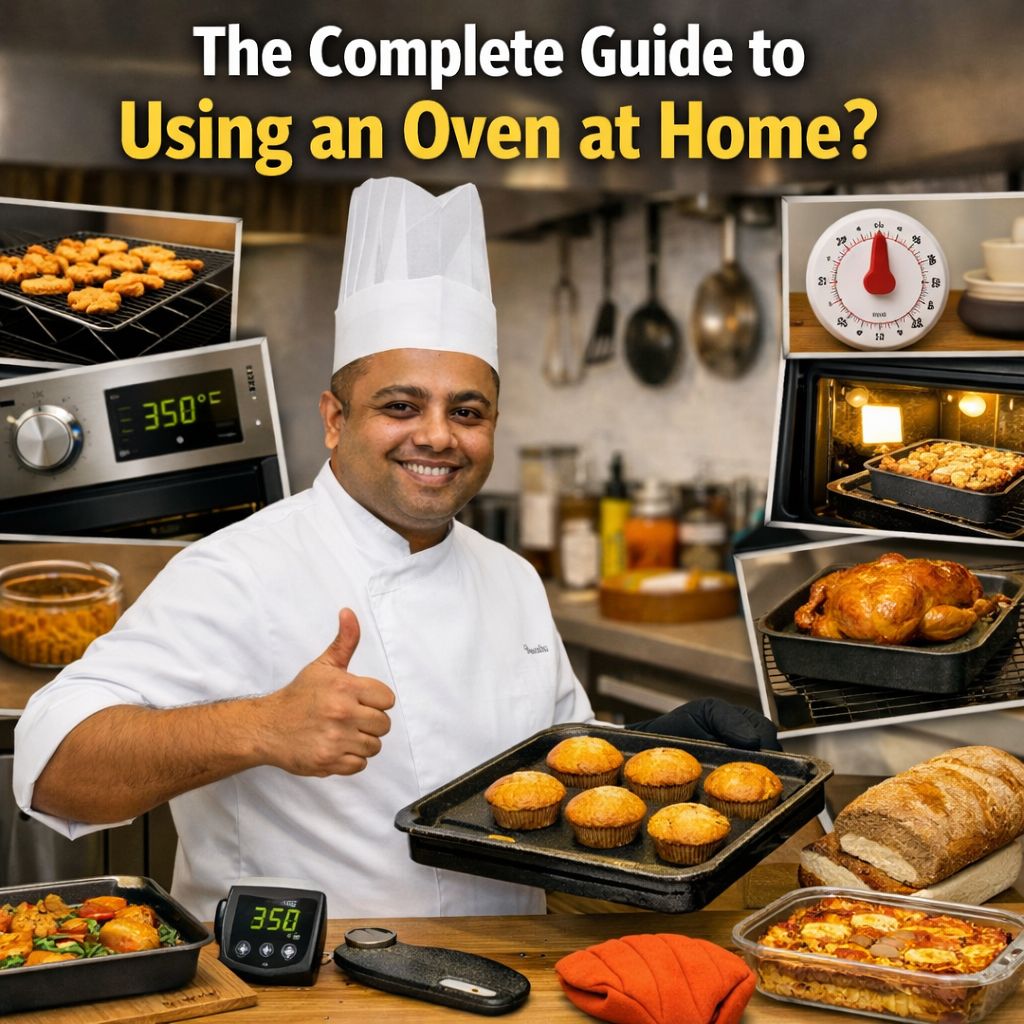
🔥 Understanding How Your Oven Actually Works
Once I started paying attention to how heat really moves inside my oven, a lot of my old kitchen questions finally clicked. It explained why food burns on the bottom in the oven, why some meals cook fast while others take forever, and even why my oven takes so long to cook food on busy weeknights.
It also pushed me to test things, like checking how long it takes an oven to preheat and learning how to tell if your oven temperature is accurate, instead of trusting the dial. When I figured out where to place oven racks for best results, my cookies stopped scorching and my casseroles cooked through.
I also learned what each setting means by decoding what oven symbols mean, which helped a lot when switching between bake, broil, and convection. That made it easier to time dishes like how long to broil chicken thighs in the oven, and to know when tools were safe, like can I put cast iron in the oven or can cardboard go in the oven during quick reheats.
And once I understood oven heat, microwave cooking made more sense too — like how to cook pizza in a microwave oven, can I bake a cake in a microwave oven, and what happens when you put metal in a microwave oven (learned that one the scary way). It even helped me notice problems early, like why does my oven smoke when I turn it on and what are oven hot spots and how do you deal with them, which saved more than a few meals.
Add in knowing how much it costs to use an oven for an hour and how to use an oven for the first time, and suddenly the whole kitchen feels a lot less confusing and a lot more under control.
🔥 Where the Heat Comes From (Gas vs Electric)
When I moved from my Florida apartment with an old gas oven to a newer electric range in the Midwest, I had to relearn everything. My food started drying out. Why? The heat wasn’t the same.
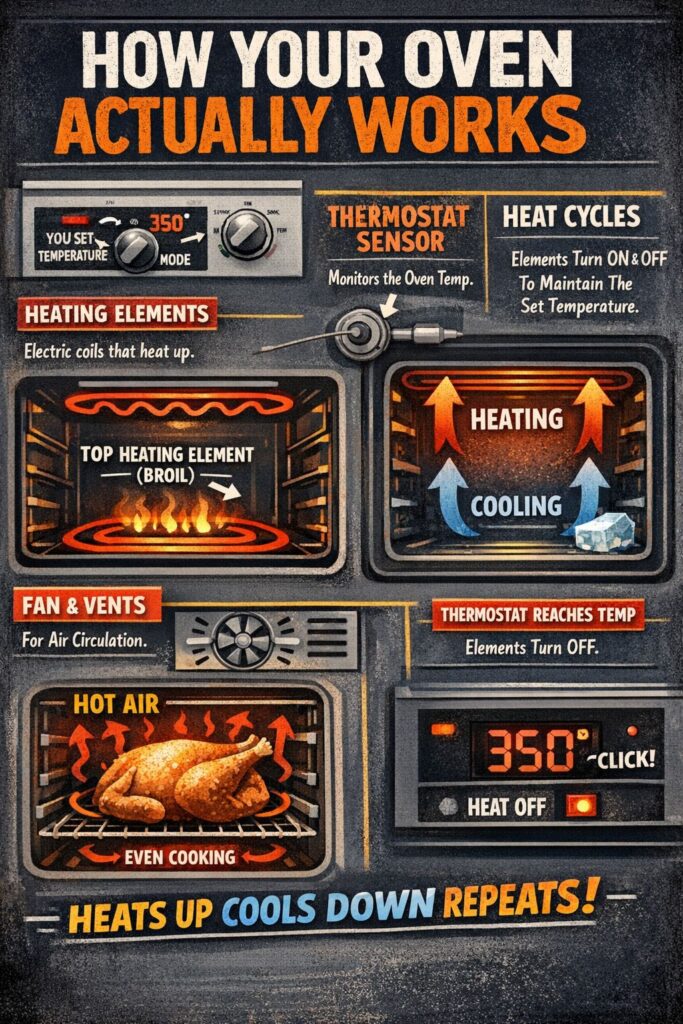
Gas ovens use an open flame, usually at the bottom, and that gives off moist heat. That’s why roasts stay juicier in gas — there’s more natural humidity in the oven air. On the other hand, electric ovens use coil heating elements. They tend to create drier heat, which is better for crisping but not as forgiving.
💡 Gas ovens feel hotter faster because flames heat the air instantly. Electric coils take longer to warm up. That’s why your timing might feel off if you switch between the two.
In U.S. homes, it’s usually one of these: GE, Whirlpool, Frigidaire, or KitchenAid. Each has different quirks, but the core difference is in how they handle heat and moisture. If your gas oven browns the top too quickly or your electric one dries out meat—now you know why.
🔥 What Preheating Really Does
I used to toss in my cookies as soon as I turned the oven on. They’d melt into flat puddles before the baking even began.
Preheating is about more than just reaching 350°F on the dial. Your oven needs time to heat the walls, racks, and air inside to that temperature. That heat saturation helps food cook evenly right from the start.
💡 If your baked goods come out pale or undercooked, it’s often because the oven wasn’t fully preheated.
When it does matter: cakes, bread, cookies — anything that rises or depends on structure.
When you can skip it: low-and-slow roasts, baked potatoes, or casseroles. I’ve put a cold pan of lasagna into a cold oven, and it turned out fine — just needed more time.
🔥 Hot Spots and Why Food Cooks Uneven
In my first restaurant gig, I burned one edge of a sheet of garlic bread while the rest stayed pale. The culprit? A hot spot.
Older ovens, especially ones with worn-out sensors, don’t regulate heat evenly. Some areas get much hotter than others — especially near the flame or element.
💡 If your food always burns in the same corner, your oven probably has a hot spot.
Also: rack position matters. Too close to the bottom? You’ll burn the crust before the top browns. Too high? The top crisps too soon.
Another culprit: cheap sheet pans. They warp in high heat, lifting food unevenly and creating direct contact with hot metal in one area. I learned that the hard way — burned biscuits on one side, soggy bottoms on the other.
🍗 Cooking in the Oven — What Works Best and Why
The oven is great, but only if you match the food to the right heat and method. Once I learned which setting worked for which dish, I stopped burning dinner and started getting consistent, delicious results.
🔥 Baking vs Roasting vs Broiling
At first, I used “bake” for everything — chicken, cookies, even garlic bread. But each oven setting has its own personality.
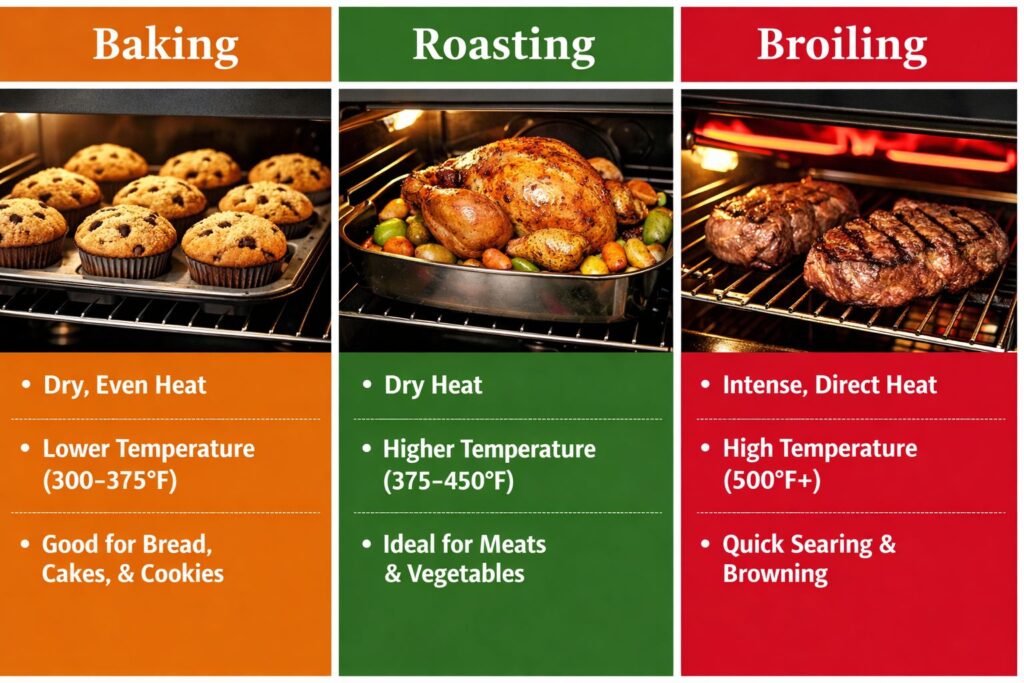
Baking is all about dry, even heat. It surrounds your food, perfect for things that rise or set — like cakes, cookies, and casseroles.
Roasting is technically just high-temp baking, usually at 400°F and up. It’s my go-to for crisp veggies, golden chicken thighs, or when I want that caramelized outer layer.
Broiling is a totally different beast. It blasts food with direct heat from above, like a reverse grill. Broiling saved my dinner more than once — I’ve crisped soggy pizza, browned mac and cheese tops, and even reheated nachos with a broiler when the microwave failed.
💡 Use baking for structure, roasting for flavor, and broiling when you need a fast finish or top-down browning.
🌡️ Best Oven Temps for Common Foods
Over the years, I’ve found that every food has a sweet spot. And it’s not just about cooking it through — it’s about texture, moisture, and flavor.
Here’s what’s worked for me:
- Chicken thighs: 400°F — High heat helps render the fat and crisp the skin.
- Cookies: 350°F — Reliable middle ground for even baking without drying out.
- Frozen pizza: 425°F — Gets the crust crisp without burning the cheese.
- Casseroles: 375°F — Hot enough to bubble and brown, but not dry it out.
- Bread: 450°F (start) then lower — High heat gives it that artisan crust.
💡 Temperature affects not just doneness, but texture. Lower temps cook gently. Higher temps crisp, brown, and reduce moisture faster.
I learned this the hard way when I baked banana bread at 400°F once — it looked done on the outside but was raw inside. Oops.
🔼 Rack Placement Matters More Than You Think
When I burned a batch of biscuits on the bottom rack, I finally realized: it’s not just the temperature — it’s where you put the food.
- Top rack: Best for browning. Great for broiling, melting cheese, or getting a crispy finish.
- Middle rack: The gold standard for most baking. Balanced heat on all sides.
- Bottom rack: Use when you want crisp bottoms — think pizza crusts or rustic bread.
💡 Even one rack too high or low can change how your dish cooks.
I once slid a tray of roasted veggies onto the bottom rack without thinking. The bottoms blackened before the tops softened. Ever since, I’ve been rack-aware.
Also — if your sheet pan is dark metal, it’ll absorb more heat. Combine that with the bottom rack? You’ve got a recipe for scorched food.
🧯 Oven Safety and What Should Never Go Inside
Most kitchen accidents I’ve seen were not from complicated recipes — they were from putting the wrong stuff in the oven. It’s easy to overlook, but oven safety matters. One bad choice can mean smoke, smells, or worse — a kitchen fire.
✅ Safe Materials for Oven Use
If you’re not sure what’s oven-safe, these four materials are your safest bets. I use them daily in my own kitchen:
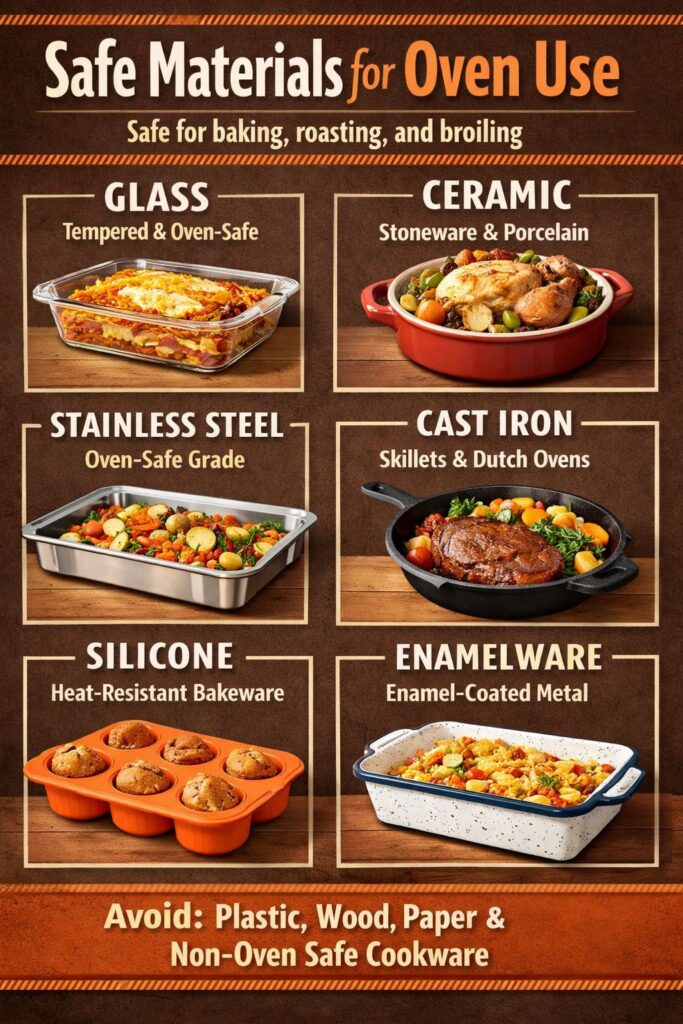
- Cast iron — Great for searing, roasting, and baking. Holds heat like a champ.
- Stainless steel — Ideal for roasting pans and trays. No warping, no coatings to worry about.
- Ceramic bakeware — Think lasagna dishes and pie plates. Just make sure it’s labeled oven-safe.
- Oven-safe glass — Brands like Pyrex or Anchor are safe — but never put cold glass into a hot oven.
💡 Always check the bottom or packaging for “oven-safe” labels — even if it looks sturdy.
🔥 What Can Start Fires or Melt
One of the scariest things I saw in culinary school? Someone left a plastic-handled pan in a 400°F oven. The smell hit first — then the smoke. It melted into the rack like a horror movie.
Avoid these common mistakes:
- Cardboard — Pizza boxes, frozen meal trays — they can catch fire under high heat.
- Plastic handles — Not all pans are oven-safe. Some “stovetop only” models will melt fast.
- Aluminum foil in wrong spots — Lining the bottom of your oven can block airflow and trap heat. That ruins temperature accuracy and can trigger smoke alarms.
- Cheap nonstick trays — They warp fast and sometimes release fumes when overheated.
💡 If it bends, smells, or has rubbery grips — don’t trust it in the oven.
🚨 Smoke, Smells, and When to Turn It Off
I’ve opened the oven to a cloud of smoke more times than I’d like to admit. Sometimes it’s a forgotten bit of cheese, other times it’s grease pooling in the corner of a tray.
Here’s when to shut it down:
- Burning grease or dripping oil — This can catch fire fast. Turn off the oven and ventilate.
- Persistent food spills — These bake onto the element and smoke every time. Let the oven cool before wiping it down.
- Gas smell (if using a gas oven) — This is serious. If you smell gas, shut everything off, open windows, and call your gas company. Don’t risk it.
💡 If the oven smells weird, looks smoky, or feels off — stop cooking and check. Trust your nose.
🏠 Oven Types and What They’re Best For
Not all ovens cook the same, even if the dial says 350°F. I learned this when I moved into a new place and suddenly my bread stopped rising the way it used to. The type of oven you use matters more than most people realize — especially if you’re trying to troubleshoot dry meat or uneven bakes.
🔄 Conventional vs Convection Ovens
A conventional oven heats from the bottom (and sometimes the top) without any airflow. It’s what most of us grew up with. But once I used a convection oven, it felt like someone turbocharged my cooking.
Convection ovens have a fan that circulates hot air around the food. This makes cooking faster and more even. Great for things that need browning — like roasted veggies or crisp cookies.
💡 Convection helps with even heat and faster results — but it can dry food out if you’re not careful.
If you’re baking delicate cakes or soufflés, I stick with regular baking mode. But for roasting or big batches of cookies, convection is a game-changer.
🧱 Wall Ovens vs Range Ovens
Wall ovens are built into your cabinets and separate from the stovetop. I recommend these for folks who bake a lot — especially if you don’t want to bend down every time.
Wall ovens are great for:
- Small kitchens where space is tight
- Homes where multiple people cook at once
- Older adults or anyone with back issues (no crouching)
Range ovens (the traditional oven-stovetop combo) are more common in U.S. homes. They’re space-efficient and often more affordable. I still use a range oven in my own kitchen — it does the job just fine.
💡 Choose based on how often you bake, and how much space you’ve got.
🧺 Toaster Ovens and Countertop Ovens
Don’t underestimate these little guys. When I lived in a tiny apartment, my toaster oven cooked everything from salmon fillets to mini pizzas.
They’re perfect for:
- Dorms and small apartments
- People cooking for one or two
- Saving energy during hot summers (when you don’t want to heat the whole kitchen)
Some countertop ovens even have convection or air fry functions now. If I’m just crisping leftovers or roasting a handful of veggies, I often use mine instead of firing up the big oven.
💡 For small meals or hot weather, toaster ovens can be more efficient than a full-size range.
🔧 Common Oven Problems and Easy Fixes
Before I ever call a repair tech, I run through a few simple checks. Honestly, half the time, the issue isn’t broken parts — it’s something small, like a tripped breaker or a warped pan. A little troubleshooting can save time, money, and dinner.
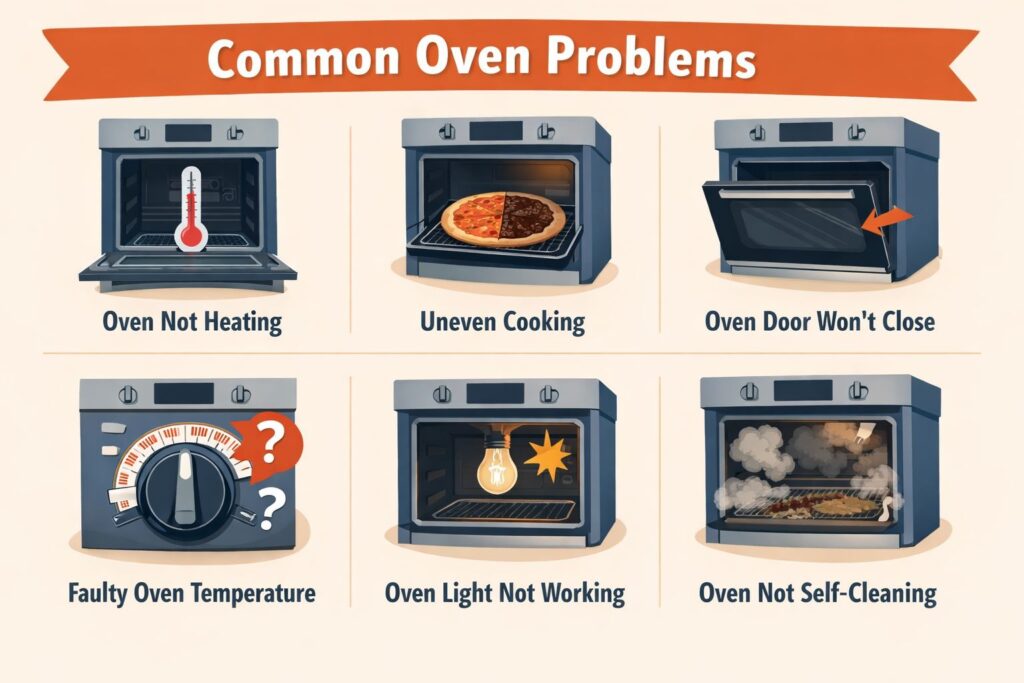
⚡ Oven Not Heating Up
Nothing’s worse than prepping a full tray of lasagna, sliding it into the oven — and 30 minutes later, it’s still cold. Been there.
Here’s what to check:
- Tripped circuit breaker: Especially with electric ovens. One half of the circuit may trip, so the oven light works, but the heat doesn’t.
- Bad igniter (gas ovens): If you don’t hear that quiet “click” or smell the faint gas puff, your igniter may be shot.
- Burned-out heating element: Look at the bottom or top coils. If they’re dull or cracked instead of glowing red, they’re likely done.
💡 Most no-heat issues come down to power — always check your breaker box before calling for repairs.
🔥 Food Burning on One Side
I had this happen with cookies once — half the tray golden, half charcoal. It wasn’t the recipe. It was my oven.
Check these things:
- Rack position: Too close to the element can overcook one side. Adjust the pan or rack to center the heat.
- Fan issues (convection ovens): If the fan stops working, air stops circulating. That creates hot zones.
- Pan color and warping: Darker pans absorb more heat. Warped pans lift parts of the food closer to the heat source.
💡 If the same corner of your food always burns, it’s probably a hot spot — try rotating your pans halfway through.
⚠️ Oven Turning Off Mid-Cook
This one had me scratching my head once during a turkey roast. The oven just… shut off.
Turns out, a few culprits can cause this:
- Overheating safety switch: If airflow is blocked or the oven gets too hot, it’ll shut itself off to prevent damage.
- Dirty vents or filters: Grease buildup can mess with internal cooling.
- Faulty thermostat or sensor: If it misreads the temperature, the oven might shut down early.
💡 If your oven randomly powers off mid-bake, check for blocked vents or heat sensor issues.
💡 Energy Use and What It Really Costs to Run an Oven
Ovens use more power than most people think — especially during long bakes or holiday cooking marathons. I didn’t really notice until I saw my electric bill spike after a week of roasting turkeys and baking pies. That’s when I started paying attention to how much energy my oven actually uses — and how to use it smarter.
⚡ Electric vs Gas Cost in the U.S.
In most U.S. homes, you’re using either an electric or a gas oven — and the cost difference isn’t just about the utility rate, it’s about how long and how hot you cook.
- Electric ovens typically use around 2 to 3 kWh per hour. At $0.15/kWh (U.S. average), that’s about 30 to 45 cents per hour.
- Gas ovens run on natural gas and cost around 10 to 20 cents per hour, depending on where you live and seasonal gas rates.
💡 Electric ovens often cost more to run hour by hour — but gas prices fluctuate a lot depending on the region and season.
In states like California or New York, electricity may be pricier. In the South or Midwest, gas tends to be cheaper. It all adds up depending on how often you bake and what your local rates are.
🥘 When the Oven Is Cheaper Than Air Fryers
I love air fryers — they’re fast, convenient, and they crisp like magic. But for big meals, the oven still wins. One Thanksgiving, I tried using just my air fryer for everything — and I had to run it four times just to cook sides.
Here’s when ovens beat air fryers in both cost and effort:
- Big batches — like casseroles, full sheet trays of veggies, or roast chicken for a crowd.
- Family meals — feeding four or more? One oven run costs less than multiple air fryer sessions.
- Holiday cooking — stuffing, pies, turkey? You’d spend all day rotating batches in an air fryer.
💡 For large portions, your oven is more efficient — both in time and total energy use.
🧠 Simple Ways to Cut Energy Use
After a few years of running a tight kitchen (and tighter utility budget), I’ve picked up some smart habits. They don’t change how your food tastes — just how much power your oven pulls.
- Cook multiple dishes at once
If you’re roasting chicken, toss in a tray of potatoes or veggies at the same time. - Use residual heat
Once the oven’s off, it stays hot for 10–20 minutes. Perfect for finishing food or warming plates. - Skip long preheats when possible
Don’t preheat for baked potatoes or roasts — slide them in cold and save 10–15 minutes of energy.
💡 Ovens are hungry for energy — but with just a few changes, you can cook smarter without sacrificing flavor.
🍳 Oven Tools and Cookware That Actually Help
Better tools won’t fix bad habits — I’ve overcooked dinner with the fanciest pans money can buy. But the right gear can save your meal when things go sideways. After years in restaurant kitchens and messy home ovens, here’s what I’ve learned actually helps.
🥘 Best Pans for Oven Cooking
Not all pans are created equal — and I’ve learned this the hard way, scraping charred cookies off a dark warped tray.
- Dark metal pans absorb more heat and brown food faster. Great for crispy edges, but they can burn bottoms if you’re not careful.
- Light or shiny metal pans reflect heat. They cook more evenly, which is perfect for delicate bakes like shortbread or meringues.
- Sheet pans vs roasting pans
Flat sheet pans (with no sides) are best for cookies and veggies. Roasting pans (deep sides) trap steam — ideal for meat, casseroles, or anything juicy.
💡 If your cookies come out too dark on the bottom, switch to a lighter pan — or add a silicone baking mat.
And don’t ignore this: warped pans ruin baking. Cheap pans bend in heat, tilt your food, and create hot spots. I once had a tray warp so bad it flipped my chicken thighs onto the oven door. Lesson learned.
🌡️ Do You Need an Oven Thermometer?
Short answer? Yes. Even a $7 one can fix what your $1,000 oven gets wrong.
Most ovens lie. I’ve seen brand-new ovens run 25°F hotter than the dial said — and that messes up everything from cookies to casseroles.
💡 If your food takes longer than recipes say — or always burns fast — your oven’s thermostat might be off.
I always keep a hanging thermometer in the back corner of my oven. It tells me the truth, not what the dial claims. It’s the cheapest “upgrade” you can make — and it’ll save you from guessing.
🍕 Pizza Stones, Steels, and Baking Sheets
Want a crispy pizza crust or perfectly browned bottom? These tools are your secret weapon — especially in U.S. ovens that often don’t get hot enough on the base alone.
- Pizza stone — Holds heat and mimics a brick oven. Preheat it, then slide your pizza on. I use mine weekly.
- Pizza steel — Like a stone, but made of metal. It gets even hotter and gives you that pizzeria-style bottom in a home oven.
- Heavy-duty baking sheet — Not just for cookies. I use thick-rimmed sheets for roasted veggies, chicken, and even reheating leftovers.
💡 If your frozen pizza crust is always soggy — a preheated stone or steel can change everything.
Just don’t forget to let stones cool fully before washing. I cracked one years ago running cold water on a hot slab — rookie move.
🧼 Cleaning and Maintenance for Better Cooking
Dirty ovens don’t just smell — they mess with your food. I used to wonder why my cookies came out tasting faintly of garlic. Turns out, it wasn’t the dough. It was the baked-on lasagna spill from last month still clinging to the bottom of my oven.
Cleaning isn’t just about looks. It’s about flavor, safety, and getting the results you expect.
🧽 How Often You Should Clean Your Oven
There’s no single schedule. It depends on how often — and how messily — you cook.
If you’re roasting meat weekly or baking bubbling casseroles, clean more often. Grease splatters build up fast and can smoke or even ignite. If you mostly reheat or bake clean items (like cookies), you can go longer between deep cleans.
💡 If you smell last week’s dinner every time you preheat, it’s time to clean.
I try to wipe down my oven every couple of weeks and do a deep clean every 2–3 months. For heavy holiday use? I clean before and after. Trust me, burnt-on sweet potato juice sticks like glue.
🔥 Self-Cleaning Mode — Good or Bad?
Self-cleaning ovens sound great. Push a button, come back to a clean oven, right? Well, kind of.
These cycles blast your oven to 800°F+ to burn off grease and grime. It works, but there’s a catch: that heat can stress parts of your oven. I’ve seen oven racks discolor and even thermostats go out of whack after repeated self-cleaning runs.
💡 I only use self-cleaning mode if I’ve got serious buildup — and never right before a big meal.
Vent your kitchen well during the cycle — it’ll smell like a campfire if there’s a lot of grease. And always remove racks and anything not oven-safe before starting.
Personally? I use self-cleaning once or twice a year, then stick to regular hand-cleaning in between.
🚪 Door Seals, Vents, and Hidden Problems
The outside of your oven may look clean, but hidden trouble can mess with how it cooks.
Over time, your door seal (the soft rubbery gasket) can dry out or crack. When that happens, heat leaks out. That leads to longer cook times and uneven results. I’ve replaced a few oven seals myself — it’s an easy fix and worth it.
💡 If your oven feels warm on the outside while baking, check the seal — it might be leaking heat.
Also check the vents. Grease and crumbs collect there over time, especially around fan vents in convection ovens. I once had a faint burning smell every time I cooked — turns out it was old breadcrumbs stuck near the vent grill.
Take a flashlight, peek inside. If something looks off — crumbs, buildup, or broken seals — it’s worth cleaning or replacing.
🔌 Installing and Setting Up a New Oven
A bad setup can ruin even the best oven. I’ve seen it firsthand — a perfectly good unit underperforming just because it wasn’t leveled or wired right. Whether you’re replacing an old range or upgrading to a sleek new wall oven, taking time to install it correctly makes all the difference.
⚡ Electrical and Gas Safety Checks
When I helped a neighbor set up their new gas oven, we found out the hard way that their old gas line was too loose — you could smell it faintly when we wiggled the connection. That’s not something you mess around with.
If you’re installing an electric oven, check the outlet rating. Most need a 220-volt outlet, not the usual 120. Plugging it into the wrong one won’t just underpower it — it won’t work at all.
For gas ovens, make sure the line is snug and leak-free. A dab of soapy water on the connection can reveal gas leaks (look for bubbles). If you’re unsure? Call a licensed pro. Safety always beats guesswork.
💡 If you’re replacing a gas oven, shut off the valve first, and always test for leaks before turning the gas back on.
📏 Leveling the Oven Matters
I learned this lesson during a carrot cake fail. The batter slid to one side and baked into a lopsided mess. The oven wasn’t level — by just a hair, but it was enough.
New ovens need to sit perfectly flat. Use a bubble level across the racks. Most models have adjustable feet — twist them until the oven is square.
💡 If your roasts pool to one side or cakes bake unevenly, the oven might be tilted.
And don’t forget: leveling affects airflow, too. Hot air circulates better when pans sit flat. A simple adjustment can fix hot spots you didn’t even know you had.
🔥 First-Time Burn-In and Smells
The first time I fired up my new wall oven, the smell hit fast. A weird chemical, plastic-y odor. Totally normal — but it freaked me out until I learned why.
New ovens often have factory oils and coatings on the heating elements. When you heat them up for the first time, they burn off.
Here’s what I do with every new oven:
- Run it empty at 400°F for 30–60 minutes
- Open the windows and turn on the vent hood
- Let it cool fully before your first meal
💡 That weird “new oven smell” should disappear after the first burn-in — if not, check for packaging you forgot to remove.
Once that’s done, you’re good to go. And you’ll avoid baking your first casserole with a hint of “factory scent.”
🛒 How to Choose the Right Oven for Your Home
I always tell people this: don’t buy an oven for how it looks — buy for how you actually cook. I’ve seen friends drop serious money on shiny, high-tech ovens they barely use. Meanwhile, my old reliable range cooks like a champ because it fits the way I cook. Choosing the right oven isn’t about bells and whistles — it’s about your kitchen, your habits, and your meals.
📏 Size, Capacity, and Family Needs
Back when I lived in a small Chicago apartment, space was tight. My oven was barely big enough to fit a turkey, and baking two trays at once was a no-go. But it worked — because I didn’t need much.
If you’re in a small apartment or a one-bedroom home, go compact. A single-rack oven or even a large countertop model can do the job.
Got a big family or love to host? You’ll want a full-size oven with multiple racks — especially during the holidays. I’ve done Thanksgiving in both small and large ovens, and trust me — more space means less stress.
💡 If you can’t fit two baking sheets side by side, it’s probably too small for batch cooking.
Also think about layout. Wall ovens free up floor space and are easier on your back. Freestanding ranges are better for all-in-one setups.
🔧 Features That Actually Matter
Manufacturers love flashy features — touchscreen displays, app controls, steam bursts. But in my kitchen, only a few features truly earn their keep.
Here’s what I look for:
- Convection fan — Speeds up cooking and evens out browning. Huge difference for roast veggies or cookies.
- Reliable thermostat — Accuracy matters. If your oven runs hot or cold, everything else falls apart.
- Easy-clean interiors — Smooth enamel walls and removable racks save you hours of scrubbing.
💡 You don’t need a dozen presets — just give me good heat control, even cooking, and a clean interior.
Other nice-to-haves: delay start timers, interior lights, and clear window doors (so you’re not opening and checking every 5 minutes like I used to).
🛠️ Brands with Good U.S. Service Networks
Look — even great ovens can have issues. When they do, service matters more than brand hype. I always recommend ovens from companies that have solid U.S. customer support and easy-to-find parts.
These brands have earned my trust over the years:
- GE — Common across the U.S., parts are easy to find, and service techs know them well.
- Whirlpool — Affordable, durable, and widely supported.
- Frigidaire — Great performance for the price. I’ve used these in both home kitchens and rentals.
- KitchenAid — A bit more premium, especially for wall ovens, but reliable and repairable.
💡 Skip the trendy imports if you can’t find a service center nearby. Local repair access beats fancy design any day.
When I had an imported oven once, it took three weeks to get a replacement part. Never again.
🧪 Food Science — Why Oven Cooking Tastes the Way It Does
Once I understood what oven heat really does to food, everything clicked. Cooking got easier. My roast chicken got juicier. My bread had better crust. Even my weeknight sheet pans started tasting restaurant-worthy. There’s science behind that flavor — and it starts with heat, browning, and moisture.
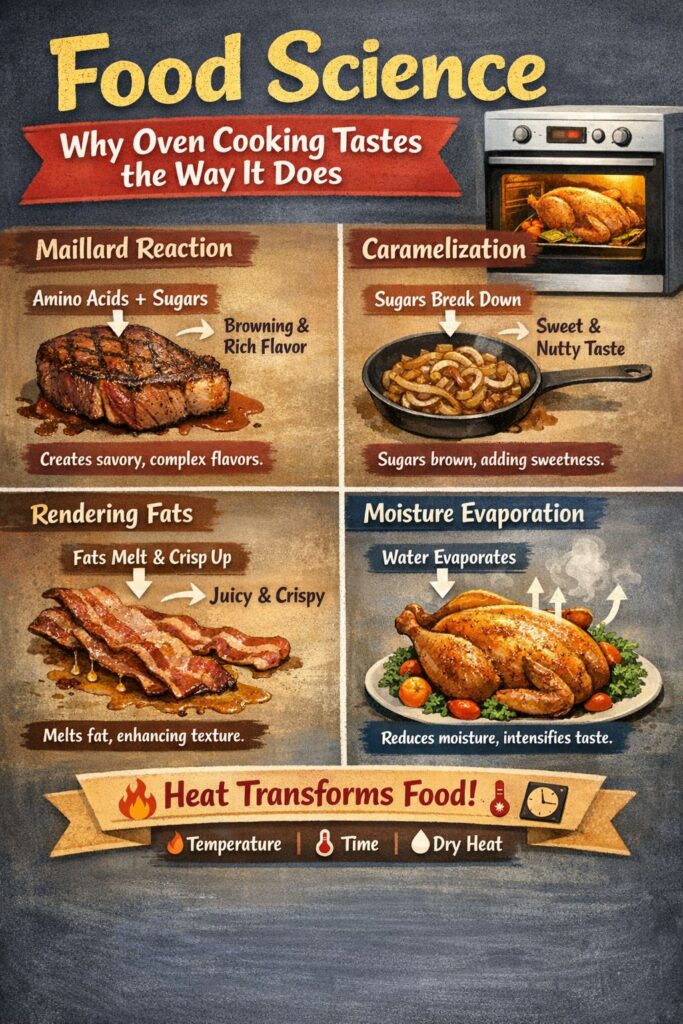
🔥 Browning and the Maillard Reaction
You ever notice how roasted chicken smells way better than boiled chicken? That deep, nutty, craveable aroma — that’s called the Maillard reaction. It’s not just “browning” — it’s flavor magic happening at around 300°F.
When proteins and sugars hit high heat, they react and transform. You get crispy chicken skin, golden toast, roasted veggies with caramel edges. That’s why oven-roasted food tastes richer than anything steamed or microwaved.
💡 Ovens can brown food because they dry the surface and hold steady high heat — microwaves can’t, which is why they leave things pale and rubbery.
I’ve tried broiling steak in the oven and microwaving one in a pinch — the difference? One sizzles with flavor, the other just… cooks.
💧 Moisture Loss and Why Meat Dries Out
Here’s where many folks (myself included, once) mess up: they blame the oven when their meat turns out dry. But it’s not just the heat — it’s how long that heat hits the meat and how much moisture escapes.
When you overcook, the muscle fibers tighten and squeeze out water. That’s why that chicken breast looked juicy going in, but cut like sandpaper coming out.
💡 Ovens dry food because they surround it with dry air. If you go too long or too hot — the moisture’s gone for good.
That’s also why resting meat is crucial. I used to skip it out of hunger (rookie move). But letting meat sit after baking gives the juices a chance to redistribute. Now I tent my roasts with foil and walk away for 10 minutes. Game changer.
🧪 Why Baking Is Less Forgiving Than Cooking
Cooking a roast? You can eyeball it. Adjust seasoning. Add broth. But baking a cake? You mess up the temp or timing, and it’s over.
That’s because baking is chemistry. You’re triggering exact reactions — like yeast fermentation, egg coagulation, or sugar caramelization. And ovens that run 25°F off can ruin the whole thing.
💡 Baking needs precise temperature and timing — even 10 degrees off can change texture, rise, or moisture.
I once baked muffins in an oven that ran hot — the outsides browned fast, but the centers were raw. I bought a $7 oven thermometer the next day. Problem solved.
⚖️ Oven vs Other Appliances — When to Use What
I love my oven — it’s the heart of my kitchen. But let’s be real: I don’t use it for everything. Sometimes I want speed. Sometimes I want moisture. And sometimes I just don’t want to heat up the whole house. That’s where other appliances shine.
Here’s how I decide what tool to grab — and why your oven isn’t always the answer.
🔄 Oven vs Air Fryer
I was skeptical of air fryers at first. Then I reheated leftover wings in one — crispy skin, juicy inside, done in 6 minutes. I was sold.
Air fryers win on speed. They’re basically mini convection ovens with a fan that’s closer to the food. They crisp fast and work great for small batches — think fries, nuggets, or reheating pizza.
But for big meals? Ovens still rule.
💡 Use the oven for batch size, the air fryer for quick crisping. Feeding four or more? The oven’s more efficient.
I’ve done roasted veggies in both — and while the air fryer is faster, the oven handles a full tray. On busy weeknights, I’ll sometimes use both at once. Multitasking magic.
🔄 Oven vs Microwave
Microwaves are like magic wands for leftovers — fast, no mess, no preheat. But they don’t cook, they reheat. And that’s a huge difference.
Microwaves heat by vibrating water molecules, which means:
- They heat unevenly (hot spots)
- They don’t brown or crisp
- They make food soft, not crunchy
💡 If texture matters, go oven. If speed matters, go microwave.
I’ve tried reheating pizza in the microwave — rubbery crust, limp toppings. In the oven? It takes longer, but the bottom crisps back up, and the cheese re-melts without turning into glue. Worth it.
🔄 Oven vs Slow Cooker
Slow cookers are like the quiet, dependable friend. Set it, forget it, come back to something tender and flavorful. They don’t replace the oven — but they do things the oven can’t.
If I want fall-apart pulled pork or chili that tastes like it simmered for days, I go slow cooker.
But for crisp edges, roasted flavor, or anything that needs browning? Oven all day.
💡 Use the slow cooker for moisture and time. Use the oven for flavor and texture.
Sometimes I do both — start in the oven, finish in the slow cooker. That’s how I make carnitas: crisp the pork in the oven, then let it melt in the Crock-Pot all day.
👨👩👧 Using Your Oven for Different Lifestyles
Not everyone cooks the same, and that changes how you use your oven. Whether you’re racing the clock on a Monday night or batch-cooking for a week of lunches, your oven can adapt — if you use the right tricks.
🍽️ Busy Weeknight Cooking
Weeknights are survival mode in my house. After a long day, I want something hot, fast, and with as few dishes as possible.
That’s where sheet pan meals shine. Toss chicken thighs, chopped veggies, and seasoning on a single tray. Bake at 425°F for 25–30 minutes — done. One pan, zero stress.
💡 Sheet pan dinners are the oven’s gift to tired people who still want real food.
Broiling is another weeknight hero. I’ll broil salmon fillets or sliced zucchini when I’m too tired to sauté. It’s fast, hands-off, and adds a roasted finish in under 10 minutes. Just don’t walk away — broilers work fast.
🥘 Family Meal Prep
When my daughter was a toddler, I got serious about batch cooking. I’d roast a whole tray of meatballs, freeze half, and use the rest for pasta, sliders, or subs during the week.
The oven makes meal prep easy because it handles multiple dishes at once. I’ll often bake banana bread on the bottom rack while roasting chicken on the top. Same heat, double the output.
💡 Use your oven like a production line — it’s built for bulk.
Also, freezer-friendly baking has saved me on chaotic mornings. Muffins, breakfast burritos, even lasagna — bake, cool, freeze, reheat. You get real meals without the nightly scramble.
🧁 Baking for Fun and Stress Relief
Some Saturdays, I bake just to unwind. No timers. No pressure. Just flour, butter, and a warm kitchen.
There’s something meditative about oven baking — it forces you to slow down. The way cinnamon smells after 10 minutes in the oven? Therapy. Rolling cookie dough with music on? A mental reset.
💡 Baking isn’t just about food — it’s comfort, nostalgia, and control in a messy world.
I’ve made blueberry muffins at midnight just because I needed a win that day. My oven doesn’t judge — it just bakes.
🙋♂️ FAQs – The Complete Guide to Using an Oven at Home
What is the best material for oven-safe cookware?
Cast iron, stainless steel, ceramic, and oven-safe glass all work great. Each holds heat differently — learn what suits your meals best.
Why does my oven burn food on one side?
It’s often a hot spot issue. Check rack position, warped pans, or a broken fan. Try rotating pans halfway through cooking.
How do I know if my oven is running at the right temperature?
Use a cheap oven thermometer. Most ovens run hot or cold by 25°F or more — and that messes up baking.
Can I skip preheating the oven?
Sometimes! You can skip it for slow roasts or baked potatoes. But for cookies or cake, preheating is a must.
When should I use convection vs regular bake?
Use convection for even browning and faster roasting. Stick to regular bake for delicate things like cakes or soufflés.