
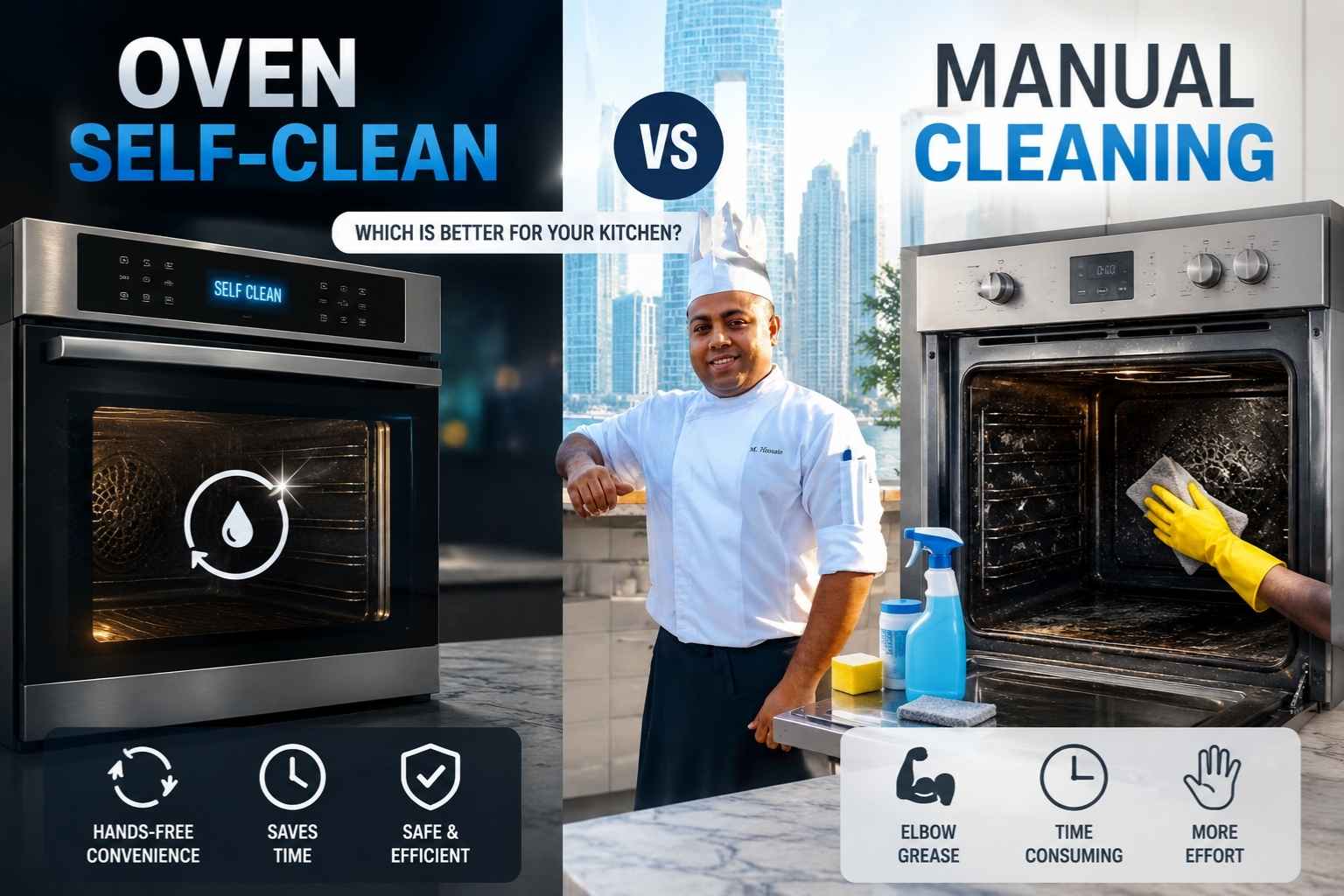
I used to dread the smoky mess of tidying up after baking, always stuck wondering about oven self-clean vs manual cleaning. Last month, I finally compared both ways to see which actually saves more time and sweat. Trust me, finding the right choice will completely change how you care for your kitchen. Let me help you pick the best, easiest path to a spotless oven today.
At A Glance
- Self-clean works best for severe grease and baked-on carbon buildup – think post-Thanksgiving disaster zones – but it runs at extreme heat (around 900°F / 480°C) and puts real stress on your oven’s heating elements.
- Manual cleaning with baking soda paste or a commercial cleaner like Easy-Off is safer for your oven long-term, especially if you clean regularly and the mess is moderate.
- Birds, pets with sensitive lungs, and young kids should be out of the house – or at least out of the kitchen – when you run a self-clean cycle due to fumes from burning grease and PTFE-coated racks.
- For gas ovens, skip the self-clean cycle more often than you think; the high heat can warp burner igniters and damage seals faster than on electric models.
- My personal routine after 15 years of cooking professionally: wipe down after every heavy cook, baking soda paste monthly, and self-clean only twice a year at most.
What the Self-Clean Cycle Actually Does Inside Your Oven
The self-clean cycle uses a process called pyrolytic cleaning. Your oven locks its door and heats to between 800°F and 900°F (425°C to 480°C) – roughly twice the temperature you use to roast a chicken. At that heat, grease, food residue, and baked-on carbon turn to ash. When the cycle finishes and the oven cools, you wipe out a thin layer of gray powder and you’re done.
The whole cycle takes two to six hours depending on your oven model (Consumer Reports, 2024). During that time, your oven draws a lot of power – typically 2,400 to 5,000 watts – and the exterior of the oven gets hot enough that you should keep children and pets away from it.
The ash left behind is mostly carbon. It has no meaningful chemical hazard. You just wipe it out with a damp cloth. That part really is as easy as it sounds.
What the cycle does NOT do well: it does not clean the oven racks. You should always remove racks before running self-clean. The heat warps them and ruins the finish, which makes them stick and slide poorly for years afterward. I have made this mistake exactly once.
Why the Self-Clean Cycle Has a Bad Reputation – and Whether the Fear Is Justified
Self-clean cycles do produce fumes. When grease and food residue burn off at 900°F, they release smoke, carbon monoxide in small amounts, and – if your oven has non-stick coated racks or non-stick interior surfaces – polytetrafluoroethylene (PTFE) fumes (also called Teflon fumes). PTFE fumes are deadly to pet birds at any concentration and can cause flu-like symptoms in humans in a poorly ventilated space (U.S. Consumer Product Safety Commission, 2023).
The fear about heating elements is also justified. Repair technicians report that a significant share of heating element failures happen shortly after a self-clean cycle (Appliance Repair Experts, 2024). The extreme heat stresses the element, and if it had any micro-cracks or wear, the cycle pushes it past the breaking point. Replacing a heating element costs $150 to $300 including labor.
Tripped breakers are another real issue. Self-clean draws so much power that it can trip a 20-amp circuit, especially in older homes.
That said, the fear is somewhat overblown for healthy adults in a well-ventilated kitchen with no birds. Open windows, run the range hood on high, and leave the house for the first hour or two. The smoke and smell are the worst part of the process – not a safety emergency for most households.
Oven Self-Clean vs Manual Cleaning: A Direct Comparison
| Factor | Self-Clean Cycle | Manual Cleaning |
|---|---|---|
| Time (your active time) | 10 minutes hands-on; 2-6 hrs total | 30-60 minutes hands-on |
| Physical effort | Very low | Moderate to high |
| Effectiveness on heavy buildup | Excellent | Good with commercial cleaners |
| Effectiveness on light buildup | Overkill | Ideal |
| Fume/smoke risk | High during cycle | Low (with commercial cleaners, moderate) |
| Oven lifespan impact | Higher stress on elements and seals | Minimal if done correctly |
| Energy cost per clean | $0.50-$1.20 per cycle (U.S. DOE, 2024) | Near zero |
| Safe for gas ovens | Use with caution | Preferred |
| Safe with birds/sensitive pets | No – remove from home | Yes |
| Rack-safe | No – always remove racks | Yes |
Manual Cleaning Methods, Broken Down Honestly
Manual cleaning is not one method. There are four distinct approaches, and each one works best in a specific situation.
Commercial Oven Cleaners (Easy-Off and Similar)
Easy-Off and other lye-based sprays are the most effective manual option for heavy grease. They work by breaking down the chemical bonds in baked-on fat. Spray on a cold oven, wait 20 to 30 minutes (or overnight for heavy buildup), then wipe clean. Wear gloves – the active ingredient, sodium hydroxide, will irritate skin and eyes.
Do not use lye-based cleaners on self-clean ovens that have special enamel coatings. Check your oven manual. Many newer models say explicitly not to use chemical cleaners because the enamel is designed for pyrolytic use and commercial cleaners damage it (Good Housekeeping Institute, 2023).
Baking Soda and Vinegar Method
Mix about half a cup of baking soda with enough water to make a spreadable paste. Coat the interior of the oven (avoid the heating element) and leave it for 12 hours or overnight. Wipe out the paste, then spritz with white vinegar to lift any remaining residue. The fizzing reaction helps loosen it.
This method is safe for all oven types, has no fumes, and costs almost nothing. The trade-off: it takes longer and works better on light to moderate buildup. For seriously carbonized grease, you will need more than one round or a commercial cleaner.
Steam Cleaning
Some newer ovens have a built-in steam clean function. This is not the same as self-clean. Steam clean uses water at around 250°F (120°C) to loosen light grease. The cycle takes 20 to 30 minutes. It is gentle, low-odor, and easy on your oven. The catch: it only works on fresh or light soil. If you have baked-on carbon from six months ago, steam will not touch it.
I use steam clean as a maintenance step between real cleans, not as a substitute.
Daily Wipe-Down Habit
This is the most underrated cleaning method in home kitchens. After every heavy cook – roasts, casseroles, anything that bubbles over – let the oven cool to warm (not hot), then wipe the interior with a damp cloth or paper towel. Takes two minutes. Prevents 90% of the buildup that makes you need self-clean in the first place.
In a professional kitchen, you clean as you go. Home cooks skip this step, then wonder why their oven smells like smoke every time they preheat.
Gas vs Electric Ovens: Which Cleaning Method Fits Each
Electric ovens handle self-clean cycles better than gas ovens as a rule. The heating elements in electric ovens are designed to cycle through high temperatures. They still wear down from self-clean use, but they are generally more tolerant of it than gas oven components.
Gas ovens are a different story. The high heat of a self-clean cycle can damage the igniter, crack burner caps, and degrade the door gasket (seal). Gas ovens also vent differently. During a self-clean cycle in a gas oven, combustion byproducts mix with the fumes from burning grease. Ventilation is more important, not less.
My recommendation for gas oven owners: use manual cleaning as your primary method and reserve self-clean for extreme cases only – once a year at most.
For both oven types, always remove racks, remove the broiler drawer if your oven has one, and remove any aluminum foil from the bottom of the oven before running self-clean.
How Often You Should Clean Your Oven Based on How You Cook
There is no universal answer to this. Cleaning frequency depends entirely on how much you cook and what you cook.
- Light cook (1-3 times per week, mostly simple meals): Wipe down monthly, deep clean every 3 to 4 months.
- Moderate cook (daily home cooking, occasional baking): Wipe down weekly, deep clean every 6 to 8 weeks.
- Heavy cook (daily baking, roasting, high-fat cooking): Wipe down after every messy session, deep clean monthly.
- Post-event cleaning (holiday meals, large dinners): Clean within 24 hours while residue is still easier to lift.
The Good Housekeeping Institute recommends cleaning your oven at minimum every three months for average household use (Good Housekeeping Institute, 2023). I think that is the bare minimum, not the target.
The Hidden Costs of Running the Self-Clean Cycle
The self-clean cycle feels free because you are not buying any products. It is not free.
Energy cost: A full self-clean cycle uses 4 to 6 kilowatt-hours of electricity (U.S. Department of Energy, 2024). At an average U.S. rate of $0.16 per kWh, that runs $0.64 to $0.96 per cycle. Low on its own, but it adds up.
Element wear: This is the real cost. Each self-clean cycle shortens the life of your heating element. Most elements last 5 to 10 years under normal use. Heavy self-clean use can cut that to 3 to 5 years. A replacement element plus service call runs $150 to $350 (Appliance Repair Experts, 2024).
Control board risk: The heat from self-clean can reach the oven’s electronic control board through conduction. Boards cost $200 to $500 to replace. This is a documented failure mode in models from major brands including GE, Whirlpool, and Bosch (Wirecutter, 2023).
Door gasket degradation: The rubber gasket around the oven door takes repeated hits from self-clean heat. When it degrades, your oven loses heat efficiency and cooking results suffer. Replacing a gasket costs $30 to $80 in parts, but if you do not notice it failing, you also pay in wasted energy on every cook.
When to Use Self-Clean – and When Manual Is the Smarter Call
Use self-clean when:
- You have heavy, carbonized buildup that has been there for months.
- You just hosted a large meal with significant oven use and overflow.
- You have an electric oven that is less than five years old.
- You have good ventilation and no birds or pets with respiratory sensitivity in the home.
Use manual cleaning when:
- The buildup is light to moderate.
- You have a gas oven.
- Your oven is more than eight years old or has had previous element issues.
- Your oven has special coatings (check the manual – many do).
- You have birds, pets with sensitive lungs, or infants in the home.
- It is summer and opening windows is not practical.
When I worked at a restaurant with commercial ranges, we never used self-clean. Commercial ranges do not have it. We cleaned manually every night, which is exactly why they never got to the point of needing extreme intervention.
Safety Considerations: Fumes, Pets, and Ventilation
Self-clean safety comes down to four things:
Ventilation: Open at least two windows in the kitchen. Run the range hood on its highest setting for the entire cycle. If your range hood vents indoors (recirculating type), it will not help much – open windows instead.
Birds: PTFE fumes – released when non-stick coatings burn – are lethal to pet birds at very low concentrations (American Veterinary Medical Association, 2022). Move birds to another building or outdoors before starting the cycle and do not bring them back until the oven is fully cool and the kitchen has aired out completely.
Carbon monoxide: A self-clean cycle in a gas oven produces small amounts of carbon monoxide. Make sure your CO detector is working before you run the cycle. If you do not have a CO detector in your kitchen, get one before using self-clean on a gas oven.
Kids: Keep children out of the kitchen during a self-clean cycle. The oven exterior gets hot enough to cause burns on contact.
Common Cleaning Mistakes and How to Fix Each One
Mistake 1: Leaving the racks in during self-clean. The heat warps metal racks and destroys the chrome finish. They will slide poorly and look terrible for years. Fix: Always pull racks out before starting the cycle. Clean them separately in the sink with dish soap and a scrub pad.
Mistake 2: Using chemical oven cleaner on a self-clean oven interior. Many self-clean ovens have an enamel coating designed for high heat. Chemical cleaners strip and damage that coating. Fix: Check your oven manual. If it says “self-cleaning enamel,” use only baking soda or steam cleaning.
Mistake 3: Running self-clean with leftover aluminum foil on the oven floor. Foil can bond to the oven floor at extreme temperatures and damage the enamel permanently. Fix: Remove all foil before every self-clean cycle.
Mistake 4: Not ventilating. Running self-clean with the kitchen closed traps fumes and smoke. Fix: Open windows and run the range hood before starting the cycle, not after the smoke appears.
Mistake 5: Cleaning a warm oven with baking soda paste. The paste dries out too fast to work if the oven is even slightly warm. Fix: Let the oven cool completely to room temperature before applying any paste.
Mistake 6: Wiping out the oven right after a self-clean cycle. The oven stays hot for one to three hours after the cycle ends. The door lock stays engaged on most models until the temperature drops below 400°F. Fix: Wait until the door unlocks on its own, then wait another 30 minutes before wiping.
My Personal Cleaning Routine (15 Years, No Compromises)
Here is exactly what I do, not what I think sounds good on paper.
After every heavy cook – anything involving fat, sugar, or sauces near the oven walls – I wait for the oven to cool to warm and wipe the interior with a damp microfiber cloth. Takes two minutes. This step alone eliminates 80% of the buildup problem.
Once a month, I do a baking soda paste clean. Half a cup of baking soda, enough water to make a spreadable paste, coat the interior, leave it overnight. Wipe out in the morning, spritz with white vinegar, wipe again. Total hands-on time: about 15 minutes.
I keep two products in my kitchen for oven cleaning: Arm & Hammer Baking Soda (the big yellow box) and Easy-Off Fume Free for the occasions where something serious baked on and baking soda will not cut it. I have used Easy-Off maybe three times in the last year.
I run the self-clean cycle twice a year – once in January after the holiday cooking season, once in July after summer grilling and baking ramp-up. My oven is a five-year-old electric range. The heating element is original and shows no signs of failure.
I do not use foil on the oven floor. Ever. It disrupts heat circulation and creates a mess risk. A silicone oven liner on the bottom rack works better and is dishwasher-safe.
Frequently Asked Questions About Oven Self-Clean vs Manual Cleaning
Is it safe to be home during the self-clean cycle?
Yes, for healthy adults with good ventilation. Open windows, run the range hood, and stay out of the kitchen for the first hour when fumes are heaviest. If you have respiratory issues, asthma, or birds in the home, plan to be elsewhere for the full cycle.
How long does a self-clean cycle take?
Most self-clean cycles run two to four hours for a standard clean setting and up to six hours on the heavy setting (Consumer Reports, 2024). Add one to two hours of cool-down time before the door unlocks.
Can I stop the self-clean cycle early if it gets too smoky?
You can cancel the cycle on most ovens, but the door will remain locked until the oven cools below a safety threshold – usually around 400°F. This takes 30 to 90 minutes. Do not try to force the door open; you can damage the lock mechanism and the door seal.
Does self-cleaning an oven use a lot of electricity?
A full cycle uses 4 to 6 kWh (U.S. Department of Energy, 2024). At average U.S. electricity rates, that is $0.64 to $0.96 per clean – not expensive on its own, but more than the near-zero cost of manual cleaning.
What is the difference between self-clean and steam clean on an oven?
Self-clean uses extreme heat (800-900°F) to burn residue to ash. Steam clean uses low-temperature steam (around 250°F) to loosen fresh soil. Steam clean is gentle, fast, and low-odor, but it only works on light buildup. Self-clean handles heavy, baked-on grease. They are not interchangeable.
How do I clean oven racks if I can’t put them through self-clean?
Soak racks in a bathtub with hot water and a few squirts of dish soap for 30 minutes. Scrub with a non-scratch pad. For heavy buildup, place racks in a large garbage bag with half a cup of ammonia overnight (outside or in the garage). The fumes loosen the grease, and it wipes off in the morning. Rinse thoroughly before reinstalling.
Is manual cleaning better for oven lifespan?
Yes, for most ovens. Manual cleaning does not expose heating elements, control boards, or door gaskets to extreme heat stress. If you clean regularly and keep buildup light, manual cleaning extends the life of your oven compared to frequent self-clean use (Appliance Repair Experts, 2024).
Can I use baking soda paste on a gas oven?
Yes. Baking soda paste is safe for all oven types – gas and electric. Avoid getting the paste on the gas igniter (the small ceramic pin near each burner at the bottom of the oven). If paste gets on the igniter, it can cause ignition problems. Wipe the igniter area with a dry cloth only.
Key Takeaways
- Self-clean works best on heavy buildup – deep carbonized grease from months of cooking – but it stresses your oven’s heating elements, control board, and door seal with every use.
- Manual cleaning is better for oven longevity when done regularly. A monthly baking soda paste clean and a quick wipe after every heavy cook prevent buildup from ever reaching self-clean levels.
- Never run self-clean with racks inside. The heat warps and degrades them permanently.
- Gas oven owners should use manual cleaning as the default. The components in gas ovens are more vulnerable to self-clean heat damage than those in electric models.
- Birds must leave the home before any self-clean cycle. PTFE fumes from burning non-stick coatings are lethal to them.
- The best oven cleaning strategy is prevention. A two-minute wipe after each messy cook saves hours of scrubbing later.
- For most home cooks, twice-a-year self-clean plus monthly manual maintenance is the right balance of convenience and oven care.

I’m Mossaraof, a trained chef and the founder of OvenInsights.com. I spent years cooking at Larrupin’ Cafe and in kitchens across Chicago and Seattle. Now I test kitchen gear for a living. I moved to North Acton, London, and I test every tool I write about. I use real meals and real heat. No brand deals. No shortcuts. I cover 12 kitchen types and hundreds of recipes. I believe this: the right tools matter as much as the recipe.