
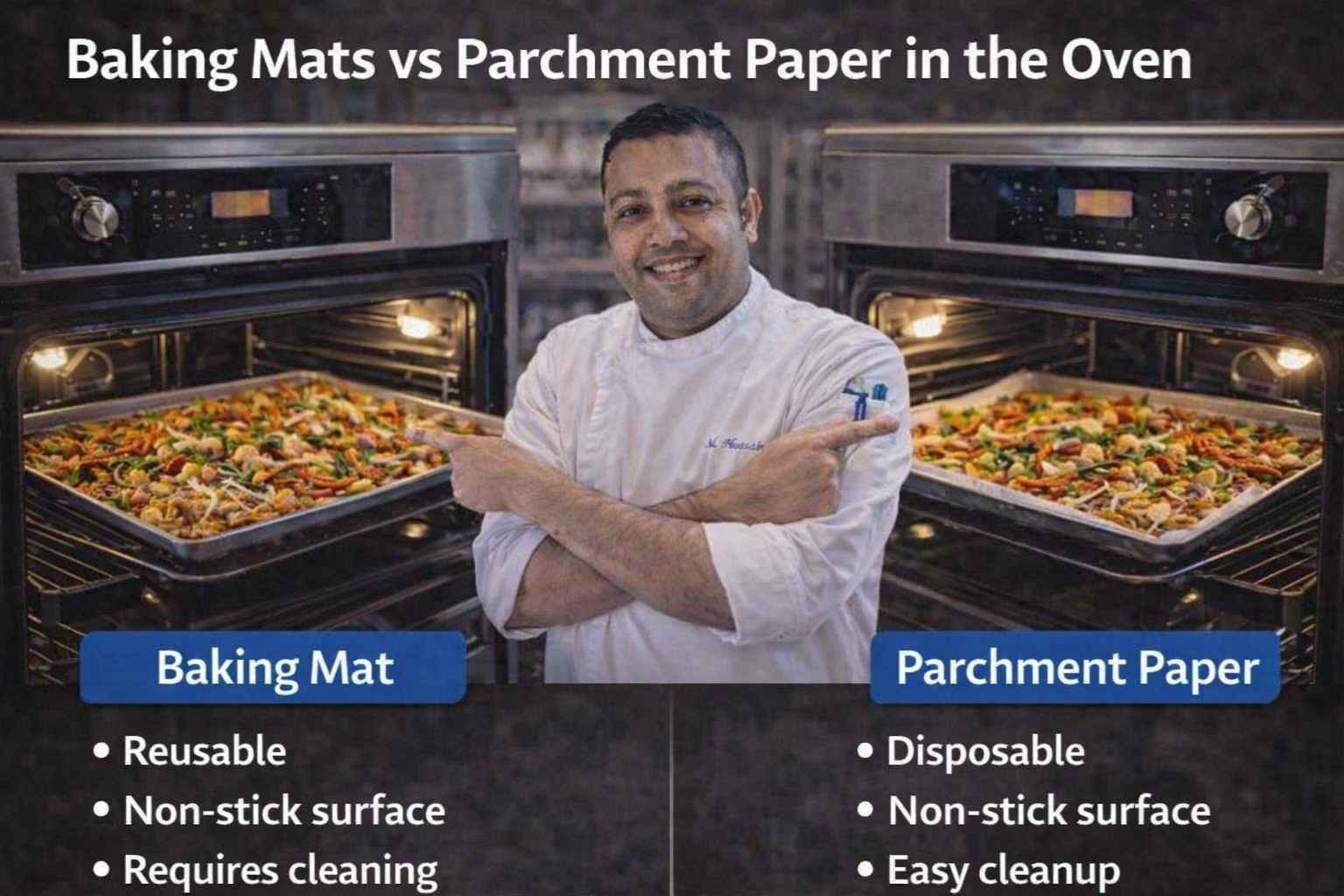
I once ruined a batch of cookies on a bad date. The sugar burned fast. I blamed the pan, but it was my liner. That mess taught me the truth about Baking Mats vs Parchment Paper in the Oven. As a chef, I know which one saves your food. I share more basics in The Complete Guide to Using an Oven at Home. Let’s find the best tool for your kitchen.
Table of Contents
ToggleWhat Are We Even Using? The Basics
Let’s look at what these tools actually are. It helps to know what touches your food.
Parchment Paper: The Old Reliable
This is a staple in most American pantries. You likely have a roll in a drawer right now.
It is paper treated with acid. Then it is coated with silicone. This makes it non-stick.
It feels dry and thin. It crinkles when you touch it.
You can find it in every grocery store. From Kroger to Whole Foods, it is there.
- Heat Safe: It handles heat well.
- Disposable: You use it once.
- Cheap: A roll costs a few dollars.
White Paper
This is what most of us see. It is bright white.
It is bleached. It looks clean. It helps you see the color of your baked goods.
Brown Paper
This is unbleached. It is a bit more natural.
It works the same way. Some folks prefer it for eco reasons. It is often compostable.
Silicone Baking Mats: The Modern Choice
These entered home kitchens a few decades ago. Pros have used them for a long time.
They are made of a fiberglass mesh. This mesh is covered in food-grade silicone.
It feels rubbery. It is slightly sticky to the touch. It has some weight to it.
You might know the brand Silpat. It is the classic French brand. AmazonBasics makes them now too.
- Reusable: You wash it and use it again.
- Thick: It is much thicker than paper.
- Slick: Nothing sticks to it.
They usually have a colored border. Orange is the most common color.
The Heat Factor: How They Cook Your Food
This is the most important part. The material changes how heat moves into your dough.
Heat Conductivity Explained Simply
Think about a winter coat. A thick coat blocks the cold.
Silicone mats act like a coat for your pan. They are thick. They insulate the bottom of the food.
Heat takes longer to get through the mat. It hits the mat first. Then it hits the cookie.
Parchment paper is very thin. It is like a t-shirt.
Heat goes right through it. The metal pan gets hot. The paper gets hot. The cookie gets hot fast.
- Paper: Allows for browning.
- Mats: Prevent burning.
- Time: Mats might need an extra minute of baking.
The “Cookie Spread” Test
I did this test last week. I made chocolate chip dough. I put half on paper. I put half on a mat.
Paper has texture. It is a little rough. It grabs onto the dough.
The dough holds its shape better. The cookie stays taller. It gets a chewy center.
Mats are very slippery. There is no friction.
The dough slides out. It spreads fast. The cookies end up wider. They are flatter and crunchier.
- On Paper: Tall and puffy.
- On Mats: Wide and flat.
- Texture: Paper gives a better chew.
Bottom Browning (The Maillard Reaction)
We all love a crispy bottom on a roasted potato. That crunch is pure flavor.
Paper lets moisture escape. It is porous. Steam can get out.
This dries out the bottom of the food. It gets golden brown. It gets crisp.
Mats trap moisture. The silicone is a solid wall. Water sits between the food and the mat.
This can make things soft. Sometimes they get soggy.
I roasted broccoli on a mat once. It steamed instead of roasted. It was not great.
Ease of Use in a Busy Kitchen
When I am rushing to get dinner on the table at 6 PM, convenience is everything.
Getting the Size Right
Paper can be annoying. You have to tear it.
The jagged metal edge on the box is sharp. Sometimes it rips the paper wrong. You get a tiny triangle piece.
Then the paper curls up. It rolls back into a tube. It won’t lay flat on the sheet.
The Crumple Trick
Here is a chef tip. Tear off your sheet. Ball it up tight. Make it a snowball.
Then flatten it out. The wrinkles break the tension. It lays perfectly flat now.
Pre-Cut Sheets
I love these. Brands like King Arthur sell them. They come in a flat box.
You pull one out. It fits the pan perfectly. No tearing. No curling. It saves my sanity.
Mat Sizing
Mats come cut to size. You buy them for your specific pan.
A “half-sheet” is the standard US size.
If the mat is too big, it is bad. It rides up the sides. It creates a slope.
Your oil will pool in the middle. Your food will cook unevenly. You must buy the exact right size.
Storage Wars
Kitchens in the USA are full of stuff. We need to save space.
Paper is easy. It stays in the box. You toss the box in a drawer. It fits anywhere.
Mats are tricky. You cannot fold them.
If you crease a mat, you break the glass fibers inside. That ruins it.
Rolling Them Up
You have to roll them. They take up space. They unroll when you don’t want them to.
You need a ring to hold them. Or a tall jar to stand them in.
Laying Them Flat
This is the best way. But who has an empty drawer?
I put mine under my baking sheets. I stack the pans on top. It works okay. But it is a hassle to grab one.
The Cleanup Reality Check
I hate washing dishes. I really do. This factor is huge for me.
Cleaning Silicone Mats
This is the biggest con. Grease loves silicone.
Oil clings to the surface. It feels slimy. Even after a rinse, it feels slick.
You have to scrub. You need hot water. You need good soap.
- The Flop: Washing a floppy mat is hard.
- The Splash: Water goes everywhere.
- The Drying: You cannot put a wet mat away.
It takes up the whole dish rack. If you put it away wet, it gets moldy.
Old mats hold onto smells too. Did you roast garlic fish last week?
Your sugar cookies might taste like garlic today. The silicone absorbs the odor. That is a deal breaker for me.
Cleaning Parchment Paper
This is why I love paper. The cleanup is zero.
You cook your food. You lift the paper up. You throw it in the trash.
The pan underneath is usually clean. You might not even need to wash the pan.
- Toss It: Just bin it.
- Compost: Brown paper goes in the green bin.
- Lazy Days: It wins for a busy Tuesday.
There is no scrubbing. There is no drying time. It is freedom.
Durability and Cost Over Time
Let’s talk money. Is the reusable option actually cheaper for a US family?
Initial Investment
Paper is cheap to buy. A roll is maybe $5 or $6. It lasts a few months.
A good mat is an investment. A real Silpat is over $20. Even cheap ones are $15 for two.
You feel that cost upfront.
Lifespan
Paper is single use. Maybe twice if you just baked dry cookies.
A mat is a workhorse. It can last 3,000 bakes. That is a lot of cookies.
If you bake every day, the mat pays for itself.
- Paper: Cents per sheet.
- Mat: High start cost, free per use.
- Value: Mats win on long-term math.
Wear and Tear
Mats are tough but sensitive.
Never use a knife on a mat. If you cut a pizza on it, you ruin it.
The cut exposes the fiberglass. Glass shards can get in your food. You have to throw it away.
Paper burns. It has a heat limit. Usually around 420°F.
If you broil on paper, it turns black. It becomes ash. It can catch fire.
Mats discolor too. My old mats are brown and stained. They look ugly, but they work.
When to Use Parchment Paper (The Winner’s Circle)
There are specific times when paper is the only right choice.
Roasting Vegetables and Meat
You want crunchy potatoes. You want crispy Brussels sprouts.
Paper allows that. It lets the heat hit the food. It lets the steam out.
Also, meat is messy. Sticky glazes on chicken wings are a nightmare to clean.
Honey and soy sauce burn onto mats. You have to scrub for ten minutes.
With paper, you just ball it up. The mess is gone.
Cakes and Loaves
You can cut paper. This is a superpower.
I trace the bottom of my cake pan. I cut a circle. It fits perfectly.
It guarantees the cake falls out.
- Brownies: I make a “sling.”
- The Lift: I leave extra paper on the sides.
- Removal: I pull the paper handles. The brownies lift right out.
You cannot do this with a mat. You cannot cut a mat to fit a loaf pan.
High Heat Cooking
I love homemade pizza. I crank my oven to 500°F.
Most mats cannot handle that. They smoke. They degrade.
Paper can handle bursts of heat. Or I use cornmeal.
But for high temp roasting at 450°F, paper is safer.
When to Use Silicone Mats (The Specialist)
Sometimes, the mat does things that paper simply cannot do.
Delicate Sugar Work
This is where mats shine. Sugar is sticky.
If you make peanut brittle, use a mat. Hot caramel does not stick to silicone. At all.
It slides right off. It is like magic.
Paper can stick to hot candy. Then you are eating paper. That is not tasty.
- Pralines: Cooling nuts and sugar.
- Chocolate: Making fancy shapes.
- Toffee: Pouring hot toffee.
Ultra-Delicate Cookies
Some cookies are fragile.
Tuiles are thin, lacey cookies. They need a perfectly smooth surface. Paper has wrinkles.
Wrinkles ruin the shape. A mat is perfectly flat.
Macarons are the big one here.
- Templates: You can put a drawing under the mat.
- Piping: You trace the circles.
- Feet: Mats help them rise straight up.
Rolling Dough
I use my mats on the counter. I do not even bake with them sometimes.
I put a wet towel on the counter. I put the mat on top. It stays put.
I roll pie crust on it. It is non-stick. I do not need much flour.
It keeps my counter clean. When I am done, I just wash the mat.
Safety and Health Concerns
We put these materials in a hot box with our food. Are they safe?
Silicone Safety
Silicone is generally safe. It is inert.
But you must buy quality. Look for “food grade.” Look for “FDA approved.”
Cheap mats have fillers. They might use bad plastic.
- The Pinch Test: Pinch the mat.
- White Lines: If you see white, it has fillers.
- Pure: Pure silicone stays one color.
If you cut the mat, throw it out. The fiberglass is not food safe.
Parchment Chemicals
White paper uses chlorine. That is how it gets white.
It is safe. The amount is tiny. But some people worry about dioxins.
If you worry, buy brown paper. It is unbleached. It is totally chlorine-free.
Some commercial paper uses Quilon. This is a chemical coating. It contains heavy metals like chromium.
Most home brands use silicone. It is safer. Check the box. Look for “silicone coated.”
Environmental Impact
We all want to create less waste. This is a tricky topic.
The Case for Reusables (Mats)
You stop filling the bin.
If you bake daily, you save hundreds of sheets of paper. That is a lot of trash.
But think about the water. You use gallons of hot water to wash the grease off.
You use soap. You use a sponge. That has an impact too.
The Case for Paper
Paper comes from trees. Trees are renewable. We can plant more.
Unbleached paper breaks down. It rots in the ground.
Silicone is synthetic. It is made in a factory. It does not rot.
When a mat dies, it sits in a landfill forever. It never goes away.
So, paper creates more volume of trash. But mats create permanent trash.
Detailed Food-by-Food Guide
Here is my quick cheat sheet. Keep this in mind for your next recipe.
Cookies
This depends on the cookie.
- Choc Chip: Use Paper. You want crispy edges.
- Oatmeal: Use Paper. They spread too much on mats.
- Slice and Bake: Use Mats. They are thick. They prevent burning.
Breads
- Focaccia: Use Paper. Use lots of oil. It fries the bottom.
- Soft Rolls: Use Mats. It keeps the bottoms tender.
- Sourdough: Use Paper. You need to lower it into a hot pot.
Fish
- Salmon Fillet: Use Paper. Skin sticks to mats sometimes.
- Whole Fish: Use Paper. It makes cleanup easy.
- En Papillote: This is a method. You cook inside a paper pouch. You seal the steam in. You cannot do this with a mat.
Common Myths Busted
I hear these rumors all the time. Let’s clear them up.
Myth: “Professional Chefs Only Use Mats”
This is false. We use paper constantly.
In a restaurant, speed is key. We do not have time to wash 50 mats.
We use big sheets of paper. We toss them after service. It is faster.
We only use mats for special pastry work. Or for sugar garnishes.
Myth: “Paper Burns in the Oven”
Only if you are careless.
Paper burns at 450°F or higher. Or if it touches the walls.
Do not let paper touch the heating element. It will catch fire.
Trim the paper. Make sure it fits the pan. You will be safe.
Myth: “Mats Make Cookies healthier”
People think you don’t need oil. So it is healthier.
But you don’t need oil with paper either. Both are non-stick.
The mat does not magically remove calories. It just stops sticking.
Final Verdict: What Should You Buy?
If I could only have one in my kitchen, which one would I pick?
The Winner for Most People
Parchment Paper.
It wins on versatility. It wins on crispiness. It wins on cleanup.
For 90% of US cooking, it is the better tool. It handles chicken, fish, and cookies.
The Winner for Bakers
Silicone Mat.
If you love making candy, get one. If you make macarons, get one.
It is a specialized tool. It does specific jobs very well.
Why You Probably Need Both
I have both. My kitchen needs both.
I keep a roll of paper for roasting chicken. I use it for my weekly meal prep.
I keep two mats for Christmas baking. I use them for rolling dough.
It is the best of both worlds. They are just tools. Use the right one for the job.
Save your money. Save your time. And enjoy your cookies.
FAQs: Baking Mats vs Parchment Paper in the Oven
What is the main difference between baking mats vs parchment paper in the oven?
Baking mats are reusable silicone sheets. Parchment paper is disposable. Both stop food from sticking in the oven. Many bakers use mats for repeat baking and paper for quick cleanup.
Is a silicone baking mat better than parchment paper for cookies?
Silicone baking mats spread heat evenly, which helps cookies bake well. Parchment paper works great too and gives crisp edges. The choice often depends on texture and cleanup needs.
Can baking mats and parchment paper be used at the same oven temperature?
Most silicone baking mats handle heat up to about 480°F (250°C). Parchment paper is safe around 420–450°F. Always check the brand guide before using them in the oven.
Do baking mats replace parchment paper in the oven?
Yes, baking mats can replace parchment paper for many recipes. They are reusable and reduce waste. Still, parchment paper is handy for quick baking or lining pans fast.
Which is more eco-friendly: baking mats vs parchment paper in the oven?
Baking mats are reusable, so they create less waste over time. Parchment paper is single-use but convenient. If you bake often, a mat can be the greener choice.


