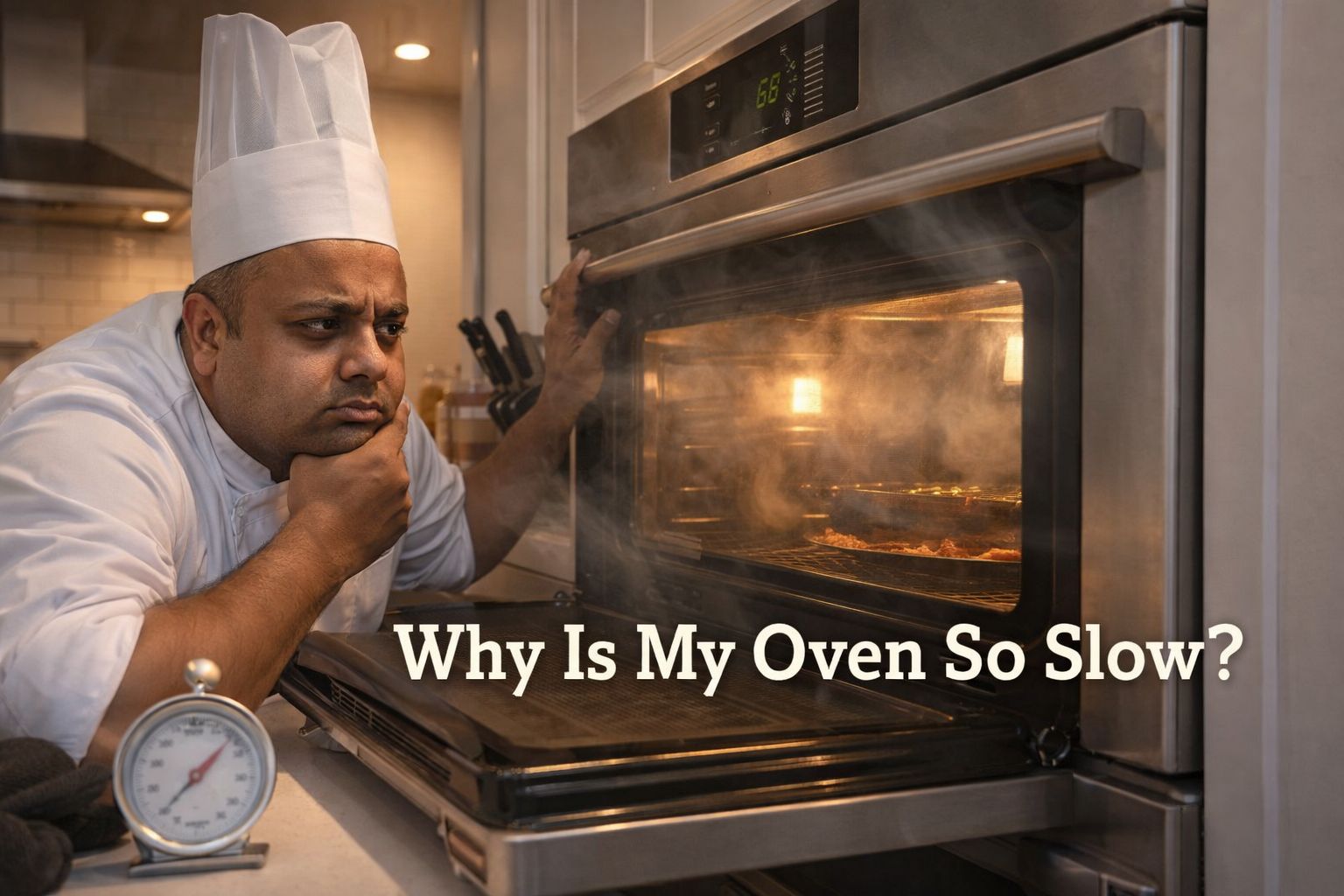
Hey, I’m Mossaraof — a cook and food blogger. One night, I baked chicken. It took forever. That made me wonder: why my oven takes so long to cook food? I’ve used many ovens in real kitchens. I’ve learned what slows them down — and how to speed them up. Let’s fix yours together.
If you want to ground yourself in how ovens actually heat, distribute air, and use different settings before we dive into the causes, check out The Complete Guide to Using an Oven at Home — that page breaks all that down in plain terms.
🔥 Is It the Oven — Or the Meal?
Some foods are just slow. But sometimes, it’s your oven holding everything back.
🍗 Cooking Dense or Moist Dishes
Not all meals cook at the same pace. I learned this during Thanksgiving prep one year when my stuffing baked beautifully — but my sweet potato casserole refused to finish.
Moist, heavy meals like these naturally take longer:
- Lasagna
- Meatloaf
- Scalloped potatoes
- Casseroles with dairy or cream
- Frozen family-size dinners
Why? Because steam slows down surface cooking, and the heat takes longer to reach the center. If your oven’s already running a little cool, that’s a recipe for frustration.
🔥 Why Frozen Foods Take Longer Than Fresh
I used to toss in frozen pizzas thinking 15 minutes would do the trick. Nope.
Frozen meals — especially big ones — suck up a ton of heat at first. In the U.S., most packaged meals assume your oven is fully preheated and running hot. But if it’s not, you’re adding extra time by default.
⚙️ Your Oven Might Not Be Reaching the Right Temperature
Just because the screen says 375°F doesn’t mean it’s true. Mine fooled me for months.
🌡️ How to Test Oven Temperature the Right Way
After burning cookies twice during a catering order, I finally bought an oven thermometer. Best $10 I ever spent.
Here’s what I did:
- Put the thermometer dead center on the middle rack
- Let the oven preheat fully — 20 minutes, not 10
- Checked the reading — it showed 340°F when I’d set it to 375°F
Boom. That’s all it took to prove my oven was lying.
You can find basic models at Target, Home Depot, or online. Just make sure it’s oven-safe up to 600°F.
🧰 Common Causes of Wrong Temperature
Sometimes, it’s not your imagination. It’s a part that’s off.
🧯 Faulty Oven Sensor
Your oven has a built-in sensor to regulate temperature. If it starts to fail (which happened in my old Frigidaire), the oven either runs too cool or too hot.
Look out for:
- Food taking longer than expected
- Inconsistent browning
- Huge heat swings
Fixing the sensor took 15 minutes and cost under $30. It’s a common issue in older U.S. ovens, especially electric ones.
🔌 Power Supply Issues (Especially in Older Homes)
I once cooked in a 1970s Chicago rental where the oven never got hot enough.
Turns out, the outlet only delivered 120V — not enough for a full-sized electric oven that needs 240V. This isn’t rare in older U.S. kitchens.
If your stove seems weak across the board, have a licensed electrician check the voltage.
🚪 Heat Loss Happens — Even in Modern Ovens
You preheat. You time things right. But food still drags on? You might be losing heat.
🧼 Dirty or Torn Door Seal = Lost Heat
I found out the hard way after a batch of biscuits stayed pale while the tops browned. The culprit? A crusty, cracked gasket.
Look around your oven door:
- Is the seal loose or torn?
- Do you see blackened grease buildup?
- Does the door close tightly?
In my case, part of the seal had slipped out of its groove. I cleaned it, reseated it, and instantly saw better results.
🔥 Opening the Oven Door Too Often
I used to peek at food constantly. It felt harmless — until I timed it.
Every time you open the door, you lose 30–50°F. That’s enough to slow cooking by 5–10 minutes. For things like cookies or fish, that matters.
Now I set a timer and trust the process (even if it makes me twitchy).
🧱 Oven Type Matters — Not All Heat the Same
I’ve used gas, electric, and convection ovens. Each one behaves differently.
🔥 Gas vs Electric Ovens in U.S. Homes
In my Florida kitchen, I’ve got a gas range. It heats up faster but runs moister — not ideal for crisping.
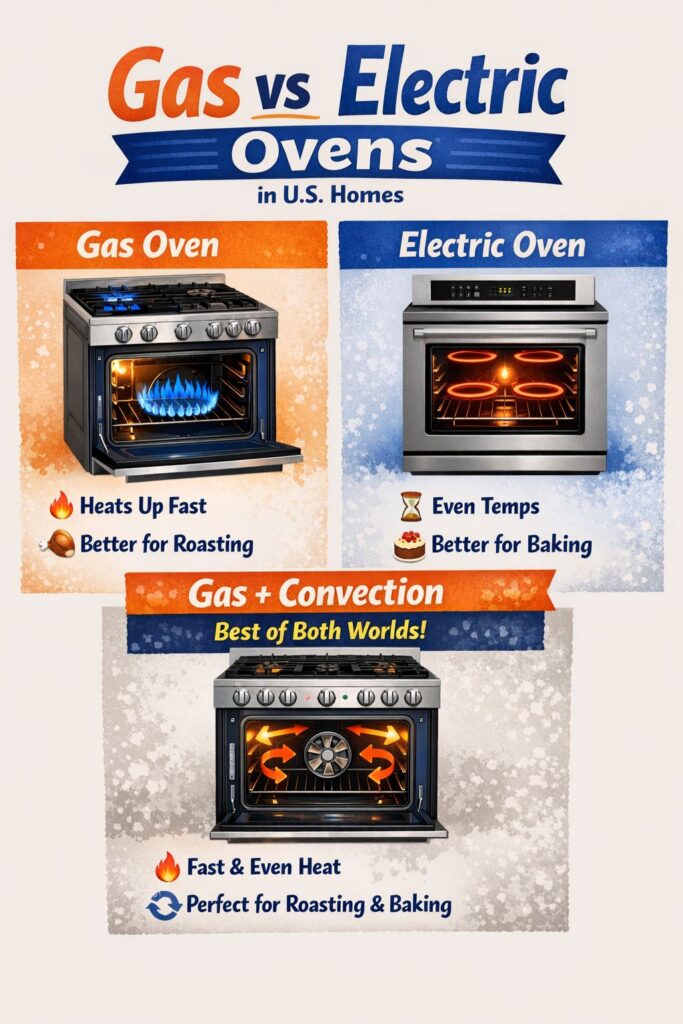
Electric ovens, which I’ve used in New York apartments, take longer to preheat but offer steadier heat.
Here’s what I’ve noticed:
- Gas: Fast to heat, better for roasting
- Electric: Even temps, better for baking
- Gas + Convection: Best of both worlds (if you know how to use it)
🌬️ What Convection Does — and Why It’s Faster
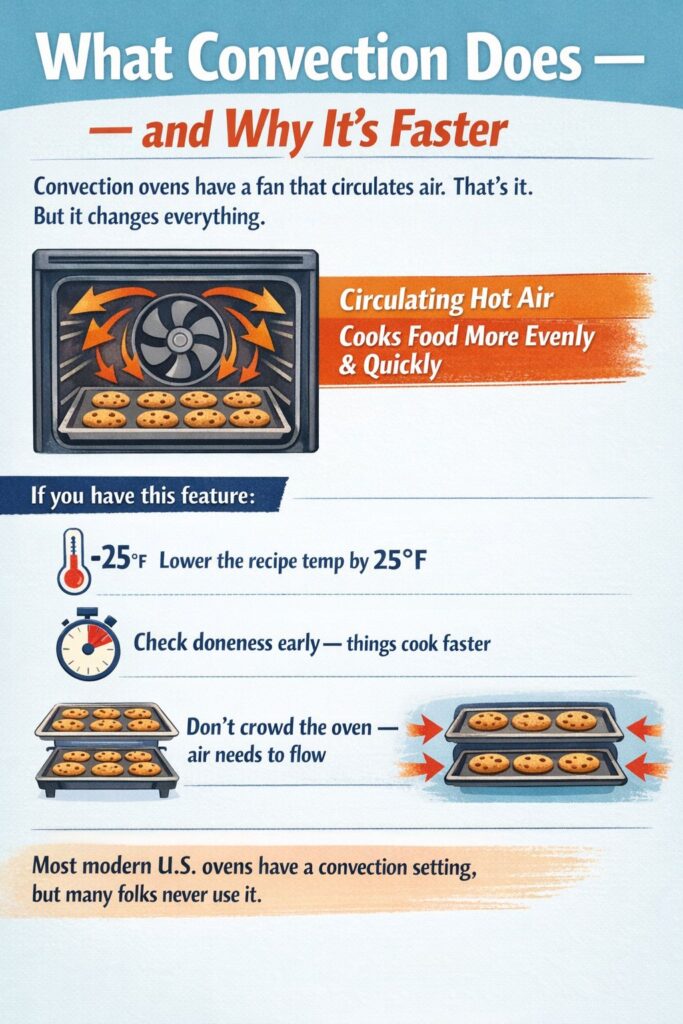
Convection ovens have a fan that circulates air. That’s it. But it changes everything.
When I switched to convection for cookies, they browned more evenly and baked faster.
If you have this feature:
- Lower the recipe temp by 25°F
- Check doneness early — things cook faster
- Don’t crowd the oven — air needs to flow
Most modern U.S. ovens have a convection setting, but many folks never use it.
🕒 How Preheating (Or Skipping It) Affects Time
A cold oven messes with more than baking. I learned the hard way after a ruined batch of brownies.
One Friday afternoon, I was in a rush. I tossed my brownies in the oven right after hitting “Bake” — no preheat. I figured it would warm up while cooking. Big mistake. The top overcooked. The center? A gooey mess.
Preheating isn’t optional. It sets the oven’s internal temperature evenly, so your food starts off right. Without it, timing gets messy and results get unpredictable.
⏱️ What Happens If You Don’t Preheat
I’ve tested this more than once, usually out of impatience.
Here’s what I’ve seen:
- Cookies spread too wide and stay raw in the middle
- Casseroles cook unevenly — the top scorches, the center stays cool
- Chicken takes way longer and risks undercooking
- Pizza crusts stay soggy underneath
Even for something basic like frozen fries, starting cold adds 8–12 minutes and still gives uneven browning.
🧠 My Routine for Smart Preheating
I stopped relying on the oven’s beep years ago — it beeps too early.
Now I do this:
- Hit the “Bake” button
- Set my kitchen timer for 15–20 minutes, not 5
- Use a thermometer to confirm it hits the right zone
- Start prep while it preheats to save time
In the U.S., most ovens signal “ready” when the air temp hits target — but the walls and racks are still cold. That’s why your first tray of cookies turns out different than the second.
🧲 Bad Cookware Slows Everything Down
You can do everything right — temp, time, rack placement — but if your pan sucks, it slows the whole thing down.
🥘 Cookware Material Makes a Huge Difference
I learned this during a side-by-side test while prepping for a holiday meal. Same recipe, same oven. But:
- The Pyrex glass dish cooked slower and left wet edges
- The cheap steel pan burned the bottom
- The aluminum Nordic Ware sheet baked it evenly and fast
Each material handles heat differently:
- Glass: Slow to heat, stays hot longer. Great for casseroles, bad for quick cookies.
- Aluminum: Heats fast and evenly. My go-to for sheet pan dinners.
- Cast Iron: Holds heat like a champ, but takes longer to warm up. Ideal for roasts or cornbread.
- Dark metal pans: Cook faster — sometimes too fast. Good for crisping, risky for baking.
🧂 U.S. Brands I’ve Used and Trust
I’ve gone through dozens of pans, but here are a few that consistently perform in American kitchens:
- Lodge cast iron: Great for oven-to-table dishes
- Nordic Ware aluminum sheets: Even baking, lightweight
- Pyrex glass dishes: Reliable for lasagna and baked ziti
- Wilton dark pans: Nice for crispy brownies (watch your timing)
I also avoid warped pans. If your pan rocks on the rack or has hot spots, it’ll slow cooking or make it uneven.
🌡️ Kitchen Climate Affects Cooking Time
This is one folks rarely think about — but trust me, it matters.
I’ve lived and cooked in Florida, Chicago, and briefly in the high desert outside Phoenix. Same oven model, wildly different performance. Why?
Because air temperature, humidity, and altitude change how ovens behave.
🌧️ High Humidity = Slower Cooking
In Florida summers, the air inside the kitchen feels thick. That moisture fights against the oven’s dry heat.
I’ve noticed:
- Breads take longer to rise and brown
- Roasting vegetables stays soggy unless I increase temp
- Pastries need extra time to crisp
Moist air slows evaporation — and that changes how heat transfers.
One workaround I’ve used: crank the temp 15°F higher on stormy or super humid days, especially for baking.
❄️ Cold Kitchens = Cold Starts
In winter, my Chicago kitchen was always chilly. I noticed my oven struggled more in the morning. It took longer to preheat and longer to hold temp.
Even with preheating, the cold air and surfaces suck away the heat — kind of like pouring coffee into a frozen mug.
Tips that helped me:
- Add 5 extra preheat minutes in cold months
- Use the oven light, not the door, to check progress
- Let pans sit in the oven for a minute before adding food — so they’re not freezing cold going in
⛰️ Altitude or Drafty Rooms Can Make a Difference
If you live in a mountain town or a drafty old house, that air can disrupt cooking too.
Air moves differently at elevation. I haven’t lived full-time in Denver, but I did cook at a friend’s cabin there once. Cakes rose faster and collapsed. Chicken took longer. It was weird.
In those conditions, follow high-altitude cooking guides. Add time. Or lower the temp and stretch the cook.
⚡ Is Your Oven Just Old and Tired?
Sometimes it’s not user error — it’s wear and tear. I learned this the slow, smoky way.
Back in 2021, I moved into a place with a kitchen that hadn’t been updated since the late ’90s. The oven still worked — technically. But cooking in it felt like trying to boil water in a rusty kettle.
Roasts took forever. Cookies browned unevenly. And don’t even ask me about frozen pizza.
Turns out, old ovens wear down in ways you can’t always see.
🧯 Signs Your Oven’s Aging (and Slowing Down)
If your oven has any of these symptoms, it’s likely the problem:
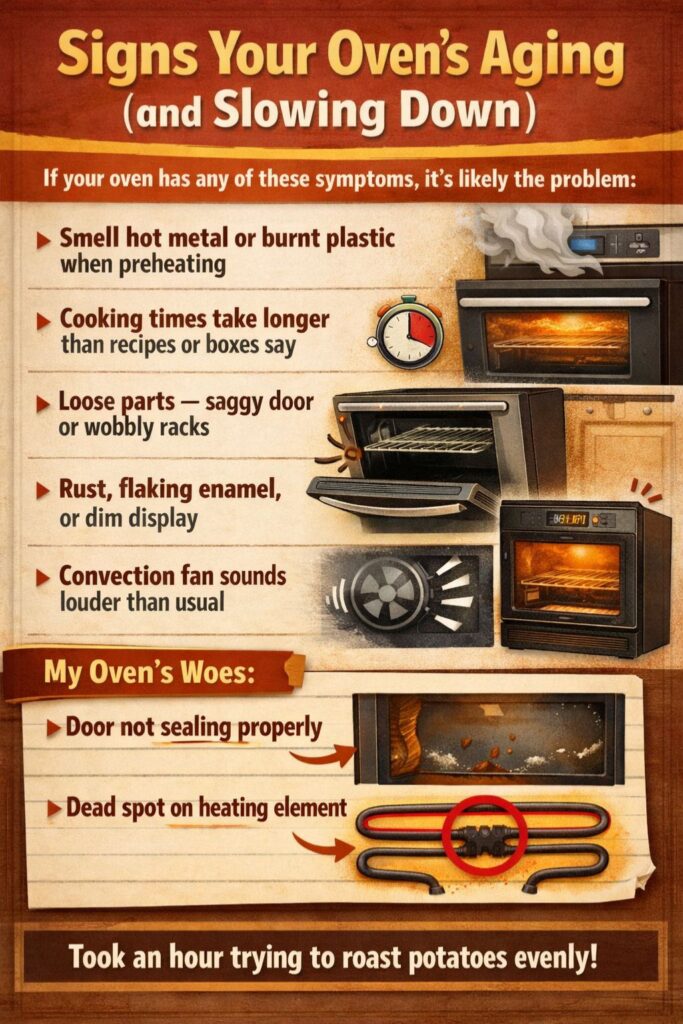
- You smell hot metal or burnt plastic when preheating
- Cooking times are longer than what recipes or boxes say
- Parts are loose — like a saggy door or wobbly racks
- You see rust, flaking enamel, or a dim display
- The fan (if convection) sounds louder than usual
In my case, the door didn’t seal right, and the bottom heating element had a dead patch in the middle. That one issue cost me an hour trying to roast potatoes evenly.
🧑🔧 When to Repair vs Replace
Here’s the honest breakdown based on what I’ve learned:
Repair If:
- The oven is under 10 years old
- It’s a simple part — sensor, igniter, gasket, or control board
- The brand is known for long-term use (like GE or Whirlpool)
Replace If:
- It’s over 15 years old
- It heats inconsistently even after repairs
- The frame, insulation, or wiring is damaged
- Replacement parts cost more than half of a new unit
In the U.S., a decent electric oven costs $600–$1,200. For gas, it’s about the same. If you’re spending $400+ in repairs, think long-term.
I ended up replacing mine with a freestanding GE model — nothing fancy, but reliable and consistent. It changed everything about my daily cooking flow.
🍂 Seasonal Oven Slowdowns — Real in U.S. Kitchens
Your oven doesn’t live in a vacuum. Cold drafts, summer heatwaves, and even holiday chaos all mess with cook times.
❄️ Winter Can Drag Cooking Time
In December, I noticed it took 10 extra minutes to bake muffins compared to summer. It wasn’t the recipe. It was the season.
Cold air outside — especially in older homes — seeps in through:
- Thin windows
- Gaps under doors
- Uninsulated kitchen walls
This cools down your oven’s outside, and even messes with your prep area. Ever crack eggs into a cold mixing bowl? They take longer to incorporate.
My fix? I add 5 minutes to my preheat routine and 5–8 minutes to the recipe’s low end. I also avoid placing pans too close to the door edge — that side stays cooler.
🔥 Summer Makes Preheat Slower, Weirdly Enough
I thought summer would help things cook faster. But in Florida? Not so much.
The humidity keeps moisture in the air. Plus, running the oven in an already-hot kitchen means your AC fights back, pulling warm air out and letting cooler air blow in.
It’s like a tug-of-war on your oven’s heat.
What helped:
- Running the hood fan less during baking
- Shutting the kitchen door to avoid airflow disruption
- Cooking during cooler hours (early morning or late evening)
🧽 Maintenance Tips That Actually Speed Up Cooking
You don’t need fancy tools or pro help to keep your oven working right. Just regular attention.
✅ Quick Things I Do Every Month
- Clean the door gasket with warm water and a rag — gets rid of grease buildup
- Wipe spills inside once the oven’s cool — burnt-on food can block heat
- Check for hot spots by baking bread slices and seeing where they brown
- Reseat oven racks so they sit level and don’t wobble
- Vacuum the vent behind the oven every 3 months (especially in dusty homes)
🔧 Easy Fixes I’ve Done Myself
I’m not super handy — but these worked without calling a tech:
- Replaced a temperature sensor ($15 online)
- Re-glued the door seal with high-temp adhesive
- Removed the oven door and tightened loose hinges
- Adjusted rack height clips when they got stuck
One surprising tip? I added a pizza stone to the bottom rack — it stores heat and evens out fluctuations when I open the door.
🔄 Final Checks Before You Blame the Oven
Sometimes, the issue isn’t dramatic. Just a few small tweaks make a big difference.
🧪 DIY Troubleshooting Checklist
Here’s what I now run through when food feels slow:
- ✅ Oven thermometer shows actual temp matches set temp
- ✅ Preheated fully (not just beeped)
- ✅ Used the right pan for the job
- ✅ Checked the door for proper seal
- ✅ Avoided opening the oven mid-bake
- ✅ Didn’t overcrowd the oven — air needs room
- ✅ Double-checked altitude, humidity, or drafts
If all of that checks out, then yeah — the oven might be done.
💨 Why My Oven Smokes When I Turn It On
This happened one Sunday before brunch. I flipped the oven on for cinnamon rolls — and it filled with smoke like a campfire.
My first thought? The oven’s breaking. My second? Maybe I left something in there.
Turns out, I had roasted chicken thighs the night before and some drippings hit the element.
Smoke can slow down cooking by throwing off the thermostat. Plus, it makes your kitchen stink. Here’s what I check now:
- Crumbs or grease on the bottom
- Dirty drip pans or foil liners
- Old food stuck under the racks
- Broiler tray left in the wrong spot
If your oven smokes during preheat, turn it off and let it cool. Wipe everything down. Start fresh — and keep a window open just in case.
🔥 Where You Place Oven Racks Matters More Than You Think
For years, I baked everything in the middle — because that’s what people say. But I started experimenting. Now I move racks around based on what I’m making.
Here’s what I’ve found:
- Top rack = hotter, good for broiling or browning casseroles
- Middle rack = even heat, best for cookies, cakes, most baking
- Lower rack = slower cooking, but good for roasts or deep dishes
One winter, I baked a deep dish lasagna too close to the top. It browned before the center got hot. Moved it down, and boom — perfect layers.
If your food isn’t cooking right, try adjusting the rack before adjusting the recipe.
🧯 What to Do If Your Oven Smells Weird
This one always catches folks off guard. You start baking, and the oven smells… off. Not burnt. Just odd.
I’ve smelled:
- Metallic tang — usually a dirty element or new oven coating
- Plastic — once I left a cutting board too close to the vent
- Electrical smell — aging wires or faulty control board
Sometimes a weird smell means something’s wrong with heat flow. That slows things down, especially in electric models where the element controls are sensitive.
If the smell is new, strong, or chemical-like — turn it off and check everything. Don’t risk it.
🧁 Final Thoughts From My Kitchen
Over the years, I’ve come to accept that ovens have personalities. They run hot. They run cold. They lie. They age. And like stubborn coworkers, they need patience — but they also need maintenance.
What helped me most:
- Using a thermometer instead of trusting the panel
- Paying attention to weather, pan type, and rack placement
- Accepting that some ovens just aren’t worth saving
These little tweaks — and a few part swaps — turned my slow, frustrating oven into a reliable kitchen partner. And when it finally aged out, I knew what to look for in a better one.
If your oven takes too long to cook food, don’t feel bad. It’s not always your fault. But with a few changes, you might just bring it back to life — or at least stop yelling at it during dinner prep.
✅ FAQ
Why does my oven take so long to heat up?
Old elements, bad sensors, or dirty seals can delay preheating. Check your parts and give it extra time in colder U.S. kitchens.
Is it normal for food to take longer in an electric oven?
Yes, electric ovens heat slower than gas. They offer even cooking but need full preheat to avoid undercooked meals.
Does cookware affect oven cook time?
Absolutely. Glass and cast iron heat slower. Aluminum pans cook food faster and more evenly in standard U.S. ovens.
Why is my oven smoking during preheat?
Old grease or crumbs on the heating element can cause smoke. Let the oven cool and clean it before cooking again.
What’s the best rack position for faster cooking?
Middle rack is usually best, but lower racks help thicker meals cook through. Avoid crowding for better airflow.