Hey, I’m Mossaraof — a professional cook and food blogger. I remember the first time I asked, can I put cast iron in the oven? I didn’t want to ruin my pan or my meal. But once I figured it out, cast iron became one of my favorite tools. If you’re just starting out, The Complete Guide to Using an Oven at Home can help you learn the basics and cook with more confidence.
Understanding Your Cast Iron Skillet
Before we turn the dial to 400°F, look at your pan. We need to know what kind of iron it is.
Raw Cast Iron (The Classic Black Pan)
This is the pan most of us have. It is heavy. It is black. It feels rough to the touch. Think of brands like Lodge. They are made in Tennessee. They are solid metal.
- Is it safe? Yes. totally.
- Heat limit: It can take high heat. 500°F is easy for it.
- Best use: searing steaks or baking corn bread.
I treat my raw skillet like a tank. It is tough. I throw it in a hot oven for pizza. I bake biscuits in it. The iron gets hot and stays hot. This helps dough rise. It makes meat crusty.
The only enemy is rust. The oven is dry. So, the pan stays dry. That is good. Just don’t drop it on your toe. It hurts. Trust me.
Enameled Cast Iron (The Colorful Pot)
These are the pretty ones. They have a smooth color on the outside. They are cream or white on the inside. Brands like Le Creuset or Staub are famous for this. They cost more.
- Is it safe? mostly yes.
- The Iron: The metal part is fine.
- The Coating: The glass coating is tough.
I use these for soups. I use them for braises. I love making chili in them. The heavy lid keeps steam inside. The meat gets tender.
But you must check one thing. The coating can crack if it gets too hot too fast. Do not heat an empty enameled pot. It needs food or oil inside.
Also, check the rim. Sometimes the rim is raw iron. It might need a tiny bit of oil. Just a dab.
Checking the Knobs and Handles
This is where people mess up. The pot is safe. The lid might not be.
Look at the knob on the lid. What is it made of?
- Black Plastic (Phenolic): These are common on older pots. They stay cool on the stove. But in the oven, they melt. They are usually safe only to 375°F.
- Stainless Steel: These are shiny silver. They are safe at any heat. I swapped all my knobs for these. It cost me ten bucks. It was worth it.
- Wood Handles: Some vintage pans have wood grips. Never put wood in the oven. It will dry out. It will crack. It might burn. Keep wood on the stove.
If you are not sure, unscrew the knob. It is easy. You can bake without it. Or cover the hole with foil.
Be safe. Check your gear first. It takes two seconds. It saves you a ruined dinner.
Why Put It in the Oven Anyway?
You might wonder why we move the pan. Why not just leave it on the stove?
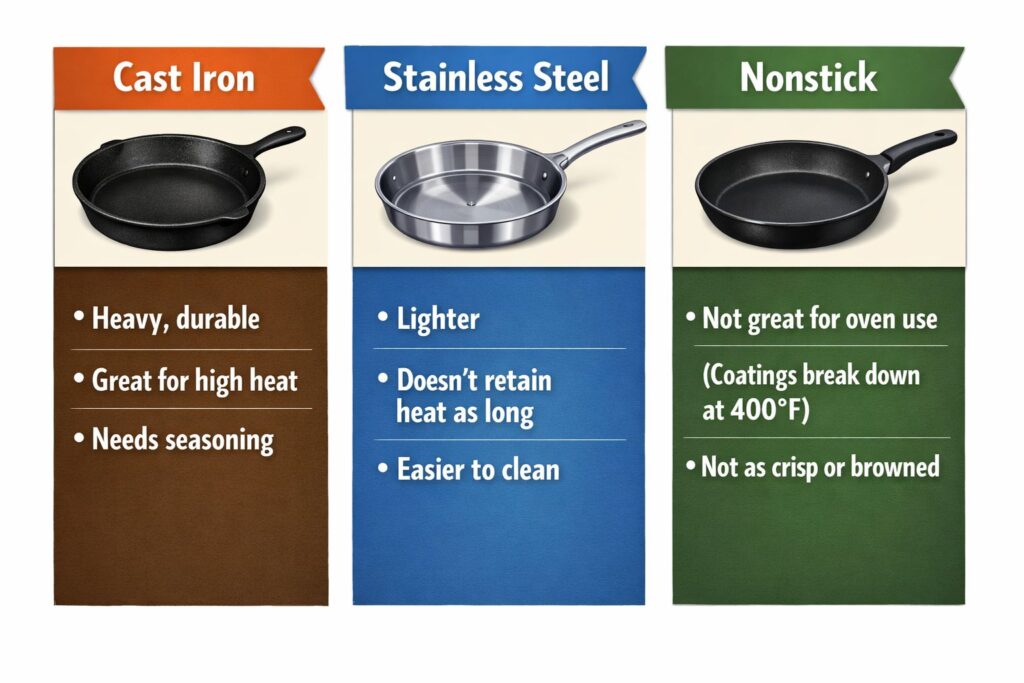
Because the oven changes everything. The stove heats from the bottom. The oven heats from all sides. It wraps the food in heat. It is gentle. It is steady.
The Perfect Sear-and-Finish Method
This is the secret. This is how restaurants cook.
We start on the burner. We get the pan ripping hot. We sear the meat. It hisses. It smokes a little. We get that brown crust. That is flavor.
Then, we move the whole pan into the oven.
- Why do it: The oven cooks the middle. The stove burns the outside.
- Best foods: Thick steaks. Pork chops. Chicken thighs.
- The result: Juicy meat. Crispy skin. No burnt spices.
I do this with chicken. I sear the skin side down. I flip it. Then I pop it in the oven at 400°F. The skin stays crisp. The meat cooks through. It is perfect.
Baking Breads and Desserts
Cast iron holds heat. It stays hot for a long time. This is magic for baking.
Think about cornbread. You pour batter into a hot skillet. It sizzles. That sound is good. It means the crust is forming.
The oven bakes the rest. The edges get golden. The center rises high.
- Cornbread: The crust is the best part.
- Skillet Cookies: I bake giant cookies. The edges get chewy. The middle stays soft.
- Dutch Babies: This is a big, puffy pancake. You need a hot pan. The batter puffs up like a cloud.
I use my 10-inch skillet for this. It is just right. It fits a box mix or my grandma’s recipe. The iron gives it a flavor you can’t get from glass.
One-Pan Meals (Less Cleaning)
I hate doing dishes. I really do.
Using one pan saves time. You cook the onions. You brown the meat. You add the sauce. Then you bake it all.
- Shepherd’s Pie: Cook the beef. Top with potatoes. Bake until bubbly.
- Frittatas: Cook the veggies. Pour in eggs. Bake until set.
- Mac and Cheese: Make the sauce. Add pasta. Bake for a crunchy top.
I take the pan straight to the table. It looks rustic. It keeps the food warm. People love it. Just warn them about the hot handle.
Step-by-Step: How to Do It Safely
Moving heavy, hot metal is risky. I have the scars to prove it.
Here is how to move your pan without burning your hand. Or your floor.
Preheating the Pan
You can put a cold pan in a hot oven. It is fine. The iron heats up slowly.
Sometimes, I put the empty pan in first. I let it get hot with the oven.
- Why do it: It acts like a pizza stone.
- The benefit: It sears meat instantly.
- The risk: A hot pan looks just like a cold pan.
I have made this mistake. I grabbed a handle I thought was cold. It was 400°F. The pain was instant. It took weeks to heal. Don’t do that.
The “Towel Rule” for Safety
This is a rule in every professional kitchen. It saves us burns every day.
If a pan is hot, leave a dry towel on the handle. Just drape it over.
- The signal: It tells everyone “Do not touch!”
- The limit: Only use a DRY towel.
- The danger: A wet towel creates steam. Steam burns you fast.
If I take a pan out, I leave the towel on it. My family knows the code. Towel means hot. No towel means safe. It is a simple system.
Placing It on the Rack
Cast iron is heavy. A 5-quart Dutch oven full of chili weighs a ton.
Lift with two hands. Be steady.
- The Rack: Use the middle rack. It is usually the strongest.
- The Tilt: Make sure the rack is flat. A tilted rack is bad.
- The Air: Don’t crowd the oven. Hot air needs space to move.
I once dropped a heavy lid. It cracked a tile on my kitchen floor. The iron won. The floor lost. Grip it tight.
Using the Right Mitts
Thin pot holders are not enough. Cast iron holds deep heat. It travels through thin cloth.
I use silicone mitts now. They grip well. They don’t slip.
- Old mitts: Throw away ones with holes.
- The grip: Iron handles are short. Get a good hold.
- The heat: It radiates. Protect your wrists too.
I keep my mitts right by the stove. I don’t want to hunt for them while my onions burn.
Caring for Your Pan After the Oven
The hard part is done. The food is cooked. But the iron is still working.
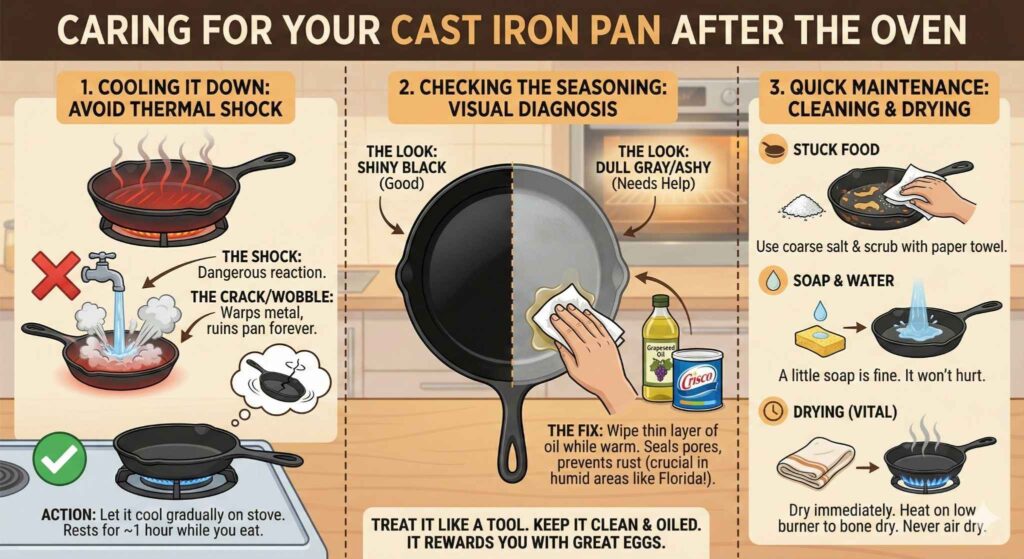
Heat changes the metal. It dries it out. We need to help it recover.
Cooling It Down
You just pulled a 400°F pan out. Do not rush to the sink.
- The Shock: Cold water on hot iron is dangerous.
- The Crack: It can warp the metal instantly. It can crack.
- The Wobble: A warped pan will never sit flat again.
I made this mistake once. I heard a loud pop. My favorite skillet spun on the burner like a top. It was ruined.
Just set it on the stove. Let it cool while you eat. It stays hot for an hour. That is okay. Let it rest.
Checking the Seasoning
High oven heat can burn off your seasoning. It is common.
If you bake at 450°F or higher, the pan might look dry. It might look gray or ashy. This is normal.
- The Look: Shiny black is good. Dull gray needs help.
- The Fix: Wipe a thin layer of oil on it while it is warm.
- The Oil: I use grapeseed oil. Crisco works too.
The heat opens the pores of the iron. The oil seals them. It prevents rust. This is vital if you live near the ocean or in humid spots like Florida. Rust loves moisture.
Quick Maintenance
I don’t scrub hard after baking. Usually, the food lifts right off.
- Stuck Food: Use coarse salt. Scrub with a paper towel.
- Soap: A little soap is fine. It won’t hurt.
- Drying: Dry it immediately. Never air dry.
- Heat: Put it back on a low burner for a minute to bone dry.
I treat my pan like a tool. I keep it clean. I keep it oiled. It rewards me with great eggs the next morning.
What NOT to Do with Cast Iron in the Oven
We talked about what works. Now let’s talk about the disasters.
Avoid these mistakes to keep your kitchen safe and your food tasting good.
Acidic Foods and Long Cooks
Tomatoes are tricky. Wine is tricky too.
Acid eats iron. It eats the seasoning you worked hard to build.
- Short Bake: A 30-minute cornbread with jalapeños is fine.
- Long Roast: A 4-hour tomato sauce is bad.
- The Taste: The sauce will taste metallic. Like pennies.
If I am making a slow-cooked ragu, I swap pans. I use my enameled Dutch oven. The glass coating handles acid perfectly. The raw iron does not.
Forgetting the Pan is Inside
This happens to the best of us. You leave a pan in the oven to store it.
Then you turn on the oven to preheat for pizza.
- The Smell: Burning oil smells terrible.
- The Smoke: It fills the kitchen fast.
- The Panic: You have to grab a blazing hot pan.
I have set off my smoke detector this way. My dog hated it. Now, I always peek inside before I hit “Bake.” It is a good habit.
Baking Fish
Fish is delicate. Cast iron is aggressive.
- The Stick: Skin sticks to iron easily.
- The Smell: Fish oil gets into the seasoning.
- The Next Dish: Your next brownie might taste like salmon.
I use a baking sheet for fish. Or parchment paper. It saves me from scrubbing fish skin off the iron later.
Final Thoughts
So, can you put cast iron in the oven? Yes. You should.
It opens up a whole new way to cook. You can sear a steak perfectly. You can bake a tall, fluffy cornbread. You can make a one-pan dinner that feeds the whole family.
Just remember the rules. Check your knobs. Use a dry towel. Let it cool slowly.
Your pan is a tool. Use it. Abuse it a little. It will only get better with time. Now, go turn on the oven. Make something good.
✅ FAQs
Can I put cast iron in the oven safely?
Yes, cast iron is safe in the oven as long as it doesn’t have plastic or rubber parts. Most can handle temps up to 500°F with no problem.
What temperature is too high for cast iron in the oven?
Most bare cast iron pans can handle up to 500°F. Enameled ones may be limited to 400–450°F depending on the brand.
Can enameled cast iron go in the oven?
Yes, but check the lid or knob. Some enameled pans have plastic parts that may melt above 400°F.
Will the cast iron handle get hot in the oven?
Absolutely. The handle gets just as hot as the pan. Always use oven mitts or heat-safe covers when taking it out.
Can I go from stovetop to oven with cast iron?
Yes, that’s one of the best things about it. Just avoid sudden temperature changes to prevent cracking.