Some nights, I nailed it. Other times, dinner turned out dry, rubbery, or weirdly pink in the middle. I’ve spent years in real U.S. kitchens—tiny apartments, humid Florida homes, and cold Midwest rentals—testing the best oven settings for chicken. As a professional cook and food blogger, I learned what works (and what fails) through plenty of trial and error. In this guide, I’ll share the real tips that helped me get it right, and I’ll even link to The Complete Guide to Using an Oven at Home if you’re still figuring your oven out. Let’s fix that next chicken dinner together.
Table of Contents
ToggleWhy Oven Settings Really Matter for Chicken
Every cut cooks differently. And every oven acts like it has its own mood.
Some days I’d set mine to 375°F and still find the thighs half-cooked 40 minutes in. Other times, the breasts turned to rubber in 20.
It wasn’t until I understood my oven settings—not just the temperature, but the mode, rack position, and timing—that things finally clicked.
- Chicken breast dries out fast
- Thighs love heat and patience
- Whole birds demand balance
And U.S. ovens? They vary a lot. My Frigidaire acts way different from my sister’s GE in New York.
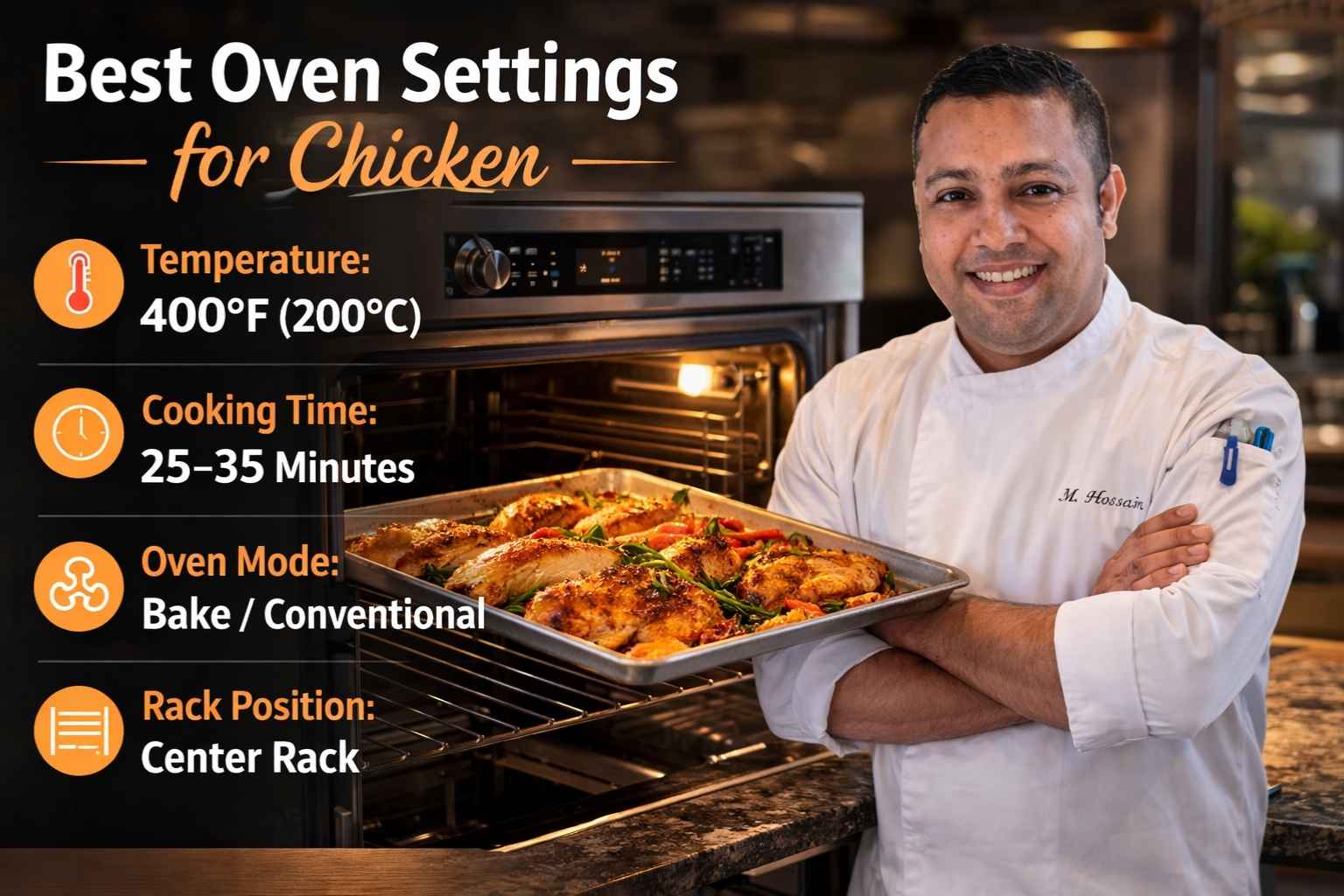
Best Oven Settings for Chicken Breasts
Chicken breasts stressed me out for years. They go from juicy to dry in a blink. I remember one night in Arizona, I forgot to set a timer, and those poor things came out like chalk.
My Go-To Setup for Boneless Breasts
- Mode: Bake (not convection)
- Temp: 375°F
- Rack: Middle
- Time: 22–25 minutes for standard 6 oz breasts
I flatten them slightly with a rolling pin now. Cooks them more evenly.
Tools That Help Me Nail It
- Instant-read thermometer (I use ThermoPro)
- Sheet pan with parchment paper
- A foil tent if the top browns too early
Convection? Sometimes Yes, Mostly No
If I do use convection, I drop the temp to 350°F and check at 18 minutes.
But honestly? For delicate cuts like breasts, I prefer regular bake mode. The fan tends to dry out the edges.
Internal Temp I Trust
I pull my breasts at 160°F. Let them rest 5 minutes. The carryover brings them to the USDA-approved 165°F.
It took a few dry runs (literally), but now I never guess.
Best Oven Settings for Chicken Thighs
Bone-in thighs are a whole different story. I actually love cooking them now because they’re forgiving. But early on? I roasted them at too low a temp and ended up with flabby skin. Not ideal when you’re trying to impress friends on a weeknight.
My Reliable Setup
- Mode: Roast
- Temp: 400°F
- Rack: Lower-middle
- Time: 35–45 minutes, skin side up
Skin side up always. Gravity helps with the juices. Trust me.
Seasoning Tricks That Help
- Dry the skin with paper towels
- Rub with olive oil + spice mix (smoked paprika, garlic salt, pepper)
- Let sit 10 minutes before roasting
Cast Iron = Crispy Heaven
I started using a Lodge cast iron skillet and never looked back. It crisps the bottom while roasting the meat just right.
In my humid Florida kitchen, it also retains heat better than a thin sheet pan.
Target Temperature
Thighs are best at 175–185°F. I used to pull them at 165°F, but the texture wasn’t there. Higher temp = tender, pull-apart meat.
Best Oven Settings for a Whole Chicken
Roasting a whole bird used to intimidate me. I pictured dry breast meat, pink legs, and a smoky mess. But once I got the hang of it, it became my Sunday ritual in the Midwest.
My Go-To Roast Chicken Setup
- Mode: Start with Bake, switch to Roast
- Temp: 450°F for 15 minutes, then 375°F until done
- Rack: Lower-middle
- Time: About 15 minutes per pound
Prep Steps That Changed My Game
- Dry Brine: Salt it 24 hours before
- Cavity Fill: Onion, lemon, rosemary
- Truss? Sometimes I do, sometimes I skip it. Depends on mood.
Thermometer Placements I Use
- One in the thickest part of the breast
- One in the thigh (avoid hitting bone)
Breast should hit 160°F, thigh at least 175°F. Always rest 15 minutes before carving.
Pans That Work
- Enamel roaster (I use a Staub)
- Or a rack set over a basic Nordic Ware sheet pan
The second option is cheaper, but still great. Just watch for juices splashing over.
Extra Settings That Actually Matter
These little things make a big difference. I learned them the hard way.
Convection: Use with Caution
- Great for thighs, wings, and skin-on drumsticks
- Terrible for boneless breasts
- Adjust temp: Lower by 25°F if you use it
Don’t Open the Oven
Every peek drops the temp. I used to check five times per bake. Now? I trust my thermometer and the oven light.
Rack Position Makes a Difference
- Middle: Balanced cooking (my default)
- Lower: For whole birds and thighs
- Upper: Only for broiling
Even my old Frigidaire showed better results when I stopped guessing rack placement.
Clean Oven = Better Results
A greasy oven throws off heat. Once, my chicken smoked so much I had to open windows mid-winter in Chicago.
Now I wipe mine down every two weeks. Nothing fancy. Just baking soda, water, and a rag.
Quick-Reference Cheat Sheets (Based on Cut)
Chicken Breasts
- Bake at 375°F
- 20–25 min
- Middle rack
Chicken Thighs (Bone-In)
- Roast at 400°F
- 35–45 min
- Lower-middle rack
Whole Chicken
- 450°F for 15 min, then 375°F
- 15 min/lb
- Lower-middle rack
Chicken Wings
- 425°F, convection if crispy needed
- 30–35 min
- Flip halfway through
Chicken Drumsticks
- 400°F, bake or roast
- 35–40 min
- Season well, space out
Mistakes I Made (So You Don’t Have To)
I Broiled Breasts Once
Total disaster. Top was crusty. Inside was raw. I laugh now, but it was a waste of good meat.
I Skipped Preheating in Arizona
Hot day. Didn’t want to run the oven long. But my thighs sat in lukewarm air for 10 minutes before heat even kicked in.
Result: greasy, soggy skin. Never again.
I Used a Dark Sheet Pan
In a rental with no airflow, I baked thighs on a thin, dark tray. The bottoms burned. Switched to a light-colored USA Pan tray? Problem solved.
Final Thoughts from My Kitchen
There’s no one-size-fits-all setting. But the best oven settings for chicken—whether breasts, thighs, or whole birds—come down to:
- Knowing your cut
- Trusting your thermometer
- Adjusting for your oven and your environment
And if you’re cooking in the U.S., know this: Your kitchen setup matters. A dry Arizona oven behaves way differently than a humid Florida one.
After years of trial and error, I trust these settings like second nature. They’re not fancy. But they work.
And that’s what matters when you’re hungry, tired, and just want a good roast chicken at the end of the day.
FAQs
What are the best oven settings for chicken breasts?
The best oven settings for chicken breasts are bake at 375°F on the middle rack. Pull them at 160°F and rest five minutes so they stay juicy and soft.
What oven setting is best for chicken thighs?
For thighs, use roast at 400°F on the lower‑middle rack. The higher heat crisps the skin and keeps the meat tender and full of flavor.
Should I use convection for chicken in the oven?
Convection works well for thighs and wings, but it can dry out breasts. If you use it, lower the temp by 25°F and check early.
How do I know when oven‑baked chicken is fully cooked?
Use a meat thermometer, not just time. Chicken is safe at 165°F, but I pull breasts at 160°F and let them finish while resting.
Do oven rack positions matter for baking chicken?
Yes, rack height changes how heat hits the food. Middle racks cook evenly, while lower racks help brown skin on thighs and whole birds.