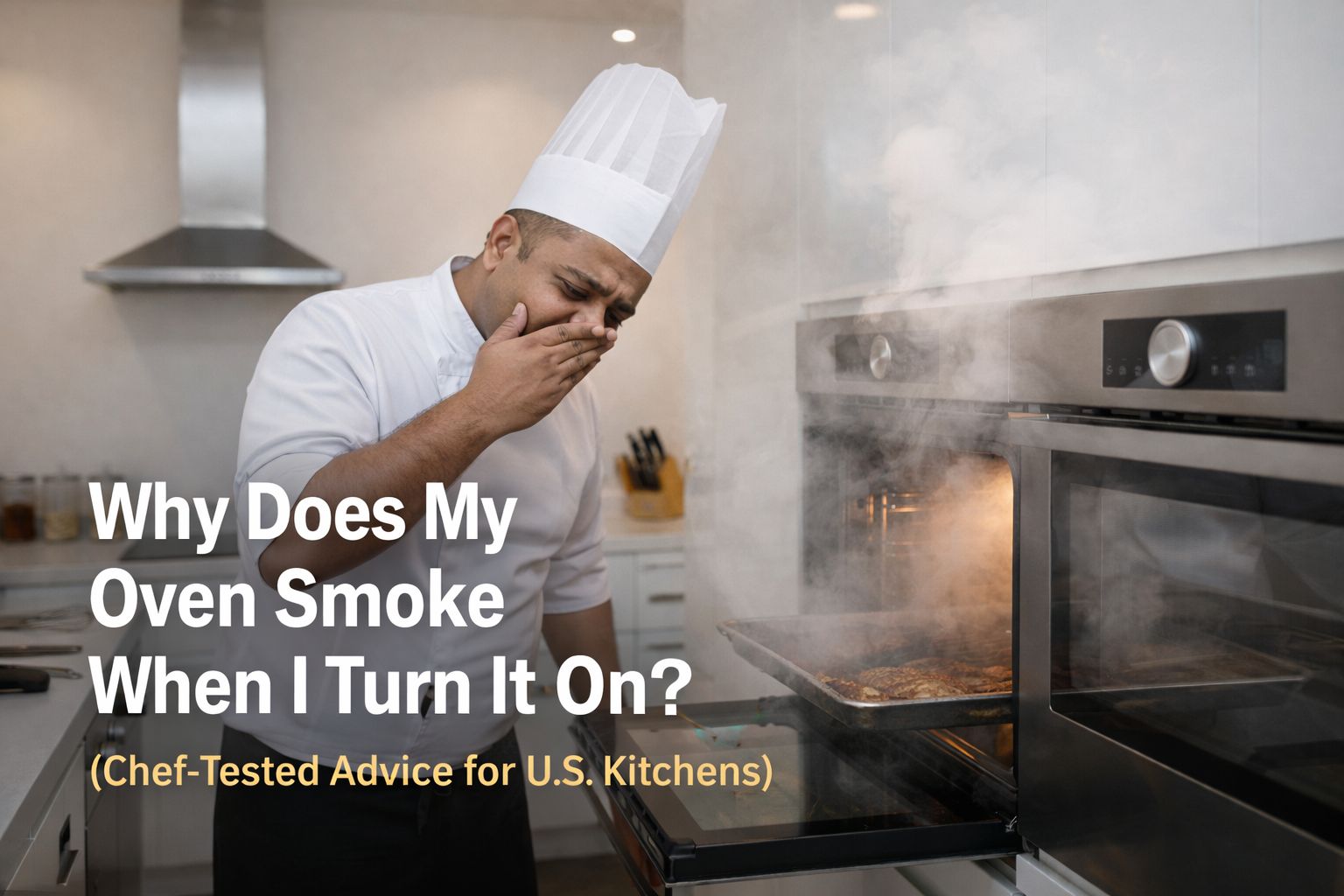
Hey, I’m Mossaraof — a cook and food blogger. One night, I turned on my oven, and smoke filled the air. I asked, why does my oven smoke when I turn it on? I’ve learned it’s a common thing, and often easy to fix. If you’re still new to ovens, The Complete Guide to Using an Oven at Home breaks it all down in simple steps.
🔥 The Most Common Reasons Your Oven Smokes
Sometimes a smoky oven just means you forgot about last week’s lasagna spill. Other times, it’s a bigger warning. Let’s start with the usual suspects.
🧼 Burnt Food or Grease Left Behind
This is the #1 cause of oven smoke—and I’ve been guilty of it myself.
Last fall, after roasting chicken thighs at 425°F, I forgot to clean the tray. The next morning, I went to bake banana bread. No meat, no oil added. Still got smoke. Why? Because those leftover drippings burned off fast.
Common culprits:
- Chicken fat, bacon grease, or meat juices that drip to the oven floor
- Popped-over cheese from frozen pizza
- Fruit pie filling bubbling over the edge
You’ll usually see:
- A thin line of smoke drifting from the back
- A faint greasy smell (kind of like burnt toast, but meatier)
👨🍳 Real tip from my own mistake: Let the oven cool completely before cleaning. I once tried wiping up grease while it was still warm and melted a cheap microfiber cloth. Smelled like plastic for hours.
♨️ High Heat Burning Off Residue
Ever cranked your oven up to 475°F for pizza or sourdough? That’s when leftover residue tends to flare up.
What burns off?
- Sugary marinades
- BBQ sauce spills
- Oil splatters you didn’t notice
Electric ovens seem to do this more than gas ones (at least in my experience). That intense top-down heat fries everything clinging to the walls or racks.
Watch for:
- Quick, sharp smoke at startup
- Slight crackling sounds
- Smoke that stops once the oven hits temp
🆕 It’s a Brand-New Oven — That “Factory Smoke” Smell
When I helped a friend in Tampa install her new Whirlpool, we fired it up and immediately smelled burning chemicals. No food inside. Just that factory scent.
Turns out, that’s normal. Brand-new ovens often have a light coating of oil or insulation glue inside that burns off during the first few uses.
What it feels like:
- Light blue smoke
- A weird sweet-chemical smell
- No flames or noise, just lingering haze
🧪 How to “Burn Off” a New Oven Safely
If your oven is fresh out of the box:
- Remove racks, manuals, and packing material
- Open a window and turn on your exhaust fan
- Preheat the oven to 400°F for 30–60 minutes
- Let it cool before using for food
After that, it should be good to go.
🛑 When Oven Smoke Is a Red Flag (Not Normal)
Let’s be clear—some smoke is fine. But not all. If it looks or smells wrong, it probably is.
🔌 Electrical Problems or Heating Element Damage
I once had a cheap apartment oven in Milwaukee that sparked every time I turned on the broiler. First came a snap, then smoke. The heating coil was cracked.
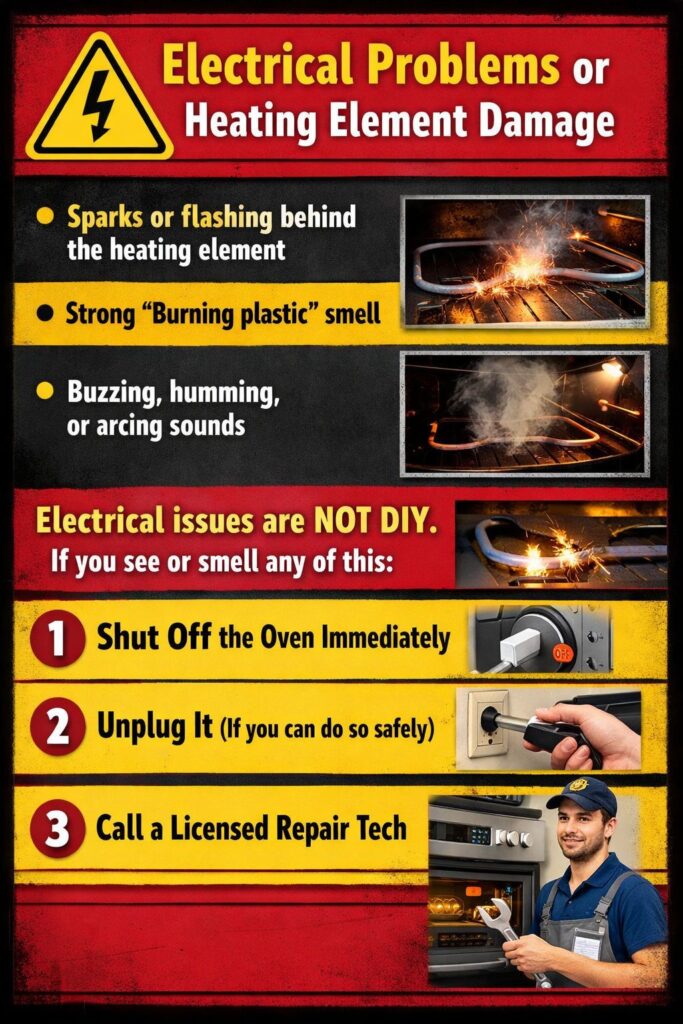
Signs to look for:
- Sparks or flashing behind the heating element
- A strong “burning plastic” smell
- Buzzing, humming, or arcing sounds
Electrical issues are not DIY. If you see or smell any of this:
- Shut off the oven immediately
- Unplug it (if you can do so safely)
- Call a licensed repair tech
🔥 Grease Fire or Active Flame
Yes, fires can happen inside ovens. I’ve seen it—especially with holiday roasts or deep-dish pizzas that overflow.
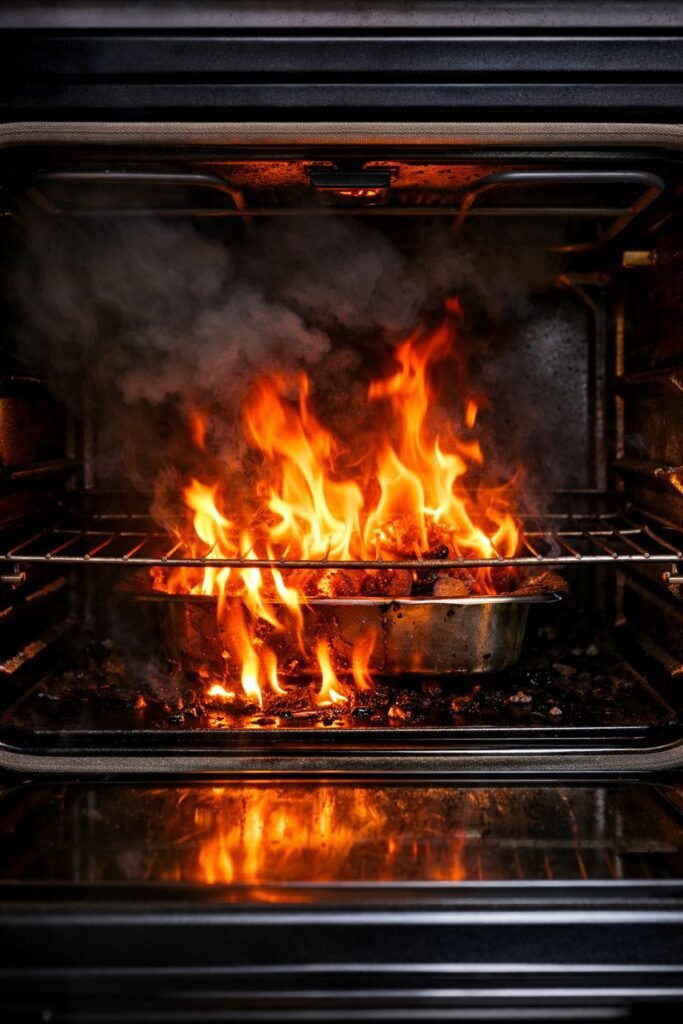
How to spot it:
- Visible flames in the oven cavity
- Bright orange flickering, not just smoke
- Smoke that turns dark gray or black
⚠️ What to Do if You See Fire
- Do NOT open the oven door — oxygen makes it worse
- Turn off the heat
- If safe, unplug the oven or shut off the breaker
- Have a box of baking soda nearby (not water!)
Fire extinguishers work—but only if you’ve been trained. If it gets out of hand, evacuate and call 911.
🧽 How to Stop Oven Smoke Before It Starts
It took me years—and a lot of smoke detectors going off—to figure out that oven smoke is mostly preventable. A few tweaks in your kitchen routine can make a big difference.
🧼 Clean Your Oven Regularly (Not Just When It Stinks)
When I worked in a Florida restaurant kitchen, our ovens got wiped daily. But at home? I used to wait until something smelled weird or started smoking.
That’s too late.
Here’s what I do now:
- Wipe spills weekly — Especially after roasting or baking something juicy
- Use a vinegar + baking soda paste — Non-toxic and safe for most ovens
- Avoid harsh cleaners in gas ovens — Fumes can linger and cause more smoke
If I’m being honest, I still forget sometimes. But every time my oven starts smoking, I know I probably skipped a cleaning day.
🧯 Skip the Foil on the Bottom Rack
I know—foil seems like an easy cleanup hack. But I stopped doing it after one Thanksgiving when the foil curled up and touched the heating element. Instant smoke and a weird burnt-metal smell.
Here’s why foil is risky:
- Reflects heat unevenly
- Can trap grease, causing flare-ups
- May block airflow and trigger thermostat issues
What I use instead:
- A baking sheet on a lower rack to catch drips
- Reusable oven liners made for high temps (check if yours is oven-safe!)
🧁 Don’t Overcrowd the Oven
This one gets me every holiday.
I’ll load three trays of cookies or try to roast two pans of veggies and a meatloaf—then smoke starts rolling out. Why?
Because:
- Crowded pans cause splatter
- Airflow gets blocked, making hot spots
- Grease buildup heats unevenly and burns
Now I batch cook. It takes a little longer, but my smoke alarms stay quiet.
🏠 Real-Life U.S. Kitchen Factors That Make Ovens Smoke
The same recipe can act totally different depending on where you live. Trust me—I’ve cooked in all kinds of homes across the country.
🌴 Humid Kitchens (Florida, Gulf States)
I spent a summer cooking at a friend’s home in Jacksonville. Everything smoked faster—and it wasn’t just the oven.
Why?
- High humidity mixes with sugar — Makes a light caramel smoke at lower temps
- Grease traps moisture — Burns slower but smokes more
- Oven seals get moldy — Yuck. And yes, mold smoke smells awful
What helped:
- Running the exhaust fan (always)
- Cracking a window when baking
- Regular seal cleanings with vinegar
❄️ Cold Midwest or Mountain Kitchens
Back in Chicago, my oven in winter used to take forever to heat. And when it finally did—bam. Smoke.
Why?
- Cold interiors cause sudden expansion — Old insulation can smoke during warmup
- Frozen spillover — Turns to steam, then smoke as it reheats
- Overcompensating with high temps — Creates burn-off zones
My trick now?
- Preheat gradually in winter — Start at 300°F, then ramp up
- Never store pans in the oven—especially glass or ceramic—they can trap odors and dust
🌵 Dry, Dusty Air (Arizona, Nevada)
I cooked in Scottsdale last year. Loved the dry heat for sourdough, but the oven? Smoked every time I turned it on.
Dust settles fast in arid climates—especially if your oven vents upward.
What I noticed:
- Fine dust on coils or inside the cavity
- Dry grease that burned instantly
- Backyard dust storms leaving grime in the kitchen
Simple fix:
- Wipe coils monthly (when oven is cool)
- Use a damp cloth, not a wet one
- Store pans covered, especially if your oven shares space with the kitchen air vent
🧠 Chef-Backed Troubleshooting — What I Check First
Before I ever call a repair tech (which isn’t cheap), I run through this checklist. Nine times out of ten, I find the issue.
🔎 Look for Buildup on the Heating Element
Sometimes smoke comes from a crusty layer stuck to the coil. Other times, it’s black soot I didn’t even notice.
What to do:
- Wait until oven is completely cool
- Shine a flashlight on the element
- Look for:
- Grease blobs
- Burnt crumbs
- Sticky black soot
If there’s gunk:
- Gently scrape it off with a plastic scraper
- Wipe with a vinegar-damp cloth
- Avoid steel wool—it can damage the coating
🧂 Smell Test — What’s That Smoke Telling You?
Your nose knows more than you think. Here’s what I’ve learned just by sniffing:
- Sweet or syrupy? Probably sugar burning (cookies, marinades)
- Sharp chemical tang? Could be cleaning product residue or electrical
- Savory or fatty? Old meat or grease buildup
If it smells like plastic or rubber, unplug the oven and inspect. Don’t risk it.
🛠️ Check Fan and Convection Settings
Not all ovens are built the same. Convection fans especially can blow around crumbs, grease, and dust.
I had a countertop convection oven once (great for camping trips). That thing trapped food bits behind the fan grill constantly—and yes, they smoked.
What I check:
- Fan cover and vents for buildup
- Grease smudges behind the rear wall
- Bits of food stuck in the fan blades (use a mirror to check)
Cleaning those spots made a huge difference.
🧼 When and How to Use the Self-Clean Feature Safely
The first time I hit the “self-clean” button on a new oven in Atlanta, I thought it would be easy. I was wrong.
The house filled with smoke. Alarms blared. My dog barked like we were under attack.
Turns out, self-clean mode is not as simple as the button makes it look.
♨️ What Self-Cleaning Actually Does
Self-cleaning ovens work by superheating the cavity to 800–900°F — hot enough to turn food residue into ash. The door locks automatically for safety, and the whole cycle can take 2–4 hours.
It’s powerful, but it comes with side effects.
⚠️ Why Self-Cleaning Causes Heavy Smoke
The problem?
- You don’t always see all the food bits before you start
- Those small grease spots you ignored? They’ll burn fast
- If the oven’s never been cleaned manually, expect smoke — lots of it
I’ve set off smoke detectors during self-clean more than once. It’s not a great look when guests are coming over.
🧹 Best Practices for Using It Without Chaos
Here’s my personal checklist, learned the hard way:
- Remove everything — racks, pans, foil, thermometers
- Wipe large spills first — especially oil, sugar, or tomato sauce
- Crack a window and turn on the exhaust fan
- Don’t run it the night before a big dinner — do it when you have time to ventilate
Bonus tip: Don’t self-clean during a Midwest winter. Your house will smell smoky, and you won’t want to open windows when it’s 10°F outside.
🧪 Hidden Culprits — Less Obvious Reasons for Oven Smoke
Sometimes the reason your oven smokes has nothing to do with food or cleaning. Here are the sneakier culprits I’ve found over the years.
🔩 Cheap Non-Stick Cookware Coatings
I once grabbed a dollar-store baking sheet to roast potatoes. Big mistake. Within minutes, smoke poured out like I’d put in a tire.
Why?
- Low-quality non-stick coatings can’t handle high heat
- They break down around 400°F
- The fumes stink — like chemicals and burnt plastic
Now I stick with:
- Heavy-duty carbon steel pans
- Enamel-coated roasting dishes
- Trusted brands like USA Pan, Lodge, or Nordic Ware
Spend a little more up front — your lungs and your food will thank you.
🏷️ Sticker Left on the Bottom of a Pan
Guilty. I did this once in a friend’s Airbnb in Colorado.
The sticker was under the cast iron. I missed it. The smell was like burning rubber, and the cleanup was worse.
Tip: Always check new pans, baking sheets, or even frozen meals for adhesive labels before cooking.
👃 Scented Cleaners or Residue Left Inside
That lemon-scented spray you used to wipe the inside? It might be the reason your oven smells like burnt fruit.
Even so-called “oven-safe” cleaners can leave a residue that:
- Smokes at high temps
- Stinks like chemicals
- Discolors the heating elements
I stick to:
- White vinegar + water
- Baking soda paste for stuck-on gunk
- A barely damp sponge for daily wipe-downs
Simple beats smoky, every time.
🔄 Oven Brand Notes — How Different Ovens Handle Smoke
Not all ovens are built the same. I’ve cooked with everything from tiny budget models to restaurant-level ranges, and each handles heat — and smoke — a little differently.
Here’s what I’ve learned across U.S. kitchen brands.
💸 Budget Brands (Hotpoint, Amana, Magic Chef)
- Thin insulation means more heat escapes — and more smoke lingers
- Interior space is tighter, so smoke gets pushed out faster
- Self-clean mode tends to be less efficient and smokier
If you’re in an apartment or rental, these brands are common. Just stay on top of cleaning and don’t overload the oven.
🏠 Mid-Tier Brands (GE, Whirlpool, Frigidaire)
These are what I see most often in U.S. homes.
- Better airflow, especially in newer models
- Convection modes help dry up spills but can also blow grease into hidden corners
- Easy to clean — especially if you read the manual (yes, I finally do that now)
Pro tip: Frigidaire ovens tend to run a little hot. I always keep a thermometer inside.
🍳 Pro Ovens (KitchenAid, Wolf, Viking)
I’ve cooked in some serious home kitchens with these, and here’s the deal:
- Great door seals — which means smoke stays in until you open the door
- High-heat settings bring out every single flaw — even a crumb can smoke at 500°F
- Self-clean mode is intense but very effective — if you prep properly
They’re amazing when clean… and monsters when dirty. Treat them with respect.
✅ When to Call a Pro (and When to Just Clean It)
Let’s be real — not every smoky oven needs a technician. But some situations aren’t worth guessing.
☎️ Call a Pro If You Notice:
- A plastic or electrical smell — could be wiring or insulation
- Smoke coming from the control panel, not the oven cavity
- You’ve cleaned everything and it still smokes — consistently
If the oven is newer, it might be under warranty. Don’t void it by DIY-ing something dangerous.
🧽 Just Clean It If:
- There’s visible grease or old food in the cavity
- Smoke only happens at high temps
- It smells like food, not plastic or chemicals
- The smoke disappears after a few minutes
Trust your senses. If it looks, smells, and sounds normal — it probably is.
FAQs
Why does my oven smoke when I turn it on the first time?
New ovens often smoke due to factory coatings burning off. It’s normal. Just preheat at 400°F for 30–60 mins to burn it off safely. Learn more about new oven setup.
Can leftover food cause my oven to smoke?
Yes! Grease, cheese, or sauce stuck on the oven floor will burn and smoke. A quick wipe-down after cooking can help prevent this. Learn more about oven cleaning tips.
Is oven smoke dangerous?
Most food-based smoke isn’t dangerous, but burning plastic or electrical smells are red flags. Always check the source. Learn more about when to call a technician.
Why does my oven smoke more in winter?
In cold climates, old grease hardens and burns when reheated. Try preheating slowly in winter months. Learn more about seasonal oven use and care.
What’s the best way to stop oven smoke before it starts?
Clean regularly, skip foil on the bottom, and avoid overcrowding trays. Good airflow and prep go a long way. Learn more about smoke-free baking tips.