The first time it happened, my oven let out a puff of smoke like it was trying to send a signal. I froze—halfway through baking banana bread, barefoot, with guests on the way. As a professional cook and food blogger, I’ve faced plenty of kitchen chaos, but knowing what to do if your oven starts smoking still rattled me the first time. In this article, I’ll walk you through what really works—based on real fires, funny fails, and fixes I’ve tested in ovens across the U.S. If you’re new to oven cooking, check out The Complete Guide to Using an Oven at Home too—it’s a lifesaver.
Table of Contents
ToggleStay Calm and Safe — Your First 60 Seconds Matter
Sometimes it’s just a little smoke from food splatter. Other times, it’s a signal that something’s wrong. Either way—don’t freak out.
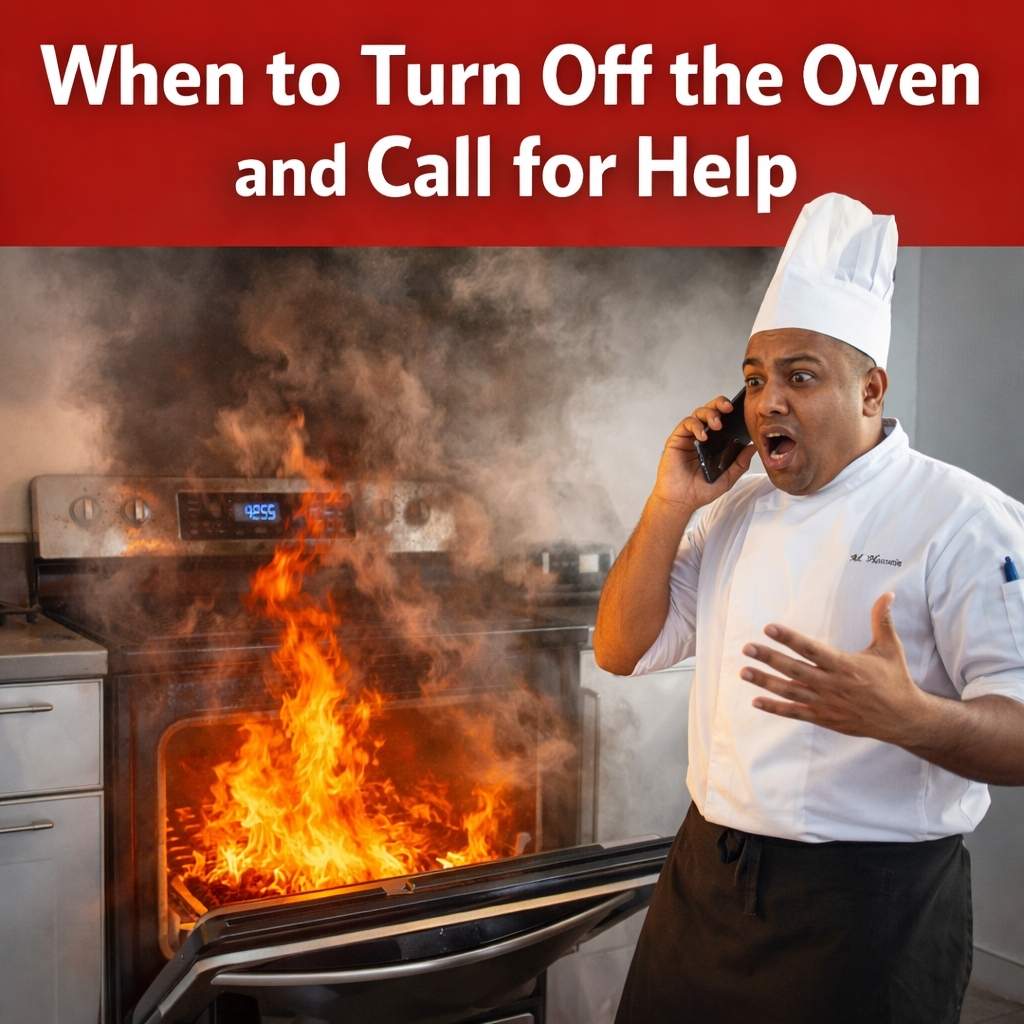
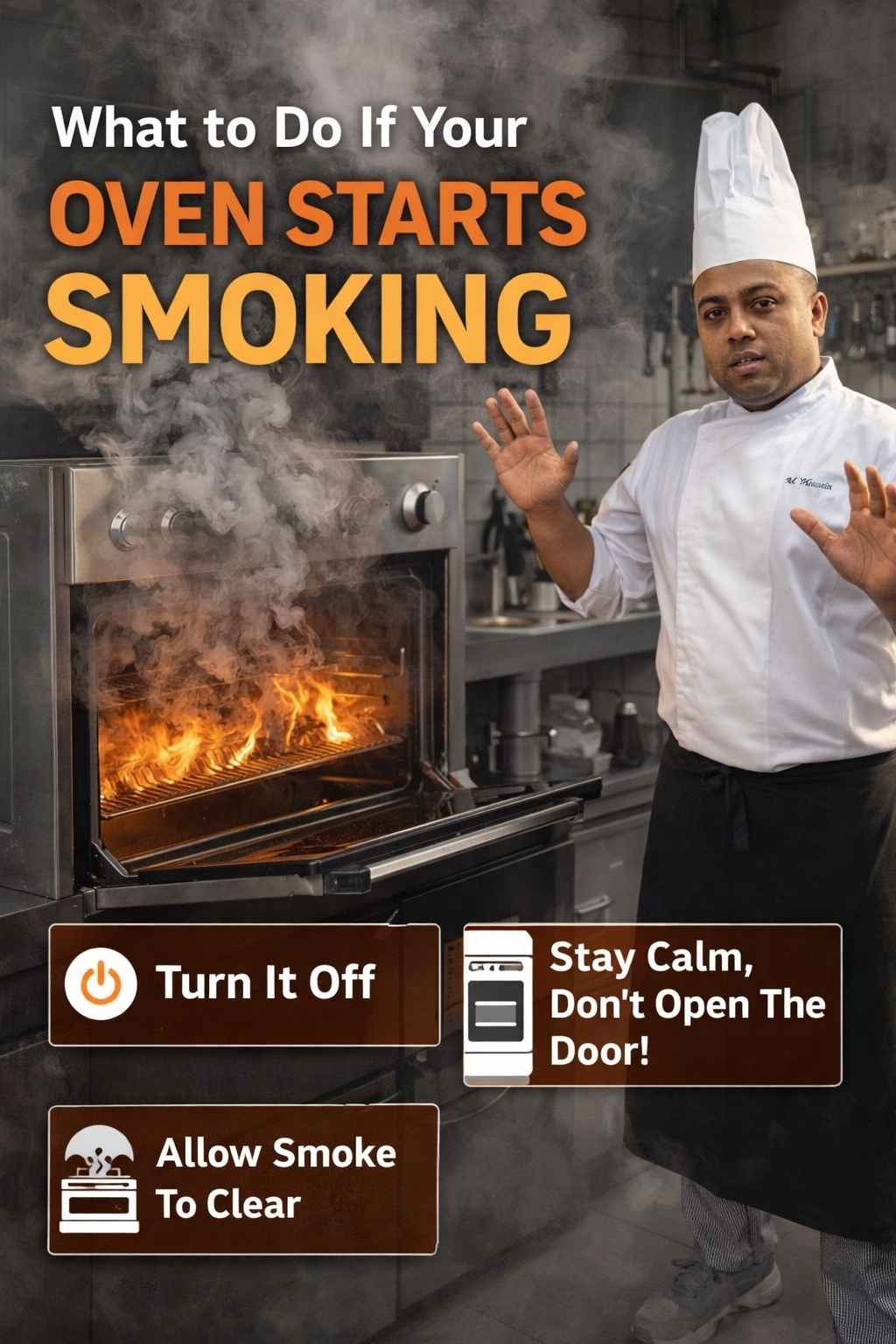
Turn Off the Oven Immediately
This should always be the first move.
- Hit the “Off” button or twist the knob to cut the power.
- If it keeps smoking, and you feel safe, unplug the oven or flip the circuit breaker.
- Don’t yank open the oven door right away. I made that mistake once, and it let in a rush of oxygen that made the smoke worse.
Don’t Throw Water on It
Seriously. Don’t.
Water and hot grease don’t mix. If there’s even a tiny flame inside the oven, tossing water can make it flare up or even cause damage to the heating element.
Keep a Class B or multipurpose kitchen fire extinguisher nearby. I keep mine under the sink now—easy reach, just in case.
Ventilate the Kitchen—Fast
- Open the nearest window, even if it’s freezing outside.
- Turn on your stove’s exhaust fan or range hood.
- If you’re in a home without good airflow (like my old Florida rental), use a portable fan to blow smoke toward a window.
It’s okay if your eyes water. Mine did. You’ll survive.
What’s Causing the Smoke? (Common Culprits I’ve Seen)
You’d be amazed how many different things can make an oven smoke. I’ve seen all of these—some in my own kitchen, some in friend’s homes I cooked in.
1. Grease and Food Bits on the Bottom
This is the #1 cause.
- Roasting a chicken? Grease drips down.
- Baking a pie? That sticky fruit filling bubbles over.
- Ever cook bacon in the oven? Those splatters stay behind.
All of that bakes into the oven floor and coils. Next time you preheat, it smolders.
2. Leftover Cleaning Products
I once used a strong oven spray in my GE electric oven. Didn’t wipe it out well. Next time I turned it on, it smoked like a chimney.
If you recently cleaned your oven—especially with chemical sprays—make sure everything’s rinsed and dried completely before reheating.
3. New Oven Burn-Off
This caught me off guard in Arizona. I had a brand-new Whirlpool. I turned it on, and smoke poured out like it was on fire.
Totally normal.
New ovens burn off oils, protective coatings, and insulation dust during the first use. Just run it empty at 400°F for 30–60 minutes with the windows open. That’s what the manual should tell you—but nobody reads those, right?
4. Faulty Wiring or Components
This is rare but serious.
- If you hear popping, buzzing, or smell burning plastic—turn everything off.
- If the heating element glows unevenly or sparks, stop using it.
I had a friend whose Frigidaire coil melted slightly from a wiring short. That’s not something you mess around with. Call a pro.
How to Handle the Mess (Once the Oven Cools Down)
After the smoke clears and your nerves settle, resist the urge to dive right in. Let the oven cool completely—especially if it’s electric. Those coils stay hot longer than you think. I learned that the hard way in a Phoenix Airbnb when I scorched a sponge trying to “just wipe it quickly.”
Start with a Manual Clean
Don’t jump straight to self-clean mode. First, clean the old-school way.
- Remove racks and soak them in hot, soapy water.
- Use a damp microfiber cloth to gently wipe down the interior.
- For stuck-on grease, make a paste with baking soda and water. Let it sit 15–20 minutes before scrubbing.
That paste saved my lasagna-loving oven in Milwaukee after a cheesy overflow disaster.
Avoid steel wool or anything too abrasive. If your oven has a blue or gray enamel interior (like many GE or Samsung models), scratching it ruins the nonstick layer.
Be Careful With the Oven Window
That glass gets gross quickly, especially when sugar burns on it.
- Use a plastic scraper to gently remove hardened gunk.
- Wipe with vinegar or lemon juice to cut grease.
Never spray liquid directly on hot glass. You risk cracking the pane, especially in colder regions. (Yes, I did that once. Never again.)
Don’t Rush Into Self-Clean Mode
Most ovens have a self-clean function—but I don’t trust it after a smoking incident.
- Wait a few days before running it.
- Remove any obvious food bits first.
- Crack windows and stay home the entire time.
Self-clean mode heats up to 800°F. It will smell. I once ran it in a Florida condo, and the AC couldn’t keep up. Felt like I was slow-roasting myself.
When to Call a Professional
Not everything is fixable with baking soda and good intentions. I’ve learned when to call in backup.
You Smell Burning Plastic or Wires
That’s not food. That’s a warning.
If your oven smells like melting plastic or has visible sparks, it might be a shorted element or damaged wiring. Don’t keep using it. Shut off the breaker and get an appliance tech out.
I once ignored that smell thinking it was “just gunk burning.” It wasn’t. I almost lost the entire control board on my electric Whirlpool.
Smoke Keeps Coming Back After Cleaning
If you’ve deep-cleaned everything and it still smokes during preheat, you may have damaged insulation inside the oven walls. This usually happens after a spill that soaked deep or from overusing self-clean mode.
It’s not visible—but it’s real. A pro can check if the insulation is holding odor or burning off residue.
If You Use a Gas Oven, Don’t Guess
Gas means risk. Don’t DIY.
If you smell gas or the flame burns yellow (instead of blue), that’s a combustion issue. Turn off the oven and call your gas provider or a certified technician.
In my Arizona rental, the gas oven would occasionally poof loudly on startup. I got used to it—until I found out it was a delayed ignition issue. Not something to ignore.
Long-Term Prevention Tips That Actually Work
Most of my smoking incidents happened because I got lazy. No shame in that. But if you want fewer smoky surprises, these tricks work wonders.
Line Your Pans the Smart Way
- Use foil or a silicone baking mat to catch drips.
- Place them inside your pan, not directly on the oven floor.
I once lined the bottom of my oven with foil to “keep it clean”—and killed the heat circulation. The oven overheated and shut off mid-roast.
Keep a Drip Tray in the Bottom Rack
For anything greasy (like bacon or roast pork), pop a clean sheet pan on the rack below. It’ll catch all the splatter.
Don’t put it on the floor of the oven. Just use the lowest rack.
Clean Regularly—Not Just After Smoke Happens
I now wipe out my oven monthly. First Saturday. It’s a routine.
- Warm oven slightly (not hot), then unplug.
- Wipe everything down while it’s soft.
- Use gloves and an old towel—it’ll still be gross.
Don’t Overfill Your Bakeware
Lasagna, banana bread, pot pies—they rise. I’ve learned to leave at least ½ inch at the top of every dish. Especially during holiday bakes.
Otherwise, you get the dreaded spill-over that becomes next month’s smoke bomb.
Oven-Specific Smoking Quirks (They’re Not All the Same)
Different ovens misbehave in different ways. Trust me, I’ve cooked on everything from ancient apartment ovens to sleek new smart ranges. Knowing your oven’s personality makes all the difference when it starts smoking.
Gas Ovens: Sneaky with Smoke
I’ve had gas ovens in two of my rentals—one in Arizona, one in New Jersey. Both had their quirks.
- Ignition smells are common. That tiny gas burst when it starts can carry a burnt odor.
- Yellow flames? That’s a red flag. It means incomplete combustion and can lead to soot (or worse—carbon monoxide leaks).
The Arizona oven once gave me a small flare-up when the igniter clicked too long. After that, I always opened a window and stood back during startup. Just in case.
Electric Ovens: Drama Queens for Drips
My electric oven in Chicago was a beast—and not in a good way.
- Any spill on the lower coil = instant smoke.
- Cheese, oil, even breadcrumbs triggered that burnt smell.
One time I dropped a tiny frozen shrimp onto the coil while baking a seafood pizza. Thought I could ignore it. Nope. The whole apartment smelled like burnt aquarium for two days.
Convection Ovens: Spread the Smoke Faster
I loved my convection oven in Florida. It baked evenly and browned beautifully. But…
- That fan? It circulates everything—including smoke.
- A tiny burnt onion on the pan became everyone’s problem in seconds.
I learned to be extra clean with convection. That airflow will amplify even the smallest mistake.
My Real-Life Oven Smoke Disasters (And What I Learned)
Some lessons you only learn the hard way. These two stories still make me laugh (and cringe a little).
That Time I Smoked Out a Dinner Party
Chicago. Winter. Snow outside. I was roasting a beef tenderloin for friends, feeling fancy.
I’d pre-seared the meat on the stovetop (lots of splatter), then transferred it to a 450°F oven to finish. Forgot that I’d used the same roasting pan last week for bacon and hadn’t scrubbed it fully.
Five minutes in, smoke started pouring out. Not a cute wisp—a full-on haze.
- I flung the window open and fanned like crazy.
- Moved the roast to the stovetop and seared it instead.
- Guests arrived just in time to hear the smoke alarm screaming.
We still ate well—but now I always check the pan bottom before big meals.
The Arizona Broiler Fire
This one was pure chaos.
Broiling chicken thighs on a Tuesday night. Skin-on. I wanted crispy tops fast, so I put them close to the element. Big mistake.
- Grease splattered up.
- I opened the oven to flip them and—woosh—a mini flare-up.
- I panicked and yanked the tray out… dripped grease all over the floor.
Ran it outside onto the patio. Arizona heat and all. I stood there holding a smoking pan in flip-flops wondering what just happened.
Since then? I never broil fatty cuts without a drip tray. And I always keep foil handy just in case.
Smart Products That Help Prevent Future Smoking
I’m not big on fancy gadgets. But a few practical tools have genuinely helped keep my oven smoke-free (or at least less dramatic).
Oven Liners (Game Changer If You Use the Right Ones)
- I use a silicone oven liner on the bottom rack—not the oven floor.
- Brands like Nordic Ware and GE make liners that won’t melt or off-gas.
It catches all the crumbs and drips, and I just pull it out and rinse it once a week. No more surprise cheese crispies smoking at 400°F.
Good Range Hood With Real Vent Power
In the U.S., especially in older homes, range hoods are often weak or just recirculate air.
If you cook often, get one that vents outside and has 300+ CFM (cubic feet per minute). Mine’s a Broan model now. It’s loud—but it clears out smoke fast when needed.
Digital Oven Thermometer
Built-in thermostats lie. Mine said 350°F once—actual temp was 395°F.
Now I use a ThermoPro with a wired probe. It shows me the real-time temp and saved me from burning many a casserole in my Airbnb stint in Vermont.
Heavy-Duty Sheet Pans
I used to bake everything on thin pans from a supermarket. Big mistake.
Thin pans warp, overheat, and cause more splatter. I now use half-sheet Nordic Ware pans with 1-inch rims. Holds in grease. Cooks evenly. No mess.
Spray Bottles and Silicone Gloves
Not for fire, but for cleanup.
- Spray bottle with water + vinegar cuts grease after cooking.
- Silicone gloves protect your hands when pulling out hot, splattery trays—like chicken thighs under broil.
What Not to Do When Your Oven Starts Smoking
Sometimes what you don’t do matters more than what you do. I’ve learned these the hard way—so you don’t have to.
Don’t Try to Cook Through It
I used to think, “Eh, it’s just a little smoke. The food’s fine.”
Nope.
That smoke gets into everything. Your bread will taste bitter. Your cookies will absorb that charred flavor. And let me tell you—nothing ruins a pan of mac and cheese like that burnt undertone.
If it starts smoking, pause. Turn it off. Start fresh once it’s clean.
Don’t Slam the Door Open
I once yanked the oven door open mid-smoke and nearly got a face full of it.
- That rush of oxygen? It can cause a flare-up.
- Hot smoke rising quickly can irritate your eyes, throat, and even set off alarms across your house.
Now I crack the door slowly with a mitt on and stand to the side like I’m opening a suspicious package.
Don’t Spray Cleaner on a Hot Oven
This was a rookie mistake I made in my Florida kitchen.
Sprayed an all-purpose cleaner on hot enamel after broiling steak. Instantly created a weird white vapor—and a permanent spot on the glass.
Let the oven cool before cleaning. Always.
Don’t Cover the Oven Floor with Foil
I thought this was clever—lining the bottom to catch drips.
Turns out, it messes with airflow and heat distribution. My oven actually shut off once from overheating. I looked it up later, and sure enough—foil blocks the vents.
If you need to catch drips, use a pan on the lowest rack. Not the floor.
Seasonal Tips for Smoke-Free Oven Use
Cooking habits shift throughout the year, and so does how your oven behaves. I’ve noticed different smoke triggers depending on where I lived and the time of year.
Winter (Holiday Season Madness)
- Lots of roasting, broiling, and casseroles—all high-drip meals.
- Ovens work harder in cold homes, especially older ones with less insulation.
🧤 My tip: Clean your oven in early December. Don’t wait until after it smokes up during Christmas dinner prep.
And if you’re in the Midwest like I was one snowy year—open that window just a crack during big bakes to keep the air moving without freezing the dog.
Spring Cleaning Season
- This is when most people use the self-clean function.
- Just remember: it’ll smell. It might smoke. Plan to be home with windows open.
🌷 I schedule my deep clean after Easter—fewer bakes, better airflow, and it’s not brutally hot yet.
Summer (Heat + Grease = Disaster)
I once tried to roast duck in July. In Arizona. What was I thinking?
- Summer heat adds to the risk of kitchen overheating and smoke buildup.
- Greasy foods and high broil settings will smoke more aggressively.
☀️ Skip the oven on super-hot days or stick to quick bakes. Use countertop ovens or outdoor grills when possible.
Fall (Baking Season)
- Pies, breads, and stuffed dishes can bubble over fast.
- Molasses, sugars, and butters are smoke triggers when they spill.
🍁 My fall ritual? I clean the oven after Labor Day, just before I get baking fever. It saves me from smoke disasters mid-pumpkin loaf.
To Every Home Cook Who’s Had a Smoky Oven Moment…
You didn’t mess up. You’re not a bad cook. Even chefs like me have opened the oven door to find smoke rolling out like a fog machine at a rock concert.
I’ve scorched lasagnas, blackened banana bread tops, and ruined more than one romantic dinner by setting off the smoke alarm at the worst time.
But that’s the beauty of cooking at home. It’s not perfect. Sometimes your oven smokes. Sometimes you forget the foil. Sometimes you laugh through the mess with a glass of wine and call it “smoky-style chicken.”
What I Keep On Hand Now (And You Should Too)
Here’s what I now always have nearby:
- Baking soda: for flare-ups or grease fires
- Kitchen fire extinguisher: under the sink
- Oven liner or drip tray: on the bottom rack
- Microfiber cloths: for fast wipe-downs
- Fan near a window: always ready, just in case
And maybe most importantly… a sense of humor. Because if you can’t laugh at the time your oven turned into a smoke machine during brunch, what can you laugh at?
FAQs: What to Do If Your Oven Starts Smoking
What should I do first if my oven starts smoking?
Turn off the oven and keep the door closed. Vent the kitchen by opening windows. Let the oven cool before checking for grease, food spills, or burnt bits.
Why does my oven smoke when I preheat it?
Ovens often smoke due to leftover food, grease buildup, or cleaning residue. Even new ovens may smoke during their first use as factory coatings burn off.
Is it safe to keep cooking if my oven is smoking?
No. Stop cooking right away. Smoke can ruin your food and may signal a fire risk. Wait for the oven to cool, then clean it before using it again.
Can I use water to stop smoke in the oven?
Never use water in a hot oven. It can splash and cause burns or flare-ups, especially if grease is involved. Use baking soda or a kitchen fire extinguisher instead.