I never thought a forgotten crumb could start a fire—until it did.
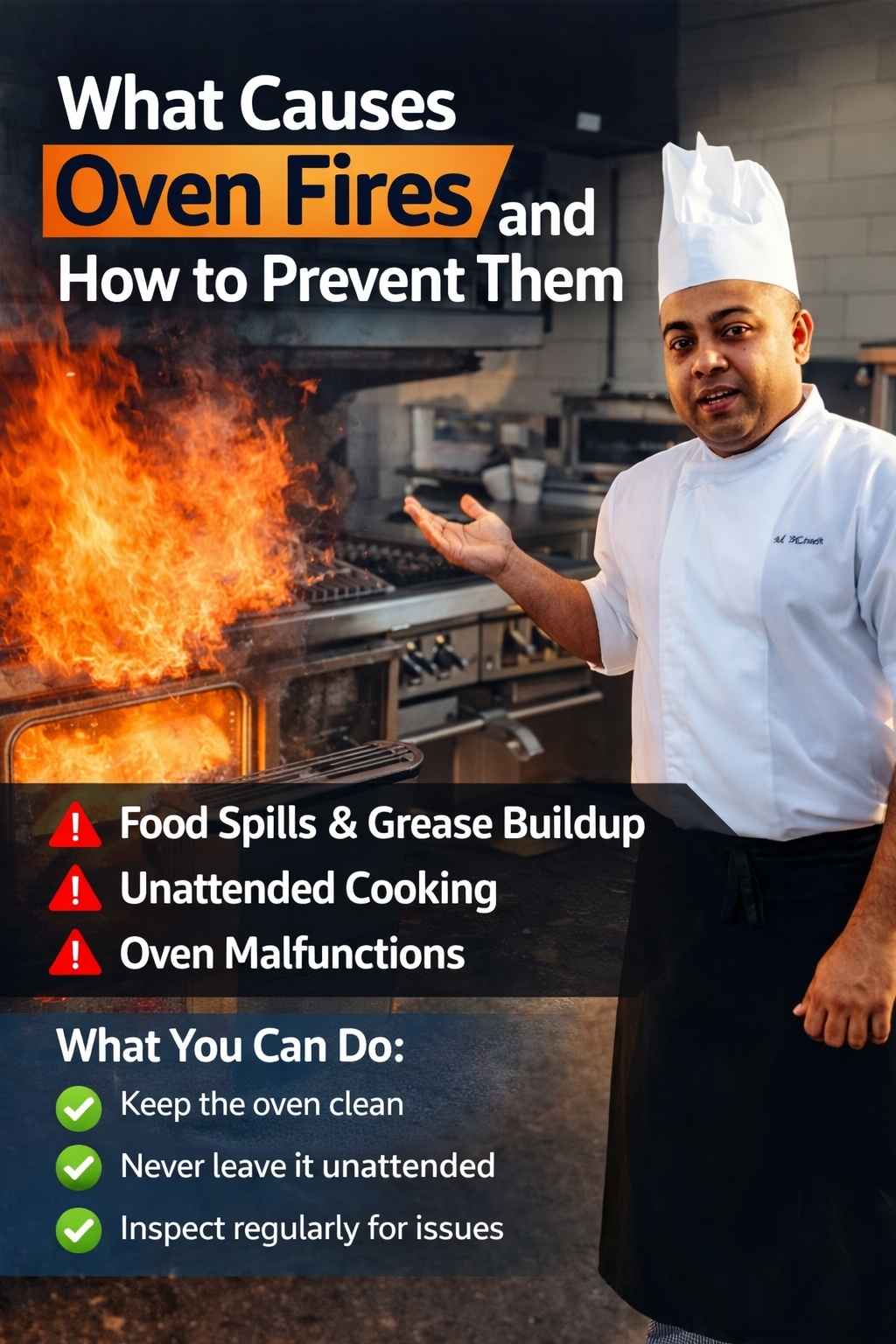
As someone who’s spent years cooking in all kinds of U.S. kitchens, I’ve seen firsthand what causes oven fires and how to prevent them.
Hey, I’m Mossaraof — a professional cook and food blogger who’s burned garlic bread more times than I’d like to admit.
This guide shares real-life lessons, safety habits, and kitchen fixes that actually work.
Let’s dive in and keep your oven safe (and your food smoke-free). And if you’re just starting out, check out The Complete Guide to Using an Oven at Home too.
Table of Contents
ToggleWhat Causes Oven Fires in Real Kitchens?
Oven fires don’t always explode. Sometimes they just smolder and spread. Other times, they hit fast. I’ve cooked in rental kitchens, small galley kitchens, and big open-concept spaces. And I’ve seen fire risks in every single one.
Grease Build-Up in the Oven Cavity
This is the number one culprit in my book. I didn’t even know how much baked-on grease lived at the bottom of my oven until it caught fire that night.
- Roasted chicken fat that drips off the side
- Oil from frozen fries or tater tots splashing on the element
- Even melted cheese from lasagna can be a problem
🔥 I once baked a deep-dish pizza in a Chicago apartment. Mozzarella bubbled over. It hit the lower coil. I smelled smoke for a week.
Food Dropped on Hot Coils
Another sneaky cause. Little things like:
- A sliver of onion that slides off the tray
- A scoop of sauce from an overloaded casserole
- Or my personal favorite: a runaway marshmallow from broiled sweet potatoes
🔥 I once baked a tray of nachos in Arizona, middle rack, nice and even. One chip fell off, caught the lower element, and lit up like a match.
Dirty or Damaged Heating Elements
Sometimes the oven itself is the problem. Over time, elements can warp, split, or lose their protective coating.
- Exposed wire = big trouble
- Uneven glowing means uneven heating—and higher fire risk
- In electric ovens, dust buildup can spark in dry climates like Arizona
🔌 I had an older Frigidaire in a Florida rental that sparked randomly when I turned it on. Turned out, the bottom coil had a hairline crack. Replaced it. Never trusted it again.
Oven Liners Used the Wrong Way
Oven liners can be helpful—but only if you use them right. I learned this after I bought a non-stick liner online and laid it right on the oven floor.
Big mistake.
- Direct contact with the heating element can cause the liner to melt or ignite
- Cheap liners without heat rating labels = high risk
- U.S. brands like GE or Whirlpool warn against placing liners on the base
🧯 The smell when that liner melted? Worse than burnt plastic. It lingered for three days, even after deep cleaning.
Fire-Prone Cooking Habits Most People Don’t Realize
Even if your oven is spotless, your habits can make it a fire hazard. I’ve made nearly every mistake on this list.
Not Cleaning After Spills
It’s so tempting to say “I’ll clean it later.” I used to do this all the time—until the “later” turned into a minor kitchen fire.
- Baked-on fruit juice from pies
- Overflowed lasagna sauce
- Roasting pan drips that harden into carbon flakes
🧼 I’ve switched to wiping the oven down as soon as it cools. Just a damp rag, baking soda paste, and a flashlight to see the corners.
Broiling with Sugary Marinades
This one nearly ruined my broiler tray. Sugar burns fast. Honey burns faster.
- Glazes like teriyaki, BBQ, or hoisin can flare under broiler heat
- If sugar hits a hot coil, it can spark or ignite
- Broiling salmon with maple glaze = risky (I’ve done it, it smoked up fast)
🔥 My teriyaki salmon nearly triggered my building’s sprinkler system in Illinois. I now roast sticky glazes at lower heat—and skip the broiler entirely.
Leaving Food Unattended (Even for a Minute)
I’ve said it. You’ve said it. “I’ll just check the laundry real quick.” That’s when oven fires strike.
- Broiler dishes catch fast
- Greasy meals can flare without warning
- And open oven doors add oxygen—fanning the flames
🧯 I once left cookies under the broiler for “just one more minute.” Walked away to check my phone. Came back to smoke and blackened edges curling like paper.
Types of Ovens and Their Fire Risks (And What I’ve Noticed in U.S. Kitchens)
I’ve cooked with just about every oven out there—gas, electric, convection, wall ovens, even a countertop toaster oven in a Florida studio. They all cook food differently. And they all have their own way of getting into trouble if you’re not careful.
Electric Ovens
Most common in U.S. homes—and the ones I’ve had in rentals from Arizona to the Midwest.
- Coils are exposed and sit on the floor or ceiling of the oven
- Grease, cheese, or crumbs drip directly onto the element
- Bottom coil fires are the most common ones I’ve seen
🔥 In one apartment, the bottom coil lit up orange, then sparked after a piece of bacon grease hit it mid-bake. That was my first time Googling “how to put out an oven fire” in real time.
💡 Tip: Always check your element before turning on the oven. If it’s crusted in old spills, clean it first.
Gas Ovens
Gas ovens are tricky. They heat fast and can dry food out—but they also hide flames underneath the floor plate. That’s where grease loves to collect.
- Broiler trays at the bottom catch most of the mess
- Any leftover drippings? Hidden under the plate, next to an open flame
- Cleaning is awkward—and easy to skip
🔥 I had a gas oven in Chicago with a hidden grease pool. One night, roasting a pork loin, it finally caught. Low flames rolled out the bottom like a bad camping stove.
💡 Tip: Remove the bottom plate once a month and wipe everything down—even if it looks clean.
Convection Ovens
These circulate air using a fan, which I love for even bakes. But the fan also stirs up crumbs and blows them near hot elements.
- I’ve had dried garlic bits light up during convection roasting
- Grease mist in the air = smoke + potential flare
- Fan cavity collects junk fast if you don’t check it
💨 One fall in New Jersey, I baked chicken thighs on convection. The fat misted everywhere. Smoke filled the kitchen by the 30-minute mark.
💡 Tip: Use a splatter shield or place a foil-lined tray underneath fatty foods.
Wall Ovens
Great for accessibility, but they’re usually packed into cabinetry—and that means less air flow.
- Fires spread faster because heat builds inside the cabinet frame
- Harder to access bottom element for cleaning
- Riskier in older kitchens with tight installs
🔥 I had a wall oven in a Florida rental that ran hot. A small bit of melted cheese hit the bottom. I didn’t notice—until the next day’s bake started with flames.
💡 Tip: Always run a visual check of the oven floor before each use. It takes 5 seconds.
Preventing Oven Fires—Habits That Actually Work
I used to think oven fires were just bad luck. But after enough smoky messes and near-disasters, I’ve figured out what really makes a difference. These habits work. They’ve saved my meals—and probably my eyebrows.
Wipe Spills Immediately (Don’t Wait Until “Later”)
It’s tempting to let that little cheese bubble or pie filling drip ride until your next deep clean. But those bits turn into fuel the next time you bake.
- Wipe down the oven floor once it’s cool
- Pay attention to door corners and back wall too
- Even breadcrumbs can cause that burnt-toast smell that lingers for days
🧽 After broiling a tray of nachos in my Arizona apartment, I left a few cheese strands behind. The next day? The oven smoked the moment I turned it on. Now I clean after every bake.
Use a Sheet Pan Under Drippy Dishes
This one’s simple and so effective. If I’m baking something juicy—like a casserole, fruit crisp, or anything with cheese—I always slide a foil-lined tray on the rack below it.
- Catches spills before they hit the element
- Keeps the oven clean and fire-free
- Great for pies, lasagna, even baked potatoes with oil rubs
🥧 I once ruined Thanksgiving apple pie because the filling leaked onto the oven coil and flared. The crust baked perfectly. The oven? Smelled like caramelized smoke.
Avoid Cooking on Dirty Trays or Pans
Sometimes the tray is the problem. I’ve grabbed an old sheet pan, not realizing the bottom had a thick layer of old oil baked in. Fifteen minutes into roasting veggies, the whole tray started to smoke.
- Check your trays before using
- Scrub the underside too—grease hides there
- Replace warped or scorched pans (they heat unevenly and flare faster)
🔥 In Florida humidity, I noticed my nonstick pans built up residue quicker. I now rotate through two pans and deep-clean weekly.
Pre-Broil Check (Always)
Before I turn on the broiler now, I do a 15-second sweep.
- I scan for crumbs or grease on the bottom
- I check the broiler pan—no leftovers hiding
- I open a window before broiling, just in case
🔥 One time I found a piece of charred onion stuck to the broiler pan. I hadn’t noticed it for two whole weeks… until it lit up under the broiler. Took me an hour to scrub the soot off the oven roof.
Never Line the Oven Floor with Foil (Yes, I Tried)
I used to think I was being smart—lining the oven floor with foil to catch drips. But it actually traps heat and messes with airflow.
- Foil can reflect heat onto the coil and cause flare-ups
- It blocks ventilation in convection ovens
- Some manufacturers void the warranty if you do this
💡 Now I place foil on a rack below the dish—not on the floor.
Use the Right Bakeware
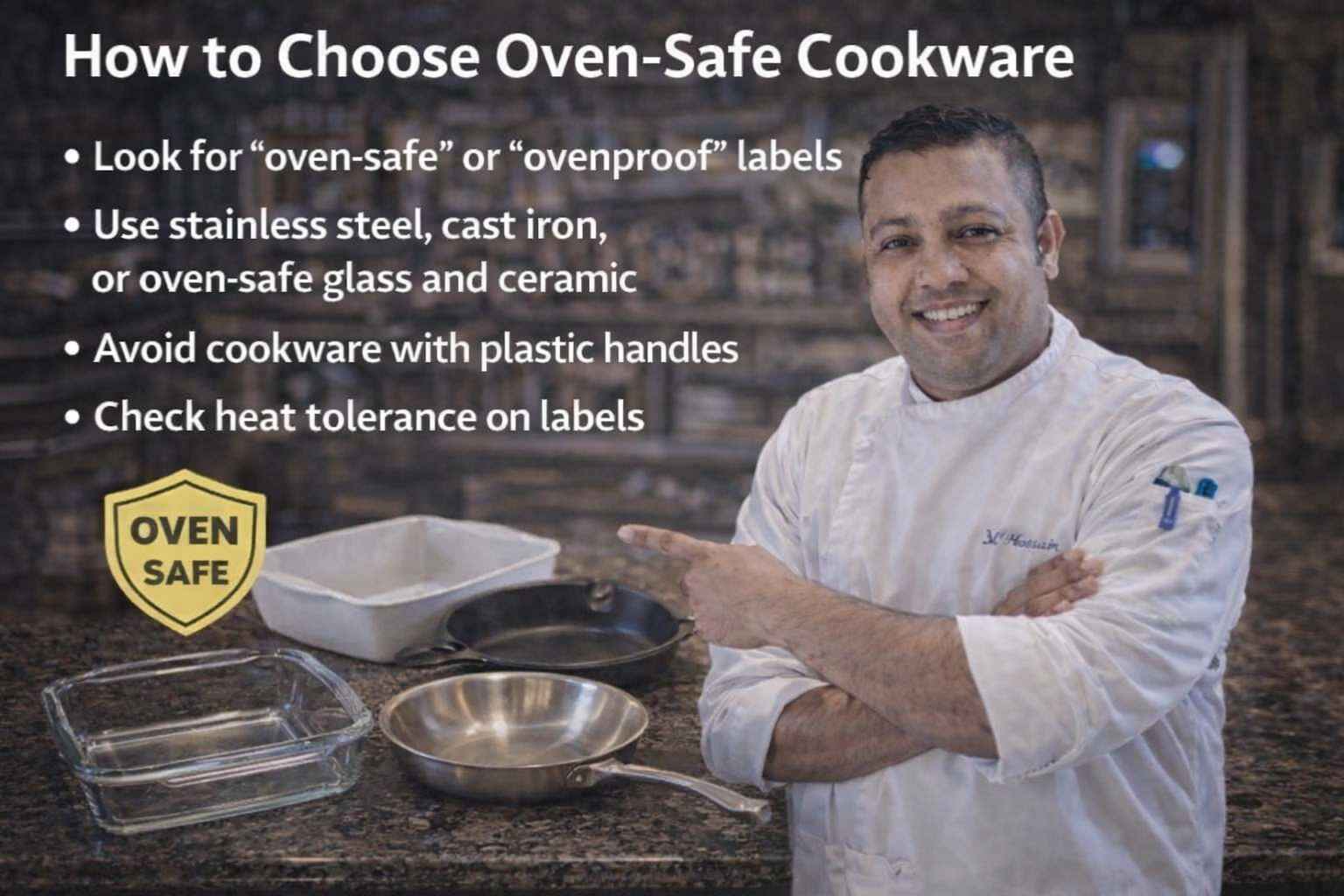
Some cookware just isn’t made for high heat. I’ve had glass pans crack, thin aluminum trays warp, and even a silicone mold bubble from oven misuse.
- Stick to oven-rated glass, stainless steel, or enameled cast iron
- Check max temps for silicone and plastic-handled pans
- Brands like Pyrex, Lodge, and USA Pan work great for U.S. ovens
🍗 That one time I roasted a chicken in a thin roasting pan from a discount store? The corner curled, leaked grease onto the oven floor, and set off the alarm and my dog.
What to Do If an Oven Fire Starts
I wish I could say I read this before it happened to me. But nope—I had to learn the hard way. One small grease puddle turned into a flame show in my Chicago kitchen. Here’s what actually works when your oven catches fire (from someone who’s been there).
Step 1: Don’t Open the Oven Door
Your first instinct might be to check inside or yank the food out. But that just feeds oxygen to the flames—and makes everything worse.
- Keep the door closed to smother the fire
- Turn the oven off immediately
- Watch through the window (most fires go out within minutes)
🔥 When my tray of bacon caught fire, I opened the oven in panic. Big mistake. The flame leapt out and scorched my cabinet handles.
Step 2: Turn Off the Oven, Let It Starve
Once you’ve shut the door and turned off the heat, don’t try to open it right away. You want the fire to run out of fuel and air.
- Leave it closed for at least 10–15 minutes
- If smoke keeps escaping, turn on the range hood or open a window
- Stay nearby, but don’t panic—most small fires die quickly
💨 In my Florida rental, I had a grease splatter light up. Leaving the door shut and stepping away saved both my oven and my nerves.
Step 3: Only Use a Fire Extinguisher If Necessary
If flames do escape or the fire spreads, that’s when you reach for the extinguisher. But only if:
- It’s a Class B or multipurpose (ABC) fire extinguisher
- You know how to use it (P.A.S.S. — Pull, Aim, Squeeze, Sweep)
- The fire is still small and controllable
⚠️ Never use water on a grease fire. I repeat: never.
💬 I didn’t have an extinguisher during my first oven fire. I do now. It sits under my kitchen sink, always ready.
Step 4: If It Doesn’t Go Out—Evacuate
If the fire doesn’t die down quickly, or if the smoke becomes overwhelming, don’t try to be a hero.
- Get everyone (including pets) out
- Call 911 from a safe location
- Let the firefighters handle it
🚒 One of my neighbors once tried to douse an oven fire with flour. That made things explode. Please, just leave if it’s beyond control.
Step 5: Air It Out, Clean It Up
Once it’s all over, open windows, turn on fans, and wait for everything to cool. Then you can:
- Carefully wipe out soot or burnt bits
- Check if the heating element was damaged
- Don’t reuse the oven until it’s clean and inspected (if needed)
🧼 I’ve cleaned up burned sugar, cheese, and chicken skin after oven flare-ups. The smell lingers—but a baking soda scrub helps.
Oven Fire Safety Tips for Different Cooking Styles
Different cooking methods bring different risks. Trust me, I’ve made mistakes with all of them—especially on rushed weeknights when I thought I could multitask chicken and emails. Here’s what I’ve learned the hard (and smoky) way.
Broiling: Fast, Hot, and Fire-Prone
Broiling is a top-down heat blast—and it’s the most common way I’ve almost started a fire. Even one minute too long can toast things way past done.
- Never walk away while broiling
- Keep food at least 3–4 inches from the broiler element
- Use a broiler-safe pan (no glass!)
- Watch for grease splatter from burgers or bacon
🔥 One night in Arizona, I broiled salmon with the skin on. It curled, crisped—and caught fire. My lesson? Line the tray with foil and never look away.
Roasting: Safe, But Grease Is Sneaky
Roasting feels low and slow, but it’s no stranger to flare-ups—especially with fatty cuts like chicken thighs or pork shoulder.
- Use a deep roasting pan to catch drips
- Avoid overcrowding, which causes spillover
- Trim extra fat if you’re roasting meats
💥 I once filled a shallow dish with oiled veggies and chicken legs. The hot oil spilled, hit the heating coil, and flash-fired. Since then, I use rimmed baking sheets—every time.
Baking: Sounds Innocent, But Sugar Burns Are Real
You’d think baking is safe. But if sugary fillings spill, or parchment paper flutters too close to the element, you’re suddenly dealing with more than burnt cookies.
- Avoid overfilling pie crusts or ramekins
- Use parchment properly (not too close to heat)
- Place trays on the middle rack to prevent top/bottom burning
🧁 My cherry pie once overflowed onto the oven floor. That caramelized sugar? Smelled great at first—until it smoked for days. Now I always slide a baking sheet underneath.
Using Foil: Be Smart About It
Foil can protect—but also cause problems if misused.
- Never line the oven floor with foil (blocks airflow, causes fires)
- Only use foil on trays or to tent dishes (like lasagna)
- Crumpled foil can arc in electric ovens
⚠️ I lined my old oven bottom with foil in Chicago to “catch crumbs.” It shorted out the bottom element. Cost me a whole oven repair.
Using Glassware: Know What’s Oven-Safe
This one’s huge. Not all glass is oven-safe—and sudden temp changes (like adding water or cold food) can cause it to shatter.
- Only use labeled oven-safe glass (like Pyrex or Anchor Hocking)
- Never broil with glass
- Avoid drastic temperature swings
❌ I once pulled a cold glass dish from the fridge and popped it into a hot oven. Heard a crack—then the whole thing burst. That cleanup? Still haunts me.
Essential Oven Fire Safety Equipment Every Home Cook Needs
I used to think oven fires were rare—until I had two close calls in one year. Now I treat fire safety gear like I treat salt and oil: always within reach. Here’s what I keep in my kitchen now—and what I wish I had sooner.
1. A Reliable Fire Extinguisher (Rated ABC)
You don’t need a giant one. Just make sure it’s:
- Labeled ABC (covers grease, electrical, and solid fires)
- Easy to reach (not under a pile of cleaning supplies)
- Checked yearly (yes, the gauge matters)
🧯 I got mine after a chicken thigh flare-up. It lives beside my pantry door—out of the way but always there.
2. Oven Mitts That Actually Protect
Thin mitts are dangerous. I swapped mine for heavy-duty, silicone-lined gloves after a hot tray slipped in my Chicago apartment kitchen.
Look for:
- Heat resistance of 450°F or more
- Non-slip grip (important for glass or slick pans)
- Long cuffs to protect your wrists
🔥 Mine came in handy when I had to pull a smoking dish from a 500°F oven—fast.
3. Baking Sheets with Raised Edges
Flat trays = spill risks. Now I only use rimmed baking sheets—especially for anything oily or juicy.
- Catches grease drips
- Prevents overflow fires
- Easier to clean (no mess on the oven floor)
🍗 After roasting sausages once, grease slid off the tray and lit up my heating coil. Rimmed trays fixed that.
4. Oven-Safe Thermometers
Your oven’s dial might lie. An internal thermometer helps you catch issues before they cause a fire.
- Helps you avoid overheating food or containers
- Especially useful in older ovens or rentals
🌡️ In a Florida rental, my “350°F” setting turned out to be nearly 400°F. The thermometer saved me from another scorched casserole.
5. Smoke Detector (Not Just for Show)
If you cook often, you need one near—but not too close to—the kitchen.
Tips:
- Test it monthly
- Keep it clean (dust buildup causes false alarms)
- Don’t remove it just because it beeped once while broiling!
🚨 I used to unplug mine every time it beeped. Big mistake. Now I clean it and crack a window.
6. Baking Soda (Yes, Really)
For small grease fires, baking soda can smother flames if you don’t have an extinguisher nearby.
- Store it in an easy-open container
- Works fast for stovetop or oven flare-ups
- Never use water on a grease fire—ever
🥄 I once tossed a handful into a smoking tray of meatballs. Flames died fast, and I avoided a ruined oven.
What to Do If You Accidentally Start an Oven Fire
I’ve been there—twice. The first time, I panicked. The second time, I was prepared. Here’s what I wish I had known the first time flames leapt inside my oven.
Step 1: Don’t Open the Oven Door
Your instinct might be to open it and blow it out. Don’t.
- Opening the door feeds the fire oxygen
- Keep the door shut and the fire contained
- Most small fires burn out if they’re starved of air
🔥 I learned this the hard way during a lasagna disaster in a humid Florida rental. Opening the door made the smoke worse.
Step 2: Turn Off the Oven
Hit the off button or turn the dial. Immediately.
- Cuts off the heat source
- Stops the fire from growing
- Gives you time to act without feeding the flames
🛑 In my old Whirlpool oven, I yanked the knob while holding my breath—worked like a charm.
Step 3: Keep an Eye Through the Window
Use the oven light. Don’t open the door.
- Watch to see if the flames die down
- If the fire goes out, leave the door closed for at least 30 minutes
- If it keeps growing, move to the next step
👀 In Arizona, I watched a pan of butter ignite while baking cookies. It flared up, then fizzled out safely—thanks to the door staying shut.
Step 4: If It Spreads, Use Your Extinguisher
If you see smoke pouring out or the flames spreading outside the oven:
- Use your ABC fire extinguisher
- Aim at the base of the fire
- If in doubt, get out and call 911
🚒 I’ve never had to use my extinguisher, but I rehearse it like a fire drill every few months. Just in case.
Step 5: Ventilate the Kitchen—Safely
Once the fire’s out and oven is cool:
- Open windows
- Turn on fans
- Use vinegar or baking soda to absorb the smoke smell
💨 After that meatball incident, I aired out the kitchen with fans and wiped everything with lemon juice and baking soda. Took a day—but no smoke alarm aftershocks.
How to Clean Up Safely After an Oven Fire
The mess after a fire is just as stressful as the fire itself—ask me how I know. My Chicago apartment still smelled like burnt cheese for two days. But I found a cleanup routine that actually worked.
Step 1: Let Everything Cool
This part is boring but necessary.
- Wait until the oven is completely cool
- Don’t touch soot or residue while it’s hot
- Keep the door open for airflow if the fire is out
🧊 I once got impatient and grabbed a rack too soon—don’t be me.
Step 2: Remove Debris Carefully
Start with a dry cleanup:
- Use gloves and a metal spatula to scrape burnt food
- Scoop ashes and charred bits into a metal tray or bin
- Don’t use plastic tools—they can melt or warp
🧤 In a Florida summer, I was sweating through my apron, but gloves saved my hands from soot stains.
Step 3: Neutralize Odors with Natural Cleaners
Skip the harsh chemicals for now.
- Place bowls of baking soda or white vinegar in the oven overnight
- Wipe with a soft cloth and warm water in the morning
- Repeat for a few days if needed
🌿 I used lemon slices and baking soda in my Arizona kitchen—smelled like a citrus grove by day three.
Step 4: Clean the Oven Walls Gently
Once ash is gone, go in with a deeper clean:
- Mix 1 cup baking soda + a splash of water into a paste
- Spread it across the interior (not on the heating elements!)
- Let it sit for 12 hours, then wipe it clean
- Use vinegar to remove residue if needed
🧽 I did this after a sausage grease fire, and it made the steel interior look nearly new.
Step 5: Clean the Racks and Glass
Don’t forget these parts—they hold odors too.
- Soak racks in hot water + dish soap + baking soda
- Scrub with a stiff brush
- Clean the oven glass with a paste of baking soda + vinegar
🪞 Pro tip: Do it outside if possible. I cleaned my racks on the porch to avoid making a mess in the sink.
Step 6: Replace Your Fire Extinguisher if Used
If you discharged an extinguisher:
- Don’t reuse it—it needs a recharge or replacement
- Clean up the powder using a vacuum with a HEPA filter
- Wipe down surfaces with damp cloths
🔥 After testing mine once, I had yellow dust everywhere. Took a full hour to clean.
Best Practices to Prevent Future Oven Fires
After my third oven scare (yes, third), I finally got serious about fire prevention. These habits sound basic, but they’ve saved me from burnt pies, smoking skillets, and full-on fire alarms.
1. Always Check the Oven Before Preheating
It sounds silly until you forget.
- Look inside for crumbs, pans, or stray liners
- Double-check for leftover food from last night
- Make sure no foil is touching heating elements
👀 I once preheated the oven with a greasy pizza box inside. It smoked faster than I could say “takeout again.”
2. Clean Your Oven Regularly (Even If You Hate It)
A dirty oven is a fire risk.
- Wipe spills when they’re fresh
- Do a deep clean every few months
- Use the self-clean cycle carefully (and never leave the house while it runs)
🧼 In my humid Florida rental, I had to clean more often. Moldy drips + high heat = awful smells and risk.
3. Use Bakeware That’s Meant for Ovens
Don’t gamble with glass or plastic.
- Only use oven-safe glass labeled “tempered”
- Avoid anything with plastic handles
- Metal pans are safer for high-heat broiling
💥 I had a cheap glass dish explode during a chicken bake. It was not oven-safe, despite what the packaging claimed.
4. Be Smart with Foil and Liners
They help—if used correctly.
- Never line the oven bottom (can block airflow or melt)
- Use foil on baking sheets, not directly on racks
- Avoid silicone liners unless your oven manual allows them
🔥 I melted a silicone mat once. The smell? Like burnt rubber in a hot car.
5. Don’t Leave the Kitchen While Broiling
Even for one minute.
- Broiling uses intense top heat—things burn fast
- Keep the light on and peek through the window
- Set a timer for 1–2 minute intervals
👃 One time, I left broiled cheese toast in for “just a sec.” Came back to a smoky mess and a ruined snack.
6. Use an Oven Thermometer
Your oven might lie.
- Internal temps can be off by 25–50°F
- A $10 thermometer helps avoid undercooked or burnt food
- Especially helpful in older electric or gas ovens
🌡 My old Frigidaire ran 40°F hot in the back—my cookies always burned until I figured it out.
7. Keep a Fire Extinguisher Close (But Not Too Close)
You want it handy—but not right next to the oven.
- Mount one nearby but away from high heat
- Check the pressure gauge monthly
- Make sure it’s rated Class B or K for kitchen fires
🚒 Mine’s under the sink, next to the trash. Easy to grab, never in the way.
Final Thoughts From My Kitchen (Real-Life Lessons Learned)
I didn’t plan on becoming an expert in “oven disasters,” but after years of trial and error (and a few fire alarms), I’ve learned the hard way what causes oven fires and how to prevent them.
From Chicago winters to Florida humidity and even an Airbnb in Arizona with the weirdest oven layout I’ve ever seen—each place taught me something new. And honestly, it wasn’t the big stuff that got me in trouble. It was the little things:
- Forgetting to clean out the crumbs before preheating
- Using a glass dish that looked oven-safe (but wasn’t)
- Lining the bottom with foil because someone on the internet said it was fine
- Walking away while broiling “for just a minute” (spoiler: that’s all it takes)
These weren’t dramatic kitchen explosions. Most were smoky, annoying, and embarrassing. But any of them could’ve become worse.
That’s why I care so much about writing this guide. Not as a chef standing on a pedestal—but as someone who’s burned their fair share of garlic bread and learned to laugh (and learn) from it.
So if you’ve ever opened your oven and thought, “Wait, is that smoke supposed to be there?”—you’re not alone.
I hope these stories and tips help you cook with more confidence, fewer fires, and maybe a little more joy.
Stay safe, and keep baking.
— Mossaraof
FAQs
What causes oven fires and how to prevent them at home?
Oven fires start from grease, food spills, or dirty heating coils. Clean spills fast, use drip trays, and never leave broiling food alone.
Can grease inside the oven really start a fire?
Yes, built‑up grease can catch fire when the oven heats up. Wipe spills often and deep clean every few months to stay safe.
Is it safe to use foil to stop oven fires?
Foil helps only on baking sheets. Never line the oven floor, since trapped heat can raise fire risk and damage the oven.
What should I do if flames start inside my oven?
Keep the door shut and turn off the oven to cut air and heat. If flames spread, use a fire extinguisher or call for help.
Which cooking methods raise oven fire risk the most?
Broiling and roasting fatty foods raise fire risk. Watch food closely, trim excess fat, and use pans that catch drips.