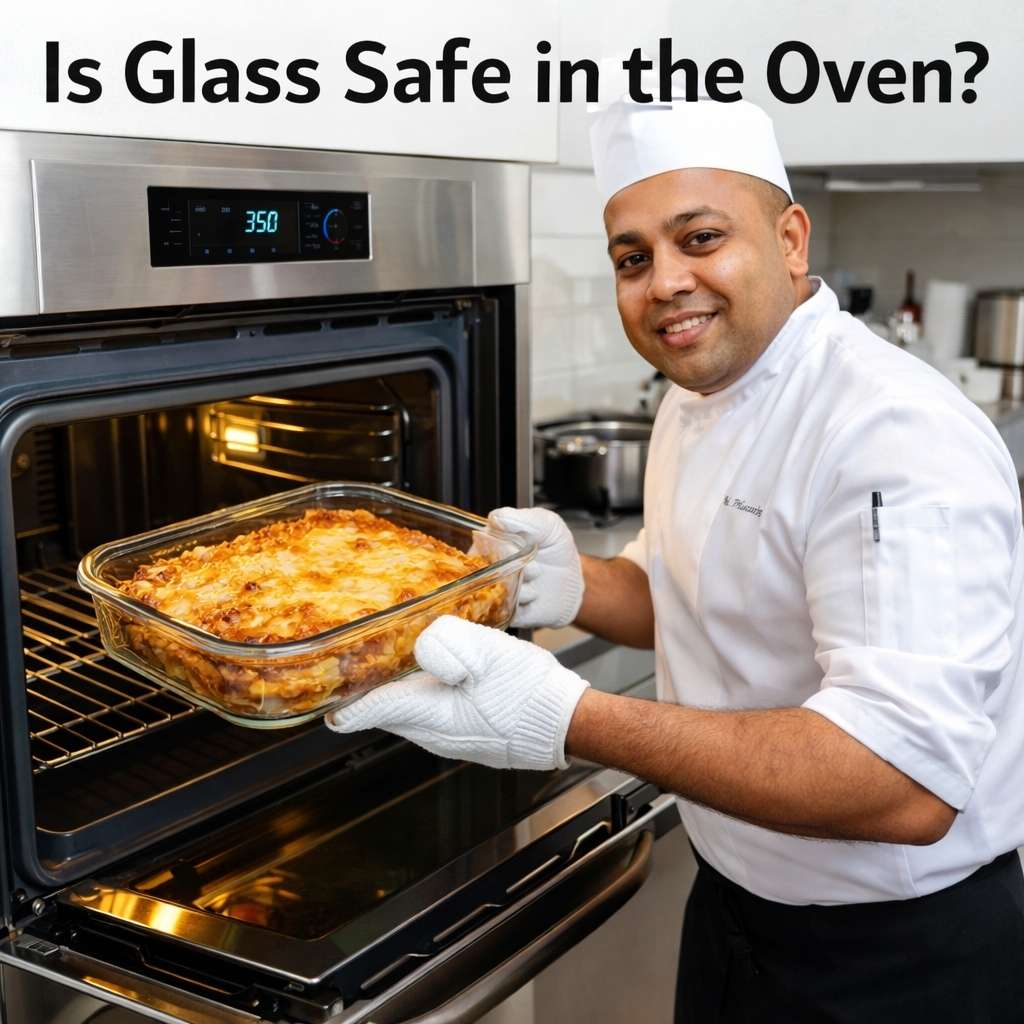
I still remember the sound my glass dish made when it cracked in the oven—like a soft pop, then silence, then dread. Hey, I’m Mossaraof, a professional cook and food blogger who’s broken more than a few baking dishes in real U.S. kitchens. So let’s answer this once and for all: is glass safe in the oven, or are we setting ourselves up for a mid-dinner disaster? I’ll share what’s worked (and what failed) in my hands-on kitchen tests, plus real tips you can trust. And if you’re just getting started, don’t miss The Complete Guide to Using an Oven at Home.
Table of Contents
ToggleIs Glass Safe in the Oven? The Truth Behind the Label
Not all glass is the same. And not all glass is oven-safe—no matter how thick or pretty it looks.
This section digs into the glass types, what the labels actually mean, and how I learned to tell the difference after too many close calls.
Tempered Glass vs. Non-Tempered
Tempered glass is the one you want for ovens. It’s treated with heat or chemicals to withstand high temperatures and resist breakage.
- Tempered glass = stronger, safer, and what brands like Pyrex and Anchor Hocking use
- Non-tempered glass = often decorative, thinner, or used for storage—not baking
I once used a pretty glass loaf pan from a flea market. No brand. No label. Looked fine—until it cracked clean in half while I baked banana bread at 350°F. Lesson learned: no label, no trust.
Maximum Temperature Limits (and What I Pushed)
Most oven-safe glass tops out at around 425°F to 450°F. But the limits vary. And pushing them? That’s where the danger starts.
- Pyrex lists 450°F as a safe max
- Anchor Hocking warns not to use glass under broilers
- Sudden changes in temperature—more on that next—can shatter even “safe” glass
🔥 I once broiled garlic bread on the top rack in a glass pan. I was in a rush. The cheese crisped… then I heard cracking. The pan didn’t fully break—but it scared me enough to never try that again.
Sudden Temperature Changes = Bad News
Glass hates surprises.
Going from cold to hot—or hot to cold—causes thermal shock. That’s when the glass expands or contracts too fast and shatters.
Here’s what can trigger thermal shock:
- Putting fridge-cold glass into a hot oven
- Placing a hot glass dish on a cold granite countertop
- Running water over a hot dish (I did this once… never again)
🧊 I once made peach cobbler in Arizona. Took the hot dish out and placed it right on the marble island. Heard a crack, then watched it split in slow motion like a spiderweb. The fruit stayed in place, but the whole thing was ruined.
Now I always rest hot dishes on wood or folded towels—nothing cold or hard.
What Oven-Safe Glass Really Means (And What It Doesn’t)
I used to think “oven-safe” meant invincible. Like, if the label said it, I could throw it into the oven and not worry. Turns out, that little phrase has a lot of gray area—especially if you don’t read the small print.
Look for These Labels and Symbols
If you flip your glassware over, you’ll usually find some marks. Sometimes etched. Sometimes printed.
Here’s what to check for:
- The words “oven-safe” or “preheated oven only”
- A temperature rating (e.g. “Up to 450°F”)
- Brand name (so you can check the website for details)
I’ve seen symbols like little oven icons or vague heat waves, but they’re not always reliable. I once trusted a “heat symbol” on a bowl I bought at a U.S. discount store. It warped in a 325°F oven—and yes, it was a mess.
📝 Now I always look up the product online. Most brands like Pyrex, CorningWare, or Anchor Hocking list exact use instructions.
What the Fine Print Often Hides
Even if it says “oven-safe,” you’ve got to look deeper. A lot of glassware includes restrictions that most people never read.
Here’s what I’ve seen (usually on packaging inserts or in tiny font):
- “Not for use under broiler”
- “Do not place on wet or cold surface”
- “Avoid direct contact with oven element”
- “Use only in preheated ovens”
My aunt once made lasagna in a newer Pyrex dish. She slid it into the oven during preheat while the coil was glowing red. Boom—crack. Glass all over the lasagna. She didn’t know that preheat stage is when ovens spike in heat, sometimes above 500°F near the element.
📦 So yeah—don’t skip the fine print. It’s not just legal fluff. It can save your dinner.
What Types of Glassware Are Safe for Baking?
I’ve tested a lot of glass—some store-bought, some gifted, some inherited from older relatives. Not all of them made it.
Here’s what’s actually worked in my kitchens.
Borosilicate vs. Soda-Lime Glass
This is the big one. Most U.S. home bakers don’t know there are two main types of glass used for bakeware:
- Borosilicate glass: More resistant to thermal shock. Used in older Pyrex and some international brands like Simax or Duralex.
- Soda-lime glass: Cheaper, more common in the U.S. Newer Pyrex and Anchor Hocking use this.
🥧 I still have one vintage Pyrex from my grandma’s cabinet (pre-1998). That thing’s a tank. I’ve used it for everything from lasagna to apple crisp, and it’s never cracked.
But newer Pyrex? Still decent—but I don’t push it past 425°F and I never go from fridge to oven.
Bakeware Types That Do Well
From experience, these are the safest glass items for regular oven use:
- Casserole dishes (3qt or 9×13)
- Pie plates
- Loaf pans for banana bread or meatloaf
- Glass measuring cups (for warming liquids at low temps)
I avoid using glass roasting pans for things like whole chickens or fatty pork. I’ve had grease bubble over and cause uneven heating. One time, the bottom browned while the top stayed pale. Metal does better for that kind of thing.
Glass Lids and Handles—Watch These Closely
Some lids look like they’re all glass—but check the edges.
- Many lids have plastic or silicone rims, which aren’t oven-safe
- Others include metal clips or vent knobs that melt or warp
- Some handles are glued, not fused, and can crack from heat
🍲 I had a CorningWare dish with a glass lid that looked fine. Baked shepherd’s pie at 400°F. Pulled it out, and the lid slipped—handle had loosened just enough to cause a drop. That pie was sad, and so was I.
🧤 Now I always lift glass lids with two hands and avoid using them at high temps.
Common Mistakes U.S. Cooks Make With Glass in the Oven
Some of these mistakes? I’ve made them myself. Others I’ve seen happen in real kitchens—from tiny New York apartments to wide-open Texas ranch homes. They all have one thing in common: glass and heat don’t forgive carelessness.
Let’s talk about the habits that can turn a simple bake into a cleanup nightmare.
Putting Cold Glass in a Hot Oven
This is one of the most common slip-ups. You pull leftovers from the fridge, pop the glass dish into the oven, and think, “It’s just reheating—it’ll be fine.”
But cold glass + sudden oven heat = big risk of shattering.
- Fridge-cold dishes can’t expand fast enough
- Especially risky if they’re placed on the bottom rack or near hot coils
- I’ve had dishes crack clean through before the oven even hit 300°F
🥶 I once put a glass dish of mac and cheese from the fridge into a 375°F oven in a Florida rental. Five minutes later, a soft pop—and my dinner started leaking through the crack like a cheesy waterfall.
🔁 These days, I let dishes sit on the counter for 30 minutes before baking. If I’m in a rush, I reheat the food in a pan instead.
Using Glass Under the Broiler
This one almost cost me a lasagna—and part of my eyebrows.
Broilers work by blasting intense direct heat, usually from the top. Glass isn’t designed for this.
- Even oven-safe glass can crack or shatter under direct flame
- The surface heats too fast, especially if the dish is near the coil
- “Broiler-safe” is usually reserved for metal and cast iron
🔥 I once put my Pyrex lasagna pan under the broiler for just two minutes to brown the cheese. The corners turned golden… and then I heard a loud pop and sizzling. One side of the dish had cracked and let steam hiss out.
⚠️ Broiling in glass is a hard no for me now.
Placing Hot Glass on a Cold Counter or Sink
This one feels harmless, but it’s a hidden danger.
When you pull a hot glass dish from the oven and set it directly onto:
- Cold granite
- Stainless steel
- A wet towel
- A sink edge
…the temperature shock can cause the bottom to crack—or worse, explode.
💥 I’ve had a casserole dish break in two on a cold Chicago countertop. It didn’t explode. It just snapped. But the whole thing was ruined, and I had to throw it all away.
🧺 Now I always use:
- Wooden cutting boards
- Cork trivets
- Thick folded kitchen towels
to give the glass a gentle place to land.
Glassware Tips I Swear By (After Years of Trial and Error)
Every cook develops their own little rules. Mine were written in melted cheese, shattered glass, and a whole lot of cleanup wipes. Here are the ones I live by now.
Always Preheat the Oven First
This feels minor, but it matters. Some people slide dishes in before the oven beeps “ready.” I’ve done it too.
But during preheat, the oven isn’t warming evenly. The coils spike in heat, and that’s when glass is at its most vulnerable.
- Hot spots hit the dish before the rest of the oven is even warm
- Especially risky for older or thinner glassware
- I’ve had pie plates warp slightly from uneven heating
⏲️ Now I wait for the preheat chime—even if I’m running behind.
Avoid Sudden Changes in Air Flow
This one sounds strange, but stay with me.
I once opened the oven door too fast to check on a baked ziti. The blast of cold air from my ceiling fan (on high) rushed in—and a small corner of the glass dish cracked.
- Glass responds to air as well as surface temp
- Going from hot air to cool breeze = instant stress
- Especially in drafty kitchens or during Midwest winters
💡 Now I turn off fans while baking and crack the oven door gently. No dramatic swings.
Check the Label Every Time
Even if it’s a “trusted” brand.
- Pyrex, CorningWare, Anchor Hocking—they all make different product lines
- Some are oven-safe. Some are not.
- Some lids are fine to 350°F… others melt at 250°F
📦 I once grabbed a new “Pyrex-style” dish from a big box store thinking it was safe. Turns out it was a cheaper soda-lime version with no heat rating. It didn’t even last 15 minutes at 400°F.
So now I check:
- The bottom stamp
- The packaging insert
- And if I’m not sure? I use metal or ceramic instead.
When to Avoid Using Glass in the Oven Altogether
I still use glass all the time. But there are certain situations where I just don’t risk it anymore. Some dishes are better off in metal, ceramic, or cast iron—and that’s not just preference. It’s survival.
Roasting Meats or High-Fat Foods
Roasting a chicken? Pork shoulder? Thick cuts of beef?
That’s when I grab my stainless steel or enameled roaster—not glass.
Here’s why:
- Fat splatters and bubbles unevenly
- Glass heats slower and cools unevenly
- Can cause food to burn on one side and undercook on the other
🐔 I once roasted bone-in chicken thighs in a 9×13 glass dish. Florida summer, no AC, trying to keep it simple. The fat rendered, then pooled, then popped. The edges caramelized while the middle stayed pale. The result? Crispy skin with chewy insides.
Switching to a metal tray fixed that for good.
Broiling or High-Heat Baking (425°F+)
Even “oven-safe” glass isn’t meant for the broiler—or intense, top-down heat. That kind of direct blast stresses the surface faster than it can handle.
And baking above 425°F? That’s the upper limit for most tempered glass brands.
🍕 I used to bake homemade pizza in a glass pie plate. At 475°F.
It didn’t crack, but the crust always came out soggy. Plus, the dish started showing tiny stress lines.
Now I use:
- Cast iron skillets for deep-dish
- Steel pizza pans for thin crust
- And sometimes a pizza stone when I’m feeling fancy
Better heat, better texture, zero risk.
Frozen Meals or Glass Left in the Freezer
This one’s sneaky—and I’ve done it more than once.
You freeze a lasagna in a glass dish. Then forget to thaw it. Then think: “Oh, I’ll just toss it in the oven. It’ll heat gradually.”
🚫 Nope.
Here’s what happens:
- The oven preheats too fast
- The cold glass hits hot air
- It cracks—sometimes clean, sometimes messy
❄️ I shattered a breakfast strata this way during a winter trip in Michigan. Frozen overnight, baked at 375°F the next morning, and the whole bottom gave out. Breakfast on the oven floor.
Now I thaw all glass containers in the fridge overnight—and never go straight from freezer to heat.
U.S. Kitchen Brands That Clearly Mark Oven-Safe Glassware
Not all brands are perfect—but some have made my life easier. Over time, I’ve learned which ones to trust.
Pyrex (Made in USA)
Old-school and mostly reliable—if you follow the rules.
- Glass bakeware is oven-safe to 450°F
- Pre-1998 Pyrex used borosilicate (stronger against thermal shock)
- Newer versions use soda-lime, still durable but more sensitive
🧀 I use my vintage Pyrex for baked mac and cheese, green bean casserole, and apple crisp. It’s never failed me—but I baby it now.
Anchor Hocking
American-made, budget-friendly, and easy to find in U.S. grocery or department stores.
- Uses soda-lime glass, like modern Pyrex
- Clearly labeled for oven use
- Doesn’t do well with high broiler temps or sudden changes
🍞 I bake banana bread in their loaf pans every Sunday. Just keep temps under 425°F, and it holds up well.
CorningWare
Stylish, classic, and great for oven-to-table use.
- Ceramic bases are oven-safe
- But the glass lids can be tricky
- Some are only safe to 350°F and not for stovetop or broiler use
🍲 I have a white CorningWare dish I use for shepherd’s pie and baked oatmeal. It works beautifully—just don’t forget to take off the lid before baking.
What to Do If Your Glass Breaks in the Oven
You hear the sound. That crack—or worse, a pop. The smell hits. Maybe you see steam or sauce spilling where it shouldn’t.
If your glass dish shatters mid-bake, don’t panic. I’ve been there, and yes, it’s awful. But it’s fixable.
Step 1 — Turn Off the Oven and Let It Cool
Your instinct might be to open the door and peek—but hold off.
- Turn off the oven
- Leave the door closed for 10–15 minutes
- Let everything cool down naturally
🔥 If you open the oven right away, you risk spreading glass shards—or worse, getting burned. I made that mistake once. Never again.
Step 2 — Carefully Remove Larger Pieces
Once it’s safe to open:
- Put on oven mitts and thick gloves
- Use tongs to remove any large glass chunks
- Transfer broken pieces to a paper-lined bin or container (never bare-handed)
💡 I keep an old metal slotted spoon just for cleanup. It’s been my go-to since the day I tried scooping glass with a plastic spatula. (Spoiler: not heat-safe.)
Step 3 — Vacuum and Wipe Down Everything
This part takes patience. But it matters.
- Use a handheld vacuum or hose to catch tiny shards
- Wipe the oven interior with a damp cloth—gently
- Be sure to check the oven floor and corners
- Run your hand above the racks—not across—to avoid cuts
🧼 I use a flashlight to scan under the heating element. That’s where stray glass loves to hide.
If sauce or food spilled over, I let baking soda paste (just water + soda) sit for 15 minutes. It lifts the mess without damaging the surface.
Step 4 — Don’t Use the Self-Clean Cycle Right Away
Seriously. Don’t hit the self-clean button while there’s any chance glass is still inside.
- High heat during self-cleaning can bake glass into the surface
- Trapped bits can spark or damage the element
- Give it a deep manual clean first
I once thought self-cleaning would “burn off the problem.” Instead, it left black marks on my heating coil and made the kitchen smell like burnt glue.
My Final Rule—Treat Glass With Respect or Stick to Metal
I still use glass—weekly, sometimes daily. But I’ve learned to respect its limits.
- No broilers
- No sudden changes
- No mystery brands with vague markings
When I stick to quality dishes, read the label, and take my time, glass is a reliable kitchen partner. But if I’m unsure? I go with metal, cast iron, or ceramic. No shame in playing it safe.
👨🍳 I’d rather use an old scratched-up roasting pan than scrape glass out of lasagna again.
FAQs
Is glass safe in the oven for baking casseroles and desserts?
Yes, oven‑safe glass works well for casseroles and desserts at normal bake temps. Just avoid sudden heat changes and always follow the brand’s heat limit.
Can glass break in the oven even if it says oven safe?
Yes, glass can still crack if it faces thermal shock, like going from fridge to hot oven or touching cold counters right after baking.
Is it safe to put cold glass straight into a hot oven?
No, cold glass can crack fast in a hot oven. Let dishes sit out first so the temp rises slow and the glass stays safe.
Can I use Pyrex glass under the broiler?
No, Pyrex glass is not safe under the broiler. The direct heat can crack or shatter the dish, even if it is oven safe.
What is the safest temperature to use glass in the oven?
Most oven‑safe glass works best below 425°F. Check the label and avoid high heat or fast temp changes to reduce break risk.