Hey, I’m Mossaraof — a professional cook and food blogger.
I still smile when I hear that first sizzle in hot iron. If you want to learn How to Roast Chicken in a Cast Iron Skillet, you are in the right place. The smell fills the kitchen fast. It feels like home on a cold night.
I have tested this method in small city kitchens and busy family homes. Cast iron holds heat well. That steady heat gives you crispy skin and juicy meat every time. It is simple, but it works like magic.
In this guide, I will show you how to season, sear, and roast at the right oven temp for bold flavor. You will learn easy steps, safe cook times, and smart tips from my own trials. For deeper oven basics, check out The Complete Guide to Using an Oven. Let’s roast chicken the right way together.
Why a Cast Iron Skillet for Roasting Chicken?
The Cast Iron Advantage
You might wonder, “Why not just use a regular baking dish or pan?” Trust me, I’ve tried it all. But there’s something about a heavy cast iron skillet that makes all the difference when roasting chicken. Here’s why I swear by it:
- Heat Retention: Cast iron holds heat better than most pans. It ensures that the chicken gets that perfectly crispy skin without drying out. I always preheat mine in the oven to make sure the skillet is scorching hot before I even add the chicken.
- Even Cooking: Thanks to its thick walls, cast iron distributes heat evenly. No more worrying about hot spots or uneven cooking, which can sometimes happen with thinner pans. In my experience, whether you’re cooking in the dry Arizona heat or the chilly Midwestern winters, cast iron always delivers consistent results.
- Versatility: It’s not just for roasting. I’ve used my skillet for searing steaks, making cornbread, and even frying potatoes. It’s a one-pan wonder in the kitchen, especially if you’re tight on time.
So, when I set out to roast a chicken, my cast iron skillet is the first tool I reach for. I can confidently say that this is the way to go for both flavor and texture. And, for my fellow U.S. home cooks, it’s great for those big family meals, too. Whether you’re in bustling Chicago or the peaceful outskirts of Florida, a skillet brings a taste of home, no matter the kitchen setup.
Preparing Chicken for Roasting
Setting the Stage
Before diving into the roasting process, let me share the prep work. You don’t need fancy ingredients—just some basics, like salt, pepper, and a little bit of olive oil. But the real secret? Patience.
Here’s my approach to preparing chicken for roasting in a cast iron skillet:
- Brining or Seasoning: If you have time, brining your chicken overnight can elevate the flavor. But I’ve found that even a quick rub-down with olive oil, garlic powder, and thyme works wonders.
- Season Under the Skin: Don’t forget to slip some seasoning under the skin. That’s where the magic happens. It’s like giving your chicken a little spa treatment before it heads into the oven.
Prep Insights from My Kitchen
Living in a humid climate like Florida, I’ve noticed that brining works especially well for locking in moisture, especially when I’m cooking during those hot, sticky summer months. The salt helps draw moisture back into the chicken, which makes for a juicier bite. But, in dryer climates like Arizona, I’ve learned that adding a bit of extra oil can help keep the chicken from drying out.
- Searing the Skin: Before I place the chicken in the oven, I always sear the skin on the stovetop. It gets that golden, crispy finish that I can’t get from just oven-roasting. A little oil in the pan, and you’re ready to go.
How to Roast Chicken in a Cast Iron Skillet
Step-by-Step Guide
Now that the prep is done, let’s get cooking.
Roasting a chicken in cast iron is simple, but there are a few tricks that I’ve picked up over time.
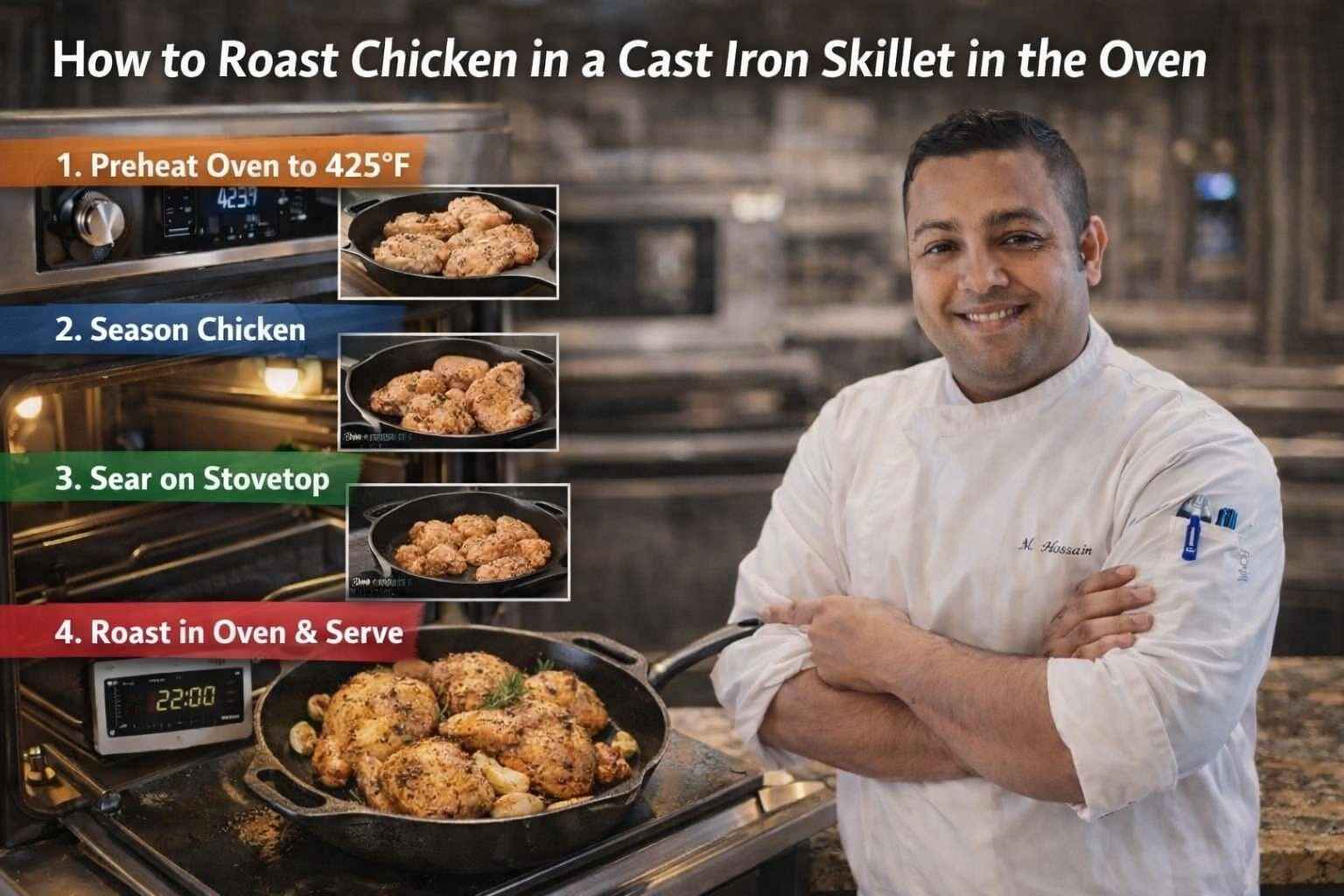
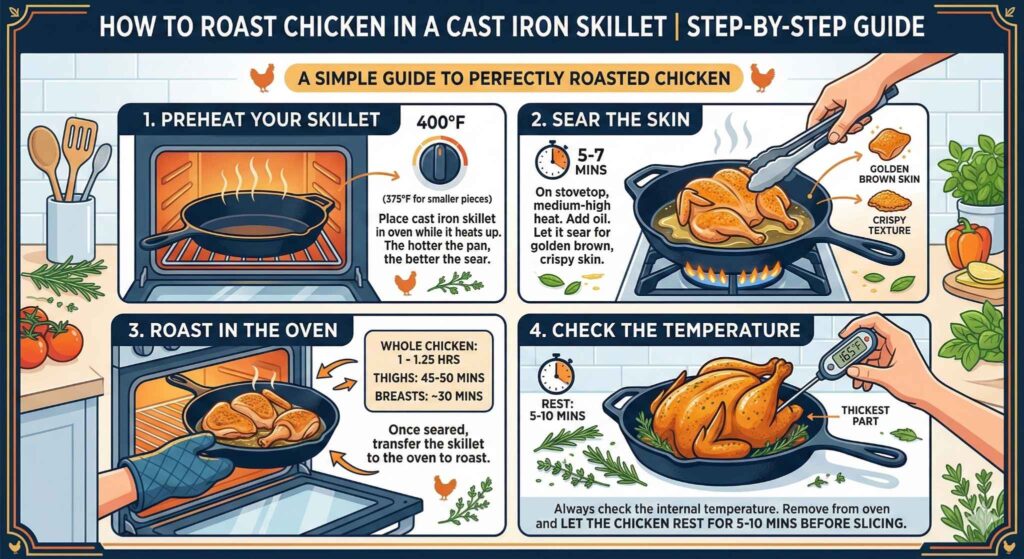
- Preheat Your Skillet: Place your cast iron skillet in the oven while it heats up. Preheat to around 400°F (or 375°F if you’re cooking smaller pieces). The hotter the pan, the better the sear.
- Sear the Skin: On the stovetop, heat the skillet over medium-high heat. Add a little oil and place your chicken skin-side down. Let it sear for about 5-7 minutes. The skin should turn a beautiful golden brown. That’s where you get the crispy texture.
- Roast in the Oven: Once the skin is seared, transfer the skillet to the oven. Depending on the cut of chicken, it’ll roast for about 30 minutes for breasts or 45-50 minutes for thighs. For a whole chicken, it’ll need about 1 hour to 1 hour 15 minutes.
- Check the Temperature: Always check the internal temperature with a meat thermometer. You want the chicken to reach 165°F in the thickest part of the meat. Once done, remove the skillet from the oven and let the chicken rest for 5-10 minutes before slicing.
What I’ve Learned Over Time
I’ve roasted chicken in a cast iron skillet countless times, and I’ll tell you—it’s all about timing. Every oven is a little different. In my oven, the hot spots mean I need to rotate the skillet halfway through cooking. In a friend’s oven (she lives in a small apartment in New York), it cooks more evenly at 375°F, so the temperature and timing might vary. Trust your instincts, and don’t be afraid to check the chicken while it cooks. You’ll get a feel for it!
How Long to Roast Chicken in the Oven with a Cast Iron Skillet
Timing the Perfect Roast
Getting the cooking time just right can make or break your chicken. Overcooked chicken is dry and tough, while undercooked chicken is, well, unsafe to eat. But with the cast iron skillet method, you’re set up for success.
- For Chicken Breasts: If you’re roasting bone-in, skin-on breasts, it’ll usually take about 35-40 minutes. Skinless breasts will cook faster, usually in 25-30 minutes.
- For Chicken Thighs: Thighs are forgiving. They take a little longer but stay juicy and flavorful. I roast mine for about 45-50 minutes at 400°F.
- For a Whole Chicken: This is where your cast iron skillet really shines. I like to roast a whole chicken at 375°F for about 1 hour to 1 hour 15 minutes. The skin crisps up beautifully, and the meat stays incredibly moist.
How to Clean Your Cast Iron Skillet After Roasting Chicken
Cleaning Cast Iron: The Essentials
After roasting that perfectly crispy chicken, you might think the work is done. But let me tell you, cleaning cast iron can be intimidating if you’re new to it. The last thing you want is to ruin your skillet. But don’t worry! With a few simple steps, your cast iron will stay in top shape for years.
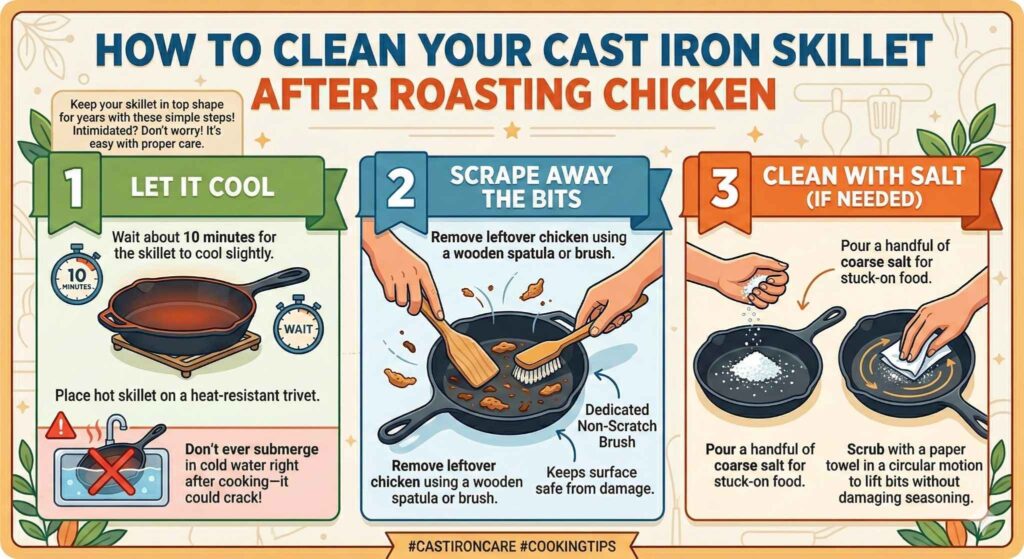
Here’s how I clean my skillet after roasting chicken:
- Let It Cool: First, let the skillet cool slightly. I usually wait about 10 minutes. Don’t ever submerge it in cold water right after cooking—doing so could crack it!
- Scrape Away the Bits: After cooling, use a wooden spatula or brush to remove any leftover bits of chicken. I keep a brush specifically for this, so it doesn’t scratch the surface.
- Clean with Salt (If Needed): For stuck-on food, I use coarse salt. It’s a lifesaver! Pour a handful into the pan and use a paper towel to scrub it in a circular motion. This helps lift any bits without damaging the seasoning.
My Personal Routine
Living in a humid Florida kitchen, I’ve found that I need to be extra careful with moisture. If I don’t dry the skillet thoroughly, it might rust. So, after cleaning, I always dry my skillet over low heat for a few minutes. This ensures there’s no leftover moisture, which could cause rust spots.
For seasoning, I coat the skillet with a thin layer of vegetable oil or flaxseed oil, then heat it up in the oven for 30 minutes at 350°F. It creates a durable, non-stick surface that’s easy to maintain.
Why Cast Iron Skillets Are Worth the Investment
A Long-Lasting Kitchen Essential
If you’re still wondering whether a cast iron skillet is worth the investment, let me tell you: it is. As someone who cooks daily, I can’t stress enough how versatile and long-lasting these skillets are. Sure, they can be a little heavy, but the cooking results are so worth it.
- Durability: My cast iron skillet is over 5 years old, and it’s only gotten better with time. Unlike non-stick pans, it doesn’t wear out or scratch easily. It’s basically built to last a lifetime, which is why it’s an essential in my kitchen.
- Versatility: I’ve roasted everything in my cast iron skillet, from chicken and steak to cornbread and even baked potatoes. It’s that one pan I reach for time and time again. Even during busy weeknights, I’ll quickly sear some chicken thighs, pop them in the oven, and dinner’s done.
- Improved Flavor Over Time: A well-seasoned cast iron skillet only gets better with use. It’s like a fine wine—each meal adds a little more flavor, and the more you use it, the more that seasoning builds up. This “seasoning” is a layer of oil and food particles that gets baked into the skillet, creating a natural non-stick surface.
U.S.-Specific Benefits
For those of you cooking in different regions of the U.S., cast iron works in every climate. If you live in dry areas like Arizona, you’ll appreciate how cast iron holds heat and helps retain moisture in the food. In more humid areas like Florida, cast iron helps crisp up food beautifully, even if the air is muggy and sticky.
Plus, cast iron is often made right here in the U.S., with brands like Lodge and Staub being long-time favorites among home cooks and chefs alike. It’s a piece of American kitchen history—practical, durable, and beloved by so many.
Using Your Cast Iron Skillet Beyond Chicken
Other Ways to Use Your Skillet
Once you’ve perfected roasting chicken in a cast iron skillet, you’ll likely find yourself using it for everything. Here are some of my favorite ways to put my skillet to good use:
- Searing Steaks: There’s nothing like the perfect sear. I’ll heat up the skillet, get it smoking hot, and drop in a steak. The result is a crusty exterior and a juicy interior. It’s my go-to for a quick dinner.
- Cornbread: I love making cornbread in my skillet—it creates a crispy, golden-brown crust that can’t be beaten. Plus, I don’t need to preheat the oven with a separate baking dish. It all happens in one pan.
- Frying: From French fries to fried chicken, cast iron is the perfect frying tool. It holds the oil temperature steady and produces the crispiest fried food. When I’m in the mood for a comfort meal, I always grab the cast iron.
My Final Thoughts
I’ve tried plenty of kitchen tools over the years, but my cast iron skillet is one I would never give up. It’s versatile, reliable, and makes food taste better—whether I’m cooking chicken, steak, or even baking a pie. If you’re looking for an investment that will last and improve with every use, a cast iron skillet is the way to go.
So, next time you’re roasting a chicken, reach for the skillet. It’s more than just a pan—it’s a game-changer.
FAQs: How to Roast Chicken in a Cast Iron Skillet
How to Roast Chicken in a Cast Iron Skillet for crispy skin?
Preheat to 425°F. Pat the chicken dry and salt it well. Start skin side down in hot cast iron, then roast in the oven until it hits 165°F inside.
What temperature is best for How to Roast Chicken in a Cast Iron Skillet?
425°F works best for roast chicken in cast iron. The high heat makes crispy skin and juicy meat. Always check with a meat thermometer for safe doneness.
Do I need to sear before I roast chicken in cast iron?
Yes, a quick sear helps build flavor and color. It locks in juices and boosts crispy skin. Then move the skillet to the oven to finish roasting.
How long does it take to roast chicken in a cast iron skillet?
Most bone in pieces take 35 to 45 minutes at 425°F. A whole chicken may take 60 to 75 minutes. Cook until the thickest part reaches 165°F.
Can I roast vegetables with chicken in a cast iron skillet?
Yes, add carrots, potatoes, or onions around the chicken. The cast iron skillet spreads heat well. Veggies soak up rich chicken flavor as they roast.