Some nights feel like a blur — work emails still open, laundry half-done, and dinner? Yeah… not happening unless Hi, I’m Mossaraof — a pro cook and food blogger. I love simple oven meals that feel warm and homey. How to Roast Chicken and Vegetables in Oven is one of my go-to dinners. The smell alone makes the whole house feel calm and happy.
I have cooked this dish for years in my own kitchen. The trick is good heat, fresh veg, and a few smart steps. If you are new to ovens, read The Complete Guide to Using an Oven first. It will help you cook with ease and care.
In this guide, I will show you how to roast chicken and vegetables in oven so they turn crisp, juicy, and full of taste. Think of it like a warm family meal made with little fuss. Let’s start and make a roast dinner you will love. 🍗🥕
Table of Contents
ToggleWhat You’ll Need Before You Even Preheat
Before I touch the oven dial, I make sure everything I need is out and ready. It saves me mid-roast panic later.
I’ve had nights where I forgot the parchment paper… or used a warped sheet pan that sent oil dripping to the bottom of the oven. Let’s just say, smoke detectors are loud, especially in a quiet Midwest apartment.
Over time, I’ve learned to set up my tools first. It makes everything smoother — from seasoning to serving.
My Go-To Roasting Tools (Nothing Fancy, Just Reliable)
You don’t need a high-end kitchen to roast like a pro. But good basics help a lot.
Here’s what I use almost every time:
- Sheet pan — heavy-duty, rimmed, and not bent (I like Nordic Ware or USA Pan)
- Wire rack — I use this when I want airflow under the chicken
- Parchment paper — makes cleanup easier, especially for sugary glazes
- Tongs — metal, springy ones that grip well
- Oven thermometer — my oven lies, so I don’t take chances anymore
And honestly, if you’re cooking in a small space or older U.S. kitchen, an extra sheet pan comes in handy for batch roasting.
Choosing the Right Chicken Cuts (That Won’t Dry Out)
I’ve tested a lot — boneless, bone-in, skin-on, skinless, whole spatchcocked. Some days I go all out, other days I grab what’s on sale at Aldi or Kroger.
These are my favorites:
- Bone-in thighs — juicy, flavorful, forgiving
- Leg quarters — budget-friendly and cook evenly with veggies
- Spatchcocked whole chicken — perfect for weekends, roasts faster than you’d think
If I’ve already got leftover oven roasted diced chicken breast, I just add it near the end to warm through with the veggies.
➡️ U.S. Tip: Look for air-chilled labels at places like Whole Foods or Costco. These chickens crisp better because there’s no extra moisture injected.
Vegetables That Roast Without Falling Apart
Not every veggie is made for oven heat. I’ve learned the hard way — soggy zucchini and dry broccoli were once regular disappointments.
Now, I keep it simple with:
- Carrots (especially thick-cut ones)
- Red onions (they caramelize beautifully)
- Bell peppers (vibrant and fast-cooking)
- Brussels sprouts (halved, tossed in oil = magic)
In the fall, I’ll throw in cubed sweet potatoes. In spring, I switch to asparagus or green beans — but those need less time.
🔪 Pro move: Cut everything to a similar thickness. That’s the real key to even roasting. No jumbo spuds next to skinny peppers.
Let’s Talk Flavor — Marinades, Rubs, and Real-Life Shortcuts
Some days I marinate. Some days I wing it. Either way, flavor matters — and I’ve found a few tricks that never fail me.
I used to think roasting meant hours of prep. Like I needed to rub garlic under the skin and let it sit overnight. Then real life hit — laundry, emails, and a hungry stomach by 6 p.m.
So I started keeping a few go-to flavor strategies. Some take five minutes. Some take none. All work.
My Favorite Marinades for Oven Roasted Chicken
When I’ve got a little extra time — even just 30 minutes — I’ll toss the chicken in one of these quick mixes. They soak in fast and make the whole house smell amazing.
- Lemon garlic: olive oil, crushed garlic, lemon juice, thyme, salt
- BBQ rub: smoked paprika, brown sugar, chili powder, a splash of vinegar
- Yogurt blend: plain Greek yogurt, turmeric, garlic powder, salt — makes it so tender
📦 U.S. pantry shortcut: I keep bottles of Primal Kitchen lemon marinade and Annie’s organic teriyaki on hand. They’re clean, taste great, and save time.
I’ll marinate directly in a zip-top bag or bowl with plastic wrap — then toss it all on the sheet pan when I’m ready.
Simple Seasonings That Go a Long Way
If I don’t marinate, I season right before roasting. No drama. Just grab the basics.
Here’s what’s always on my counter:
- Olive oil
- Kosher salt
- Black pepper
- Smoked paprika
- Dried rosemary or thyme
Sometimes I’ll add a pinch of cinnamon if I’m roasting sweet potatoes or butternut squash with the chicken. Weird? Maybe. But so good.
🧂 Lately, I’ve been obsessed with Trader Joe’s Green Goddess seasoning. Just a sprinkle mixed with oil turns chicken breasts into something way more exciting.
When Time’s Tight — Just Roast It Plain
Not every night’s a Pinterest night. Some evenings, I pull chicken straight from the package, rub it with olive oil and salt, and get it in the oven.
And honestly? That’s often when it turns out the juiciest.
If I’m using oven roasted chicken breast like Subway style — the precooked kind — I skip seasoning entirely. I’ll just layer it with veggies during roasting so it warms up gently and absorbs some of the pan flavor.
💡Pro tip: Roasting plain with skin-on thighs still gives a golden, crispy finish. That skin does the seasoning work for you.
Step-by-Step: How to Roast Chicken and Vegetables in the Oven
This is my real kitchen rhythm — from preheat to plate. No fluff, no fancy chef moves, just what actually works.
There’s something deeply satisfying about putting raw ingredients on a tray and pulling out a golden, juicy, dinner. I’ve followed this same rhythm in hot Florida summers and icy Chicago winters — and it holds up, every single time.
Step 1 — Preheat That Oven Smartly
I always start with the oven. Not the chopping, not the seasoning. The oven.
- Set it to 400°F
- Make sure the rack is in the center
- Let it preheat fully — even if I’m still chopping
⚠️ If I’m in Arizona or anywhere dry, I keep a small oven-safe ramekin of water on the lower rack to fight off dry heat. It’s a little trick I learned after a few too many shriveled carrots.
And in older apartments (especially those with unpredictable electric ovens), I use an oven thermometer to make sure the temp is accurate. Mine runs 25°F hot — ask me how I found out… after drying out an entire tray of chicken.
Step 2 — Toss the Veggies First
Veggies go in the bowl first. Always.
Why? They hold seasoning better and act as the “bed” for the chicken.
- I drizzle with olive oil
- Add kosher salt, pepper, and a dash of smoked paprika
- Toss everything well until shiny but not soaked
Then I spread them out in a single layer on the sheet pan. No crowding. If the pan’s full, I use a second one. Crowded veggies steam — they don’t roast.
🥕 Pro Tip: I roast carrots and Brussels sprouts cut-side down for max browning.
Step 3 — Add the Chicken Strategically
Once the veggies are down, the chicken goes right on top or beside them — depending on how juicy or crispy I want things.
- Skin-side up if bone-in
- Space between each piece — no overlapping
If I’m using something like oven roasted diced chicken breast, I add it in the last 10 minutes, just enough to warm without drying it out.
And yes, I’ve tried roasting everything at once. But trust me — adding pre-cooked chicken late saves it from becoming rubbery.
Step 4 — Roast and Rotate
Once everything’s on the tray, into the oven it goes.
- I roast for 35–45 minutes, depending on cut size
- Around 25 minutes in, I rotate the pan
- I don’t flip the chicken — but I might toss the veggies a bit
You’ll smell the magic before you even see it. That roasted onion smell? That’s when I start hovering near the oven window like a kid.
🌡️ Chicken’s done when:
- The skin is deep golden
- Veggies have crisped edges
- Internal temp hits 165°F (I check thickest part of the thigh)
Step 5 — Let It Rest (Even If You’re Starving)
The hardest part.
I pull the tray out and let everything sit for 5–10 minutes. No touching. No sneaking bites.
Why? Because resting lets the juices settle. I’ve ruined too many gorgeous thighs by cutting in too early and watching the flavor run away.
So I open a window. Pour a glass of iced tea. Or just stand there with the oven door open, soaking in the warmth.
That first bite — golden skin, juicy meat, sweet-roasted veggies — always reminds me why I keep coming back to this method.
Real-Life Tips for U.S. Kitchens (From a Chef Who’s Been Burned)
Ovens are like people — no two behave the same. And I’ve cooked in enough weird apartments and old houses to prove it.
You’d think as a chef I’d have perfect, predictable results. Nope. I’ve roasted chicken in creaky Florida rentals, tight Chicago studios, and even a friend’s dusty garage “kitchen” setup in Arizona during a potluck. Roasting is reliable — but only if you understand your oven’s quirks.
What to Know About U.S. Ovens
Every region seems to have its own flavor of appliance drama.
- In Florida, moisture is everywhere — I avoid foil and rely on dry heat to get crispy skin
- In Arizona, I fight dryness by adding a ramekin of water inside the oven
- In Chicago, my electric oven was 40°F off — I didn’t know until a thermometer told me
Here’s what I’ve learned:
- Use an oven thermometer — especially in older apartments
- Preheat longer than you think — most ovens beep too early
- Avoid the top rack — it runs hotter and browns too fast
⚠️ A lot of U.S. homes have electric ovens, not gas. If you switch between them (like I do when house-sitting or renting), adjust your timing — electric takes longer to heat, but holds temp better.
How to Roast Evenly Without Fancy Gear
I don’t own a double oven or a high-end convection setup at home. But I’ve figured out how to roast evenly without spending more money.
Here’s what I do every time:
- Place your sheet pan on the center rack
- Rotate the pan halfway through roasting — even just turning it 180° helps
- Check for hot spots — if one side of your oven always overcooks, shift the tray early
🍗 Chicken should roast skin-up and spread out. If it touches other pieces or overlaps with veggies too much, it steams.
🥦 Veggies should sit in a single layer. If I’m feeding a crowd, I use two sheet pans and stagger them — then switch racks halfway.
Roasting in Summer? How I Keep the Kitchen Cool
Let’s be honest — roasting in July isn’t always fun. But I do it anyway. I’ve picked up a few habits to survive it:
- I roast early in the day — then reheat at dinner (still tastes great)
- I use the oven light, not the door — opening the door kills heat and heats up my whole kitchen
- I crack a window and run a fan — even in Florida, this helps keep the sweat down
I’ve even roasted a whole chicken in my pajamas at 6 a.m. on a Saturday once — just to avoid the heat of the afternoon. Was it weird? Yes. Worth it? Definitely.
Reheating Roasted Chicken and Veggies Without Drying Them Out
Leftovers can be a blessing — unless they taste like cardboard. Here’s how I keep mine juicy and crispy, even on Day 2.
I used to microwave everything. That’s what I grew up watching my dad do — plate, napkin on top, hit 1-minute. But reheating roasted chicken that way? Nope. Total texture ruin. The veggies go mushy, the chicken dries out, and I just end up mad at myself.
Now, I’ve got a few reheat moves that actually work — and taste almost as good as the first night.
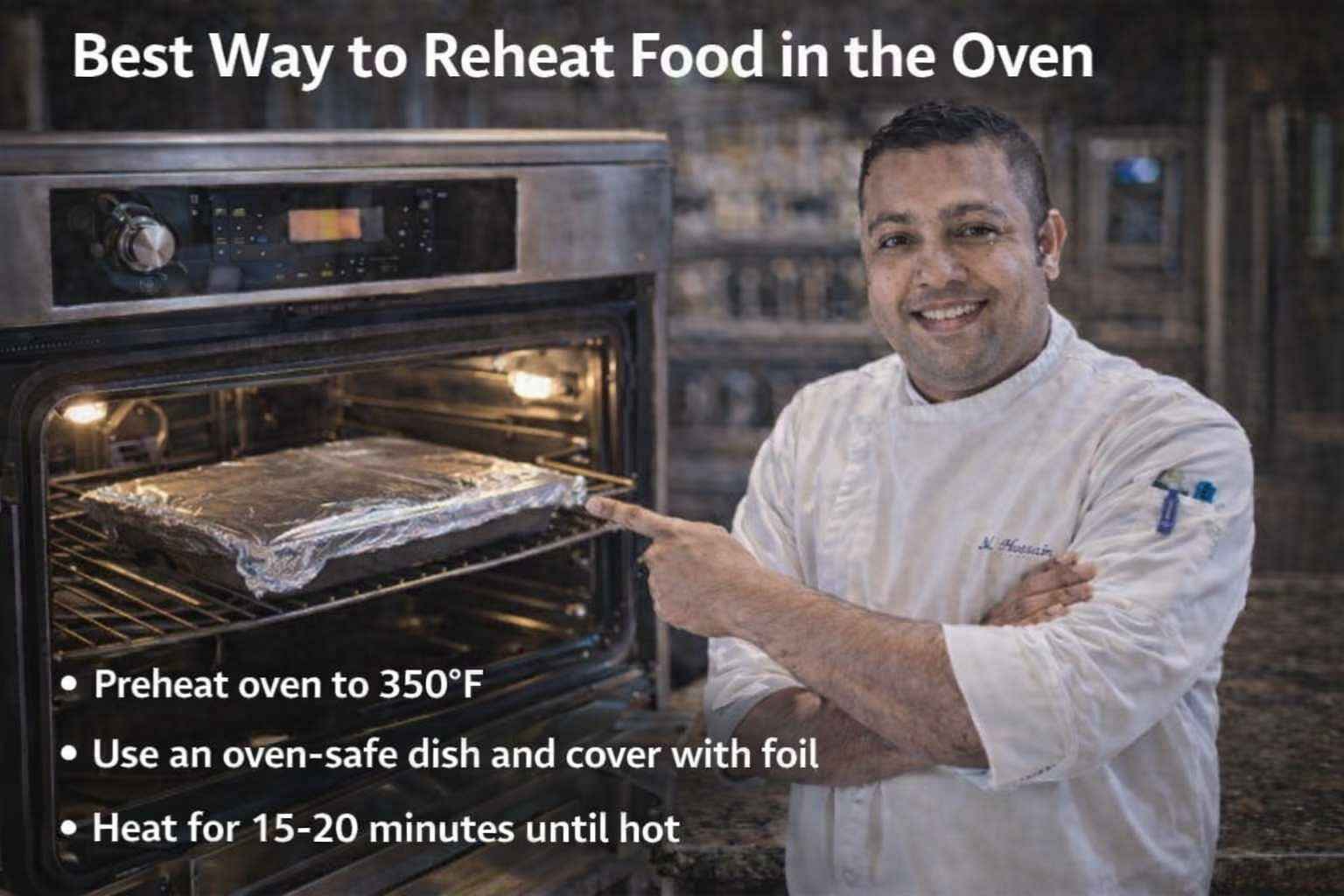
Oven Reheat Method (My Favorite Way)
If I have time, I reheat leftovers the same way I cooked them — in the oven.
Here’s my go-to:
- Set oven to 350°F
- Spread leftovers on a baking sheet (don’t crowd them)
- Cover loosely with foil if the chicken is already browned
- Roast for 10–15 minutes, depending on portion size
This method revives crisp edges on the veggies and gently warms the chicken without drying it out.
💡 Pro tip: Splash a tiny bit of broth or water under the foil if the chicken feels dry. Just a spoonful. Keeps the meat juicy.
Toaster Oven Hack for Small Batches
When I’m just reheating one thigh and a handful of veggies (aka Tuesday lunch), I use my toaster oven.
- 375°F for about 7–10 minutes
- No foil — I want the edges to crisp again
- I watch closely — toaster ovens run hot fast
This method is great in summer when I don’t want to fire up the full-size oven.
⚡ Bonus: It gives a satisfying sizzle sound when it’s almost ready. Like a mini dinner drumroll.
Air Fryer Trick (When I’m in a Rush)
Yes, I’ve fallen for the air fryer trend. And yes — it works beautifully for roasted leftovers.
- 375°F for 5–6 minutes
- Shake halfway through for even crisp
- Only do this with skin-on chicken or diced chicken breast — not whole leg quarters
If I’m reheating something like oven roasted diced chicken breast, this is the fastest way to bring it back to life. Perfectly golden on the outside, tender inside.
⚠️ Be careful: Veggies with high water content (like zucchini or tomatoes) don’t always love the air fryer. They get rubbery fast.
Nutrition Talk — Calories in Oven Roasted Chicken and Veggies
I never counted calories as a chef… until I hit a stretch where I was eating like a line cook but sitting like a blogger.
I still don’t track every bite, but I’ve started paying more attention — especially on lazy weeks when I batch roast trays of chicken and veggies. The good news? Roasting is naturally pretty light — depending on what you’re tossing in the pan.
How Many Calories Are in Oven Roasted Chicken Breast?
If I roast skinless, boneless chicken breast with a little olive oil and basic seasoning, I’m usually looking at:
- 120 to 150 calories per 3 oz cooked portion
That’s plain. No skin. No heavy glazes. Just salt, pepper, maybe some garlic powder.
Now if I go heavier with oil, butter, or BBQ sauce (which I absolutely do on some nights), I tack on about 50–100 extra calories per serving.
🍗 With skin on? You’re looking at 170–200 calories, depending on crispiness and size.
Subway vs Homemade — What’s the Real Difference?
I’ve had folks ask me: “How many calories are in Subway’s oven roasted chicken breast?”
Here’s what I found:
- Subway’s chicken breast (just the meat, not the sandwich) is around 140 calories per 3 oz
- But it often includes added sodium and preservatives — something I avoid when roasting at home
Honestly? I still grab Subway once in a while. Especially when I’m traveling. But at home, I keep it cleaner and control the flavors.
🥪 If you’re trying to eat like Subway’s oven roasted chicken breast at home, stick to lean cuts, lighter seasoning, and skip sugary sauces.
Vegetables — Surprisingly Filling, Surprisingly Light
Roasted veggies feel indulgent. The caramelized edges, the way they absorb oil, the way they crisp… But calorie-wise? They’re pretty friendly.
Here’s what I usually get per 1 cup of roasted veg:
- Carrots — ~50 calories
- Bell peppers — ~40 calories
- Brussels sprouts — ~60 calories
- Red onion — ~45 calories
Of course, it depends how much oil I use. I usually stick to 1–2 tablespoons per sheet pan, which gets me great texture without grease.
🧠 My little trick: I bulk up meals with roasted cauliflower or add a scoop of quinoa if I want more staying power — both keep me full without spiking calories.
What If You Don’t Have an Oven? Roasting Without One
I’ve lived in places where “oven” meant a dusty countertop toaster or nothing at all. I still roasted. Sort of.
During one chaotic summer, I was subletting a spot near Daytona Beach. The kitchen had a mini-fridge, one working burner, and… a microwave with personality. No oven. But I didn’t give up roasted chicken. I just got creative.
How to Make Roasted Chicken Without Oven
It’s not exactly the same. But I’ve gotten close — especially with a covered cast iron pan or deep skillet.
Here’s what I do when I need to mimic roasting:
- Use a heavy-bottomed skillet or Dutch oven
- Heat oil, sear chicken skin-side down until golden
- Add veggies around it
- Cover with a lid and cook on low heat for 25–30 minutes
This method keeps the moisture in, and while you don’t get oven-style crispness, the flavor is incredible. Think: steamy, slow-roasted vibes with a bit of sizzle.
🔥 Want crisp? After cooking, I uncover and crank the heat for a final 5 minutes.
Hindi Kitchen Trick — Tandoor-Style in a Pot
I learned this from a friend’s aunt who cooked without a formal oven in her NYC apartment.
Here’s her method (and it works shockingly well):
- Line the bottom of a large pot with coarse salt — about ½ inch thick
- Place a metal trivet or steel rack over it
- Put a smaller pot or baking dish with marinated chicken on top
- Cover the big pot with a tight lid
- Cook over medium-low heat for 30–40 minutes
The salt acts like a heat diffuser. The results? Juicy, tender chicken with subtle roasted edges.
🇺🇸 It’s a technique I’ve since adapted in U.S. kitchens — especially when traveling and staying in Airbnb rentals that lack an oven but have a decent stovetop.
Final Thoughts From My Oven (and My Messy Apron)
Not every roast is perfect. But every one teaches me something — even if it’s just how to scrape burnt bits off a tray without crying.
I’ve burned Brussels sprouts. I’ve undercooked chicken thighs. I’ve accidentally used cinnamon instead of cumin and stood there wondering why my sheet pan smelled like snickerdoodles.
But you know what? I still roast.
There’s something comforting about the routine of it — slicing vegetables, seasoning chicken, hearing that soft oven fan hum in the background. It’s grounding. It feels like home, even when I’m not in one.
FAQs
How to Roast Chicken and Vegetables in Oven so they cook evenly?
Cut vegetables to the same size and place chicken in the center of the pan. Spread the veg around it with space. This helps hot air move well and roast all food at the same rate.
What temperature is best for How to Roast Chicken and Vegetables in Oven?
A hot oven works best. Set it to about 400°F or 200°C. This heat helps the chicken turn crisp and brown while the vegetables roast soft and sweet.
Which vegetables work best when learning How to Roast Chicken and Vegetables in Oven?
Use firm veg like carrots, potatoes, onions, and broccoli. They roast well with chicken and hold shape. These also soak up juices and taste rich and warm.
How long does it take to roast chicken and vegetables in the oven?
Most trays cook in about 35 to 45 minutes at 400°F. Time can change with chicken size. Check that the chicken is cooked through and the veg look golden.
Do I need to flip vegetables while roasting chicken in the oven?
Yes, a quick stir helps. Turn the vegetables once during the roast. This helps them brown on all sides and cook well with the chicken juices.