
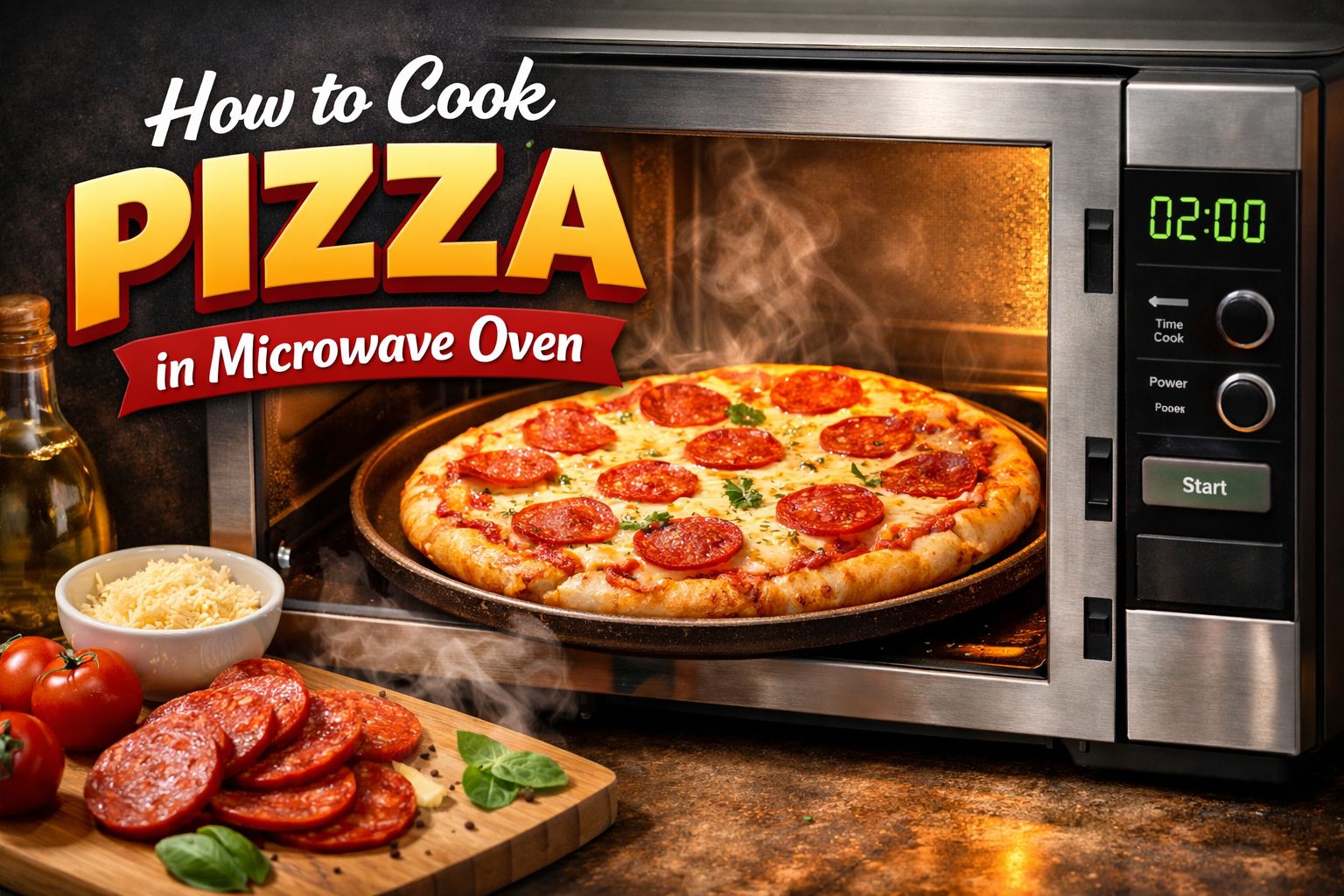
Hey, I’m Mossaraof — a professional cook and food blogger. One night, I wanted pizza fast but didn’t want to turn on the big oven. That’s when I tried to figure out how to cook pizza in microwave oven without ending up with a soggy crust. I’ve tested a few ways — some worked, some didn’t. If you’re still learning oven basics, check out The Complete Guide to Using an Oven at Home — it’ll help you build the confidence to try more at home.
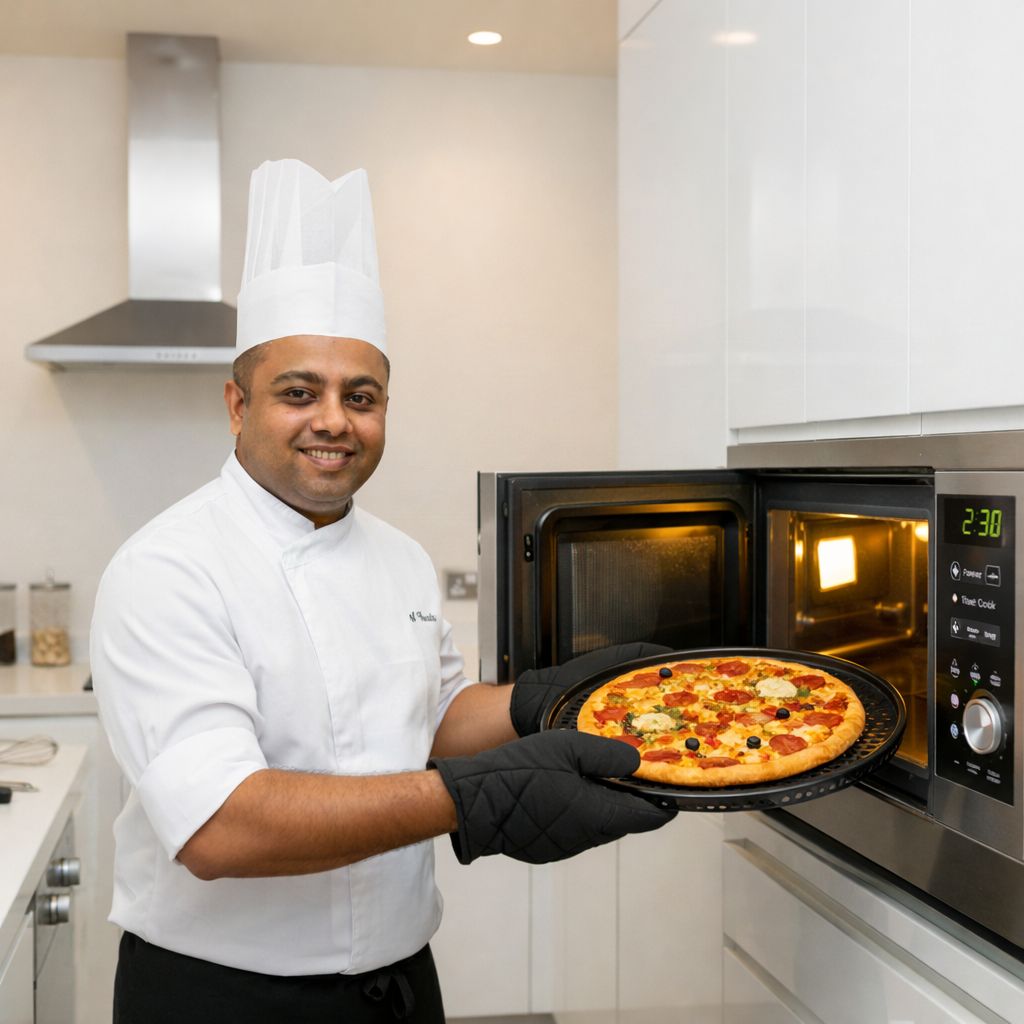
Can You Really Cook Pizza in a Microwave Oven?
Most people think the microwave is just a leftover machine. But if you do it right, you can cook pizza — and make it taste good. I’ve done it more times than I can count, especially on nights when the oven felt like a luxury I didn’t have time for.
What Microwaves Do to Pizza (Heat, Steam, and Soft Crust)
Here’s the science part — but I’ll keep it simple. Microwaves heat water molecules inside the food. That’s great for melting cheese fast, but it’s also why your crust gets soggy instead of crisp. It’s like steaming the pizza instead of baking it.
When I first tried microwaving pizza, the top looked fine — bubbly cheese, hot sauce — but the crust? Limp. Chewy. Kinda like wet cardboard. That’s because microwaves don’t brown or crisp like ovens do. They blast heat from the inside out, so the dough never really gets a chance to dry out or firm up.
👉 Quick answer: Microwaves melt cheese fast but steam the crust, making it soft instead of crispy.
Baking dough needs dry heat. Microwaves just don’t deliver that. So if you’re expecting an oven-style crunch, you’ll be disappointed — unless you tweak a few things (I’ll show you how later).
When Microwave Pizza Makes Sense
Despite the texture issues, microwave pizza has its moments — trust me. I’ve leaned on it during long work nights, lazy Sundays, and even while traveling.
If you’re making a small portion — like one or two slices — the microwave is perfect. It’s fast, no preheat needed, and cleanup takes seconds.
Back in my college days, it saved me more than once. Tiny dorm kitchen. Midnight hunger. Just me, a slice of leftover pizza, and the hum of a microwave. Done in under two minutes.
Even now, I use it for quick lunches in the kitchen when I’m testing other recipes. One slice, 90 seconds, and I’m back to work.
👉 Quick answer: Microwave pizza works best for small portions, quick meals, or when you’re short on time and energy.
Think late-night cravings, office lunches, or when you just don’t want to deal with turning on the oven.
Best Microwave Settings for Cooking Pizza
Most folks just hit the start button and hope for the best. But when it comes to microwave pizza, the power level and timing can change everything. I’ve had melted cheese disasters and still-frozen centers — until I figured out the right settings.
What Power Level to Use for Pizza
Let me tell you — full power is not always your friend. Sure, it sounds like the fastest route to pizza, but it often leaves the base cold while the cheese bubbles like lava. I’ve had slices where the crust stayed doughy, but the cheese was already scorched.
That’s because microwaves heat unevenly at high power. The moisture in the crust doesn’t get enough time to cook off, so the base turns soft and floppy.
👉 Quick answer: Use medium power (about 50–70%) to heat pizza more evenly and avoid overcooked toppings or a soggy base.
Now when I cook pizza, I set my microwave to medium power, around level 6 or 7. That gives the crust time to firm up without burning the top. And if I’m working with a thick slice or extra toppings, I’ll even go lower and add a few more seconds.
Turntable, Rack, or Crisping Tray — Does It Matter?
Absolutely — it makes a huge difference. Microwaves without a turntable heat in hot spots, so one side might be hot while the other’s still cold. I’ve had to rotate slices halfway through more times than I can count.
If your microwave has a turntable, use it. It helps the heat reach every part of the pizza as it spins. No more weird cold spots in the middle.
Now, if you’re lucky enough to have a crisping tray or microwave browning plate — use that! It’s a game-changer. It gets hot enough to brown the crust a little, and it helps evaporate the moisture underneath. You’ll get something closer to oven-style pizza.
👉 Quick answer: Use a turntable or crisping tray to help cook the pizza more evenly and reduce sogginess.
Sometimes I even place the slice on an inverted microwave-safe rack or a paper towel-lined plate. That little lift lets steam escape and keeps the bottom from going limp.
How Long to Cook Pizza in Microwave Oven (By Pizza Type)
Microwaving pizza isn’t one-size-fits-all. The time changes depending on what you’re starting with — frozen, homemade, or something in between. I’ve tested all three, and getting the timing right can mean the difference between a delicious slice and a rubbery mess.
How Long to Cook Frozen Pizza in Microwave Oven
If you’ve ever microwaved a frozen pizza, you know how tricky it can be. One minute it’s an ice brick, the next the cheese is bubbling over and the crust is still soggy. That used to happen to me all the time.
👉 Quick answer: Mini frozen pizzas take 2–4 minutes. Full-size frozen slices need about 5–7 minutes, depending on thickness and toppings.
I always start on medium power. For mini pizzas (like bagel bites or personal-sized pies), I go for 2 minutes, check it, then add 30-second bursts. For bigger slices, I use 5 minutes as a base — but I never walk away. I check the center to make sure it’s hot, not just the edges.
If your microwave has a defrost or pizza setting, don’t trust it blindly. It helps as a guide, but every microwave is a little different — just like every frozen pizza.
How Long to Cook Homemade Pizza in Microwave
Now homemade pizza in the microwave? That’s a whole different game. Especially if you’re starting with raw dough.
👉 Quick answer: If the dough is raw, par-cook the crust first for 2–3 minutes, then add toppings and cook for 2–3 more. If it’s a pre-cooked base, microwave with toppings for 3–5 minutes total.
I’ve made microwave pizza from scratch on tired weeknights. The trick? Use a pre-baked or par-baked crust. Raw dough stays gummy unless you give it a head start.
So I cook the dough alone for a few minutes first. Once it firms up a bit, I add sauce, cheese, and toppings, then finish cooking. I watch for cheese to bubble and edges to firm up.
Bonus tip — thinner crust works way better in the microwave. Thick dough just doesn’t get the same love.
How to Tell When Microwave Pizza Is Done
Here’s the million-dollar question. How do you know it’s actually done?
👉 Quick answer: It’s done when the cheese is melted, the center is hot, and the crust feels firm, not rubbery.
I press the center gently with the back of a spoon — if it pushes back with a little firmness and feels hot underneath, it’s ready. If it feels wet or collapses in, it needs more time.
The cheese should be melted but not hard. And that crust? You want a slight chew, not a soggy flop.
Sometimes I let it sit for 30–60 seconds after cooking. The steam settles, and everything firms up just enough to give you a better bite.
Microwave Pizza Cooking Method (Step by Step)
This is the exact method I use when I don’t want to wait for the oven. Whether it’s late, I’m hungry, or I just want a fast fix — this is my go-to microwave pizza routine. It works with frozen slices, quick homemade versions, or even that last lonely piece from yesterday.
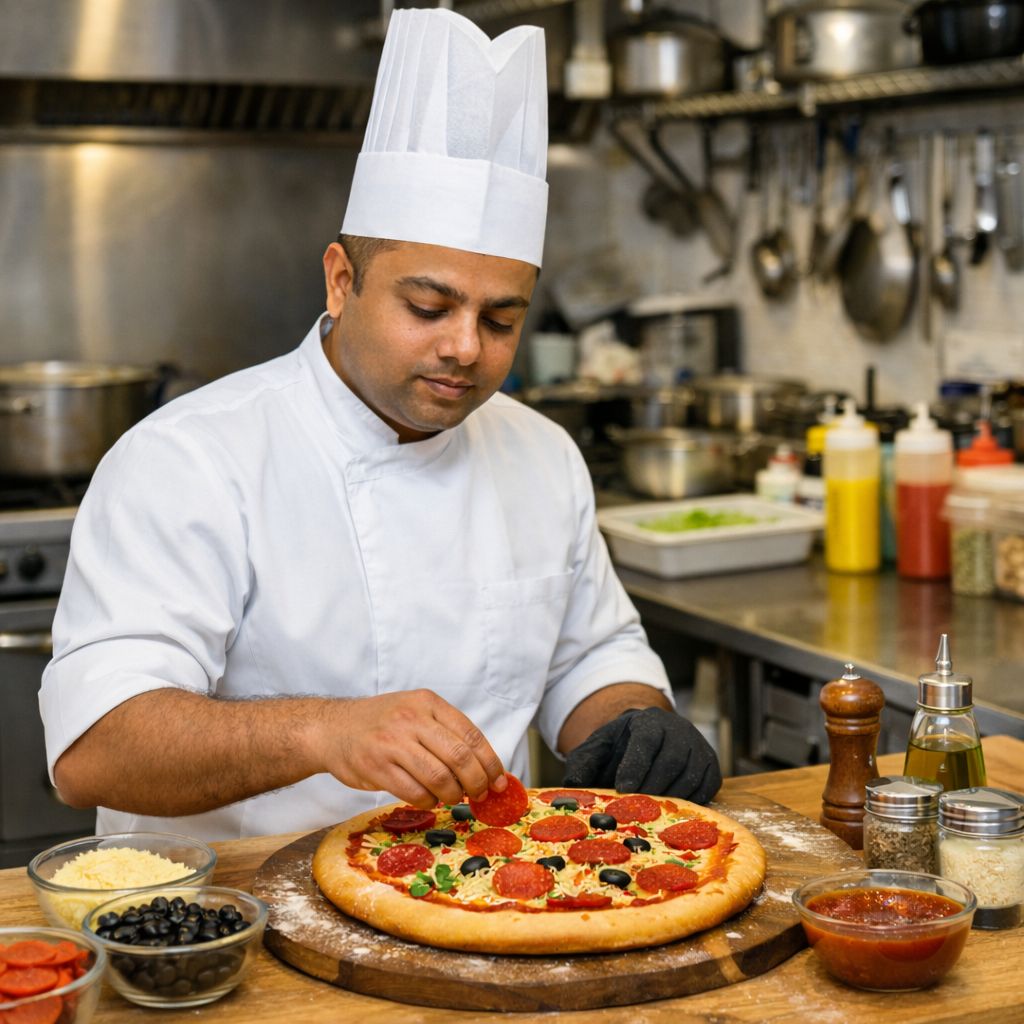
Step 1 – Prepare the Pizza for Microwave Cooking
Before anything else, you’ve got to set it up right. I’ve learned the hard way that how you prep it makes all the difference.
👉 Quick answer: Use thin crust, go light on the sauce, and don’t overload the toppings.
I always use a thin crust or tortilla base when making one from scratch — thick crusts just stay gummy. If it’s a frozen slice, I pat off any ice crystals with a paper towel.
Keep the sauce light. Too much sauce makes the crust steam and turn soggy. And when it comes to toppings, less is more — spread them evenly, and don’t pile them up like a mountain. You want the microwave heat to reach the base, not just hover over the pepperoni.
Sometimes I even lift the pizza up on a microwave-safe rack or inverted plate. That airflow makes a big difference in how the crust cooks.
Step 2 – Set the Right Time and Power
Timing and power level are where most people mess up — I used to. Trust me, going full power for too long doesn’t make it cook faster. It just gives you a hot top and a cold bottom.
👉 Quick answer: Start with medium power for 2–3 minutes, then add time in short bursts while checking.
I usually set the microwave to medium power — around 60%. For one slice, I start with 90 seconds, then check the center. If it’s still cold, I add another 30 seconds. For two slices, I’ll go with 2–3 minutes total, pausing once in the middle to rotate or check.
Every microwave is different, so don’t be afraid to stop and peek. You won’t ruin anything by opening the door.
Step 3 – Let It Rest Before Eating
This might be the most overlooked part — and I get it. You’re hungry, and it smells amazing. But waiting just a bit? Totally worth it.
👉 Quick answer: Let your pizza rest for 30–60 seconds after cooking for better texture and easier bites.
Microwave cooking builds up steam inside the food. When you pull the pizza out and let it rest, that steam settles. The cheese firms up, the crust gets a tiny bit more chew, and you won’t burn your tongue on hot sauce.
I usually just set the plate down, pour myself a drink, and by the time I come back — it’s perfect.
How to Avoid Soggy or Chewy Microwave Pizza
This is the number one complaint I hear — and honestly, I’ve been there too. A pizza that looks ready but bites like a sponge. Soft, rubbery, limp crust with toppings sliding off. Not the kind of slice that makes you smile.
But once I figured out the small things that ruin microwave pizza (and how to fix them), everything changed.
Common Mistakes That Ruin Microwave Pizza
When I was first experimenting, I made every mistake in the book. These are the ones that almost guarantee a soggy mess.
👉 Quick answer: Too much sauce, thick crust, and overcrowded toppings cause soggy, chewy pizza in the microwave.
1. Too Much Sauce
I love a saucy pizza, but in the microwave? It’s a trap. Sauce holds water, and microwaves steam that water right into the crust. You end up with a wet bottom, not a firm bite.
2. Thick Dough
Microwave heat doesn’t bake the way an oven does. Thick crusts stay doughy in the center while the top starts to bubble. It’s better to go with thin bases — tortillas, naan, or pre-baked crusts.
3. Overloaded Toppings
More toppings might seem like a treat, but too much weight blocks heat from reaching the crust. I’ve had slices where the middle stayed cold and the crust steamed instead of cooked.
Tricks for Better Texture in the Microwave
Now here’s the fun part — my go-to chef hacks that make microwave pizza actually taste good. These simple tweaks changed everything for me.
👉 Quick answer: Use a paper towel under the plate, short bursts of heat, and a crisping tray (if you have one) for better texture.
1. Paper Towel Under the Plate
This one’s a game-changer. Put your pizza slice on a paper towel-lined plate. The towel absorbs steam from the crust instead of trapping it. No more soggy bottom.
2. Use Short Bursts Instead of One Long Zap
Microwave your pizza in short intervals — like 30–60 seconds at a time. Check, rotate, and go again. That pause lets steam escape and keeps everything from overcooking. I call it the “cook and breathe” method.
3. Crisping Tray or Browning Plate (If You Have One)
If you’ve got a crisping tray or microwave crisper, use it. These tools heat up like a mini skillet, crisping the bottom while the microwave heats the rest. It’s the closest thing to oven-style crunch you’ll get.
Even a microwave-safe rack or flipping a plate upside down can lift the slice and improve airflow. More air = less steam = better crust.
Easy Pizza in Microwave Oven (Quick Recipes)
There are nights when I just want something warm, cheesy, and comforting — fast. No rolling dough. No preheating. Just grab what I have and make it work. These are the microwave pizza recipes I fall back on when time (or energy) is short.
They’re quick, fun, and way better than settling for plain toast or instant noodles.
Microwave Mug Pizza (5-Minute Fix)
If you’ve never tried mug pizza, you’re in for a surprise. I first made one on a rainy night when I was craving pizza but didn’t want to deal with dishes. This became my go-to late-night cheat.
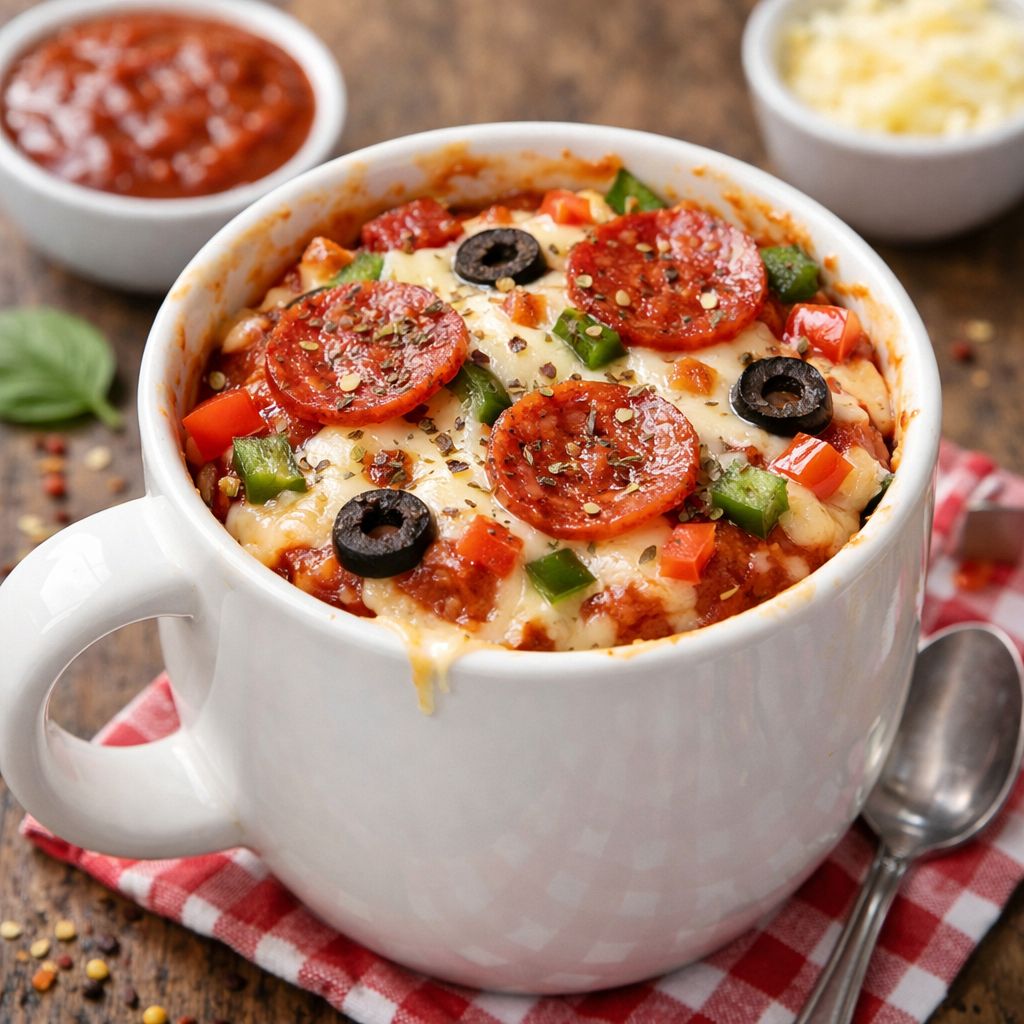
👉 Quick answer: Mix quick dough in a mug, add toppings, microwave for 1–2 minutes, and enjoy pizza with zero cleanup.
Here’s how I do it:
- In a microwave-safe mug, mix 4 tablespoons flour, ⅛ teaspoon baking powder, a pinch of salt, 1 tablespoon oil, and 3 tablespoons milk.
- Stir until it forms a doughy base.
- Spoon a little pizza sauce on top, sprinkle shredded cheese, and add a few toppings.
Microwave for about 1 minute and 30 seconds on medium power. Let it rest for 30 seconds before digging in — the cheese will be molten!
It’s not a crispy pizza, but it’s satisfying, soft, and warm — kinda like pizza meets biscuit in a mug. Perfect for dorm rooms or lazy nights on the couch.
Tortilla or Bread Base Microwave Pizza
This one saved me during a snowstorm. No crust, no dough, but I had tortillas and leftover marinara. Thin and crispy with the right trick — and ready in under 5 minutes.
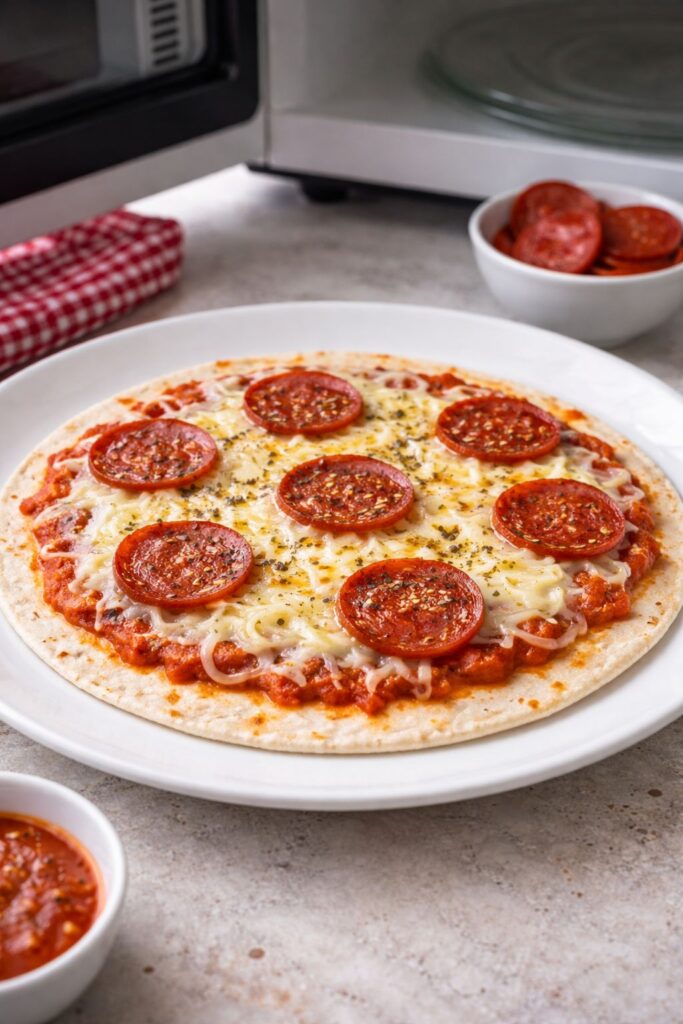
👉 Quick answer: Use a tortilla or bread as the crust, layer sauce and toppings, and microwave for 1–2 minutes for a fast, crispy bite.
Here’s how I make it:
- Place a flour tortilla or slice of sturdy bread (like sourdough or naan) on a paper towel-lined microwave-safe plate.
- Add a thin layer of sauce, a handful of cheese, and whatever toppings I can find — olives, pepperoni, even leftover chicken.
- Microwave on medium for 1–2 minutes, checking halfway.
If I want more crisp, I’ll microwave in 30-second bursts or place the tortilla on a crisping tray. You can even brush a little oil on the bottom to help it brown.
It’s quick, flexible, and even kid-friendly. I’ve let my niece build her own version — less mess, more fun.
Best Way to Cook Pizza in Microwave vs Convection Microwave
Let’s be real — not all microwaves are built the same. I’ve cooked pizza in every type of microwave you can imagine, from basic budget models to fancy convection combos with more buttons than a spaceship. And trust me, it matters.
👉 Quick answer: Regular microwaves heat fast but leave crusts soft. Convection microwaves add dry heat, giving you crispier, more oven-like results.
If your microwave has a “convection” button, you’re already ahead. But if you’re working with a standard model, don’t worry — I’ve got tricks for that too.
Regular Microwave vs Convection Microwave for Pizza
My old microwave just blasted heat straight into the food. It was quick — no doubt — but the crust? Always soft, sometimes soggy, and never brown. I’d eat it anyway, because let’s be honest, melted cheese still wins. But it wasn’t that golden, crispy slice I was hoping for.
👉 Quick answer: Regular microwaves heat by steaming food from the inside. Convection microwaves use a heating element and fan for drier, even cooking — better for browning pizza crust.
Then I tried a convection microwave in my test kitchen. Total game changer.
Here’s the deal: convection microwaves use a built-in heating element and fan to circulate hot air — just like a mini oven. That means your pizza cooks more evenly, the crust dries out, and the edges actually crisp.
When I use convection mode, I place the pizza on a low rack or crisping tray and preheat if needed. The result? A base that crackles slightly when you bite it and cheese that browns in spots — not just melts into a puddle.
So if you have convection, use it. Every single time.
When to Use Oven Instead of Microwave
Now, even with convection, there are times when I say nope — I’m firing up the big oven.
👉 Quick answer: Use a conventional oven for thick crusts, big batches, or when you want crispy, bakery-style results.
1. Thick Crust or Deep Dish Pizzas
Microwaves (even with convection) just don’t handle thick crust well. It stays soft in the middle or cooks unevenly. For deep dish or hand-tossed pies, the oven’s dry, surrounding heat is a must.
2. More Than Two Servings
Microwaving three or four slices back-to-back is doable — but not ideal. The first gets cold while the last cooks. The oven lets me spread them all out and reheat or bake at once, evenly.
3. You Want a Real Crunch
Let’s say it’s Friday night. You’re not rushing. You want that toasty smell and golden bubbles. That’s oven time, friend. I preheat to 425°F, slide the pizza on a hot baking sheet or stone, and wait for that sizzle. Pure joy.
Is Microwave Pizza Safe and Healthy?
People ask me this all the time — “Is microwave pizza bad for you?” Short answer: No, it’s not unsafe, but like anything, it depends on how you cook it and what you’re eating. I’ve cooked (and eaten) more microwave pizza than I care to admit, and I can tell you — there are smart ways to do it.
Food Safety and Internal Temperature
Let’s start with the most important part — safety. If you’re microwaving pizza (especially frozen), it has to heat all the way through. That means the center should be piping hot — not just the cheese on top.
👉 Quick answer: Microwave pizza is safe when the internal temperature hits at least 165°F, especially for frozen or homemade versions.
I use a digital food thermometer in my test kitchen. If I’m cooking a frozen slice, I check the center to make sure it reaches 165°F — that’s the USDA’s safe temp for cooked foods. No guessing. No halfway warm bites.
If the center is still cold but the crust is hot, I go back in for 30 seconds. Always better safe than sorry. And if you’re heating meat-topped pizza (like sausage or pepperoni), don’t cut corners. You want it hot enough to kill any bacteria.
Microwaves heat unevenly, so rotating or pausing to stir the heat around is key — even for a single slice. Trust me, a hot spot on the edge and a cold doughy middle is not worth the risk (or the stomachache).
Nutrition and Texture Changes
Now let’s talk health — not from a salad-and-smoothie perspective, but from a real-world chef angle. You’re not making kale chips. You’re making pizza. And that’s okay.
👉 Quick answer: Microwaving doesn’t add calories or fat, but it can change the texture — softer crust, less browning, and different mouthfeel.
One upside? No extra oil is used when microwaving. Unlike frying or pan-toasting, you’re not adding fat just to heat it up. That’s a win if you’re watching calories.
But — and here’s the tradeoff — microwave pizza won’t have that golden brown crust. No Maillard reaction, no crisp edges. That changes the mouthfeel, and sometimes makes it feel heavier or chewier.
Nutritionally, the microwave doesn’t destroy more nutrients than other methods. In fact, because it cooks fast and uses less heat overall, it often preserves more vitamins — especially in veggies.
So yes, it’s still pizza. It’s still carbs and cheese. But microwaving it doesn’t make it worse for you — and if it helps you eat at home instead of grabbing fast food, I say that’s a win.
FAQs – How to Cook Pizza in Microwave Oven
When you’re hungry and in a hurry, these are the exact questions that pop into your head. I’ve been there — standing in front of the microwave with a slice in hand, wondering if I’m doing it right. Let’s clear things up.
Can you cook pizza in microwave oven without convection?
👉 Yes, you can cook pizza in a regular microwave — but expect a softer crust.
I’ve done it hundreds of times. As long as you use a thinner base, go light on the sauce, and heat it evenly (medium power helps), it comes out hot and tasty. Just don’t expect a crispy crust unless you use a crisping tray or upgrade to convection.
How long should I cook pizza in microwave oven?
👉 Most pizza takes between 2–5 minutes in the microwave, depending on the type.
If you’re heating a slice, 1–2 minutes on medium power usually works. Frozen mini pizzas take 2–4 minutes. Full-size or homemade versions can take 5–7 minutes. Always check the center — it should be hot all the way through.
Can I put frozen pizza directly in the microwave?
👉 Yes, you can microwave frozen pizza, but it needs the right setup.
I always unwrap it fully and place it on a microwave-safe plate. I start with medium power, and if it’s a thicker slice, I give it a head start with 2–3 minutes, then add 30-second bursts. Pat off any frost or ice to avoid soggy crust.
Why does microwave pizza turn chewy?
👉 Microwave pizza turns chewy when there’s too much moisture and uneven heating.
I’ve learned that sauce-heavy or thick dough traps steam, turning the crust rubbery. To fix this, use a paper towel under the slice, microwave in short bursts, and avoid overloading toppings. Give it a rest after cooking to let steam settle.
Is microwave good for making homemade pizza?
👉 Yes — if you use the right base and method.
I’ve made plenty of small homemade pizzas in the microwave. Thin crusts (like tortillas or pre-baked bases) work best. Start by pre-cooking the crust if it’s raw, then add toppings and heat until bubbly. Not crispy like oven pizza — but fast, hot, and delicious.