Hey, I’m Mossaraof — a professional cook and food blogger.
If you have ever pulled dry chicken from the oven, I feel you. I used to fight that same battle in my tiny Chicago kitchen. Learning How to Cook Chicken in a Roasting Pan changed that for me. It was like finding the sweet spot between heat and heart.
A roasting pan holds heat in a steady way. It helps you get juicy meat, crisp skin, and even cook time. I have tested oven temperature, roast time, and pan depth in humid Florida summers and cold Midwest winters. The method stays simple, and it works.
In this guide, I will show you how to season chicken, set the right oven temp, and roast it with ease. I will also share tips on safe internal temp and pan placement for the best roast chicken. If you are new to oven cooking, read my full guide on The Complete Guide to Using an Oven to build strong basics.
Grab your roasting pan, take a deep breath, and let’s cook chicken the right way tonight.
Table of Contents
ToggleWhy You Need a Roasting Pan for Chicken
There’s something special about a roasting pan — and it’s not just because it sounds fancy. Trust me, as someone who’s spent plenty of time roasting chickens in all kinds of pans, a good roasting pan can make all the difference in the world.
The Right Pan Makes a Difference
Here’s the thing — a roasting pan isn’t just a random piece of kitchenware. It’s a tool that can take your chicken from “meh” to “wow.” You see, it’s all about heat distribution. A well-made roasting pan helps heat the chicken evenly. That means a perfectly cooked bird, golden skin and all.
- Material: When I upgraded to a heavier stainless-steel roasting pan, it changed everything. It holds heat well, so I don’t have to worry about my chicken cooking unevenly. It’s a simple change, but a crucial one for me.
- Size: Size matters too. It’s tempting to go for a massive roasting pan, but I learned that a pan that’s too large can lead to an uneven cook. I tend to go for a medium-sized roasting pan — big enough to fit my chicken, but small enough to keep it cozy while it roasts. That helps keep the moisture in and gives me that juicy, tender meat I crave.
A Real-Life Example: The Florida Heat
I live in Florida, so when I roast chicken, I’ve learned that the humidity can affect my cooking time. On a hot, sticky summer day, the oven is already fighting the heat, so I have to be mindful of that. I also make sure to use a non-stick roasting pan, which helps prevent moisture from getting trapped and ruining that crispy skin I love.
What You Need Before You Start Roasting Chicken
Before you get started with roasting your chicken, let’s talk prep. Trust me when I say this, a little prep goes a long way. I used to skip this step, but I quickly learned that if you want your chicken to turn out golden and juicy, prep is key.
Brine or Marinate
Now, this might sound extra, but brining your chicken makes all the difference. The salt pulls moisture into the meat, which is especially important for chicken breast — it can dry out so quickly. I like to brine my chicken in a simple solution of salt, sugar, and water for a few hours. It really helps lock in flavor and moisture.
- Pro Tip: I brine my chicken overnight when I have the time. It’s like an insurance policy against dry meat. A little prep work pays off in the end.
Pat the Skin Dry
This one’s easy to forget, but it’s crucial. When you’re getting ready to roast, always pat your chicken dry with a paper towel. This helps the skin crisp up in the oven. I’ve made the mistake of skipping this step, thinking the moisture would just evaporate — spoiler alert, it doesn’t. Instead, I ended up with a soggy, limp skin that no one was happy about. The lesson? Always dry your chicken.
Roasting the Chicken: Step by Step
Here’s the fun part — actually roasting the chicken. I’ve roasted my fair share of chickens over the years, and I’ve learned that the key to a great roast is simple: pay attention to temperature, timing, and technique.
Preheat Your Oven
If there’s one thing I can’t stress enough, it’s to always preheat your oven. I learned that lesson the hard way when I threw a chicken in a cold oven, thinking it would roast just fine. Spoiler alert: it didn’t. Now, I always preheat my oven to 400°F before I even think about putting that bird in.
Use a Rack for Airflow
I’m all about getting a crispy skin, so I use a rack in my roasting pan to elevate the chicken. This way, the heat circulates evenly around the bird, and the fat drips down into the pan. That crispy skin I love? It happens because of this simple step. No rack? No crispy skin. It’s that easy.
- Pro Tip: If you don’t have a rack, you can improvise with some chopped vegetables like onions and carrots underneath the chicken. The added bonus? The veggies soak up all the tasty chicken drippings.
Timing Is Everything
Roasting time can vary based on the size of the chicken. For a standard 4-5 lb chicken, I usually roast it for about 1 hour and 15 minutes at 400°F. The most important thing, though, is checking the internal temperature. You want your chicken to hit 165°F in the thickest part of the thigh.
- Pro Tip: I use a meat thermometer. It’s the most reliable way to ensure my chicken is cooked to perfection without any guesswork.
Resting Is Key
This is another step I used to skip, but after years of trial and error, I’ve learned that letting your chicken rest is a must. After I take it out of the oven, I let it sit for about 10-15 minutes. This gives the juices time to redistribute throughout the meat, so it stays juicy when I carve it.
Roasting Chicken in Different Climates: A U.S. Perspective
Living in the U.S. means you’ll experience a variety of kitchen challenges based on your location. Whether you’re dealing with the dry heat of Arizona or the frigid winters of the Midwest, your kitchen environment plays a big role in how your chicken cooks. I’ve definitely had my fair share of kitchen tweaks based on where I’ve lived.
Humidity vs. Dry Heat: The Florida Dilemma
In Florida, the humidity is relentless. I learned quickly that high humidity can affect the texture of the chicken. The air feels moist, which can cause skin to become soggy or not crisp up as well. To combat this, I always make sure to turn on the oven’s convection setting if I’m cooking in a pan. This helps to circulate the air, so the chicken skin gets crisp while the inside stays moist.
I also learned that when I roast a chicken in Florida, I have to factor in the environment. The oven itself is working harder to maintain temperature because of the humidity in the air. I keep an eye on it a bit more than I would in a dryer climate.
Dry Arizona Heat: The Challenge of Overcooking
In contrast, Arizona’s dry heat presents its own challenges. Roasting chicken in the dry heat means that I have to be extra cautious about overcooking. The air doesn’t hold moisture the way it does in humid climates, so the chicken tends to dry out much quicker. Here, I make sure to start roasting at a slightly lower temperature, around 375°F, to keep the meat tender.
The good news? The skin crisps up beautifully! There’s something about that dry Arizona air that makes the skin on my chicken golden brown and crispy without much effort. But I also make sure to check the chicken sooner to avoid that dry, rubbery texture.
Adjusting Roasting Times for Smaller vs. Larger Chickens
One of the most common questions I get when teaching people how to roast chicken is about timing. How long should you roast chicken? It depends. Here’s the thing: timing isn’t just about how much weight the bird is — it’s also about the oven’s heat distribution, your pan, and even the thickness of the chicken. Let me break down my usual guidelines for roasting different sized birds.
For a Small Chicken (3-4 lbs)
When I roast a smaller chicken, like a 3-4 lb bird, I usually reduce the cooking time to about 1 hour to 1 hour and 10 minutes at 400°F. The meat is less dense, and it cooks more quickly. But don’t let the smaller size fool you! I still make sure to use a meat thermometer to check that the internal temperature reaches 165°F in the thickest part of the thigh.
For a Large Chicken (5+ lbs)
For larger chickens, I find that they take closer to 1 hour and 15 minutes to 1 hour and 30 minutes at 400°F. The key is to roast them until the juices run clear, and the meat is fully cooked, tender, and easy to pull away from the bone.
- Pro Tip: I often roast the chicken at 400°F for the first 45 minutes, and then lower the temperature to 375°F to finish cooking. This helps crisp up the skin without overcooking the inside.
When Cooking Chicken Breasts or Thighs
If I’m only roasting chicken breasts or thighs in the pan (without the whole bird), I usually cook them at 375°F for about 30-40 minutes, depending on the size.
- For a juicy chicken breast: I avoid overcooking by checking the internal temperature regularly. You’re aiming for 165°F, but don’t let it go beyond that or you’ll risk dryness.
The Importance of a Quality Roasting Pan: My Favorite Picks
If you’ve ever found yourself wondering if a high-end roasting pan really makes a difference, I can tell you from personal experience, it absolutely does. I’ve used many roasting pans over the years — some good, some bad — and I’ve finally settled on a few favorites that I know I can rely on. The quality of your pan will affect everything from even cooking to easy cleanup. Here are the ones that I swear by:
- Le Creuset Enameled Cast Iron Roasting Pan: This pan is my go-to for everything. The heat retention is incredible, and it distributes heat evenly, making my chicken roast beautifully every time. Plus, the enamel coating makes cleanup a breeze.
- Lodge Cast Iron Roasting Pan: If you’re looking for something more affordable but still high-quality, Lodge is a great option. It’s durable, cooks evenly, and can go from stovetop to oven with ease. Plus, I love the rustic feel of cast iron.
- Cuisinart MultiClad Pro Stainless Steel Roasting Pan: If I’m roasting a chicken breast or two, I often grab my Cuisinart stainless steel roasting pan. It’s lightweight, easy to maneuver, and gives me a nice, even roast.
Why the Right Pan Matters for U.S. Kitchens
Living in different parts of the U.S., I’ve found that the right pan can really make or break your chicken. For example, when I was living in New York, I had a smaller oven, so I needed a smaller, more compact roasting pan. But in Texas, where I have a larger oven, a bigger roasting pan gives me room to cook multiple chickens at once, especially when I’m cooking for family gatherings.
How to Roast Chicken in a Convection Oven
For anyone lucky enough to have a convection oven, you’re in for a treat. I’ll admit, when I first used a convection oven, I was a little intimidated. But once I got the hang of it, I realized it’s one of the best ways to roast chicken. Here’s what I’ve learned:
- Lower the Temperature: When using a convection oven, I always lower the temperature by 25°F compared to what I would use in a regular oven. This helps prevent the chicken from overcooking while still ensuring that it gets that nice crispy skin.
- Monitor the Roasting Time: The convection oven speeds up cooking time because the fan helps circulate the heat. I check on the chicken a little earlier than I normally would in a regular oven, usually around 1 hour to 1 hour and 10 minutes for a 4-5 lb bird.
- Even Cooking: One of the best things about convection is how evenly the chicken cooks. I don’t have to rotate the pan halfway through as I used to do in my old oven. The air circulation does all the work for me!
Basting: Is It Necessary?
Basting is one of those things that some chefs swear by, and others avoid. Personally, I don’t find it absolutely necessary, but I do like to baste my chicken a bit if I want to add extra flavor or moisture. If you’ve brined or marinated your chicken well, it won’t dry out without basting. However, if you’re looking for a richer flavor, I recommend basting with its own juices about halfway through cooking.
Common Mistakes to Avoid When Roasting Chicken in a Pan
Over the years, I’ve made my fair share of mistakes when roasting chicken, and trust me, you don’t want to make the same ones. Here are a few things I’ve learned the hard way — and how to avoid them.
Not Letting the Chicken Rest
After your chicken comes out of the oven, the temptation to dive in is real. I get it. That golden, crispy skin and the delicious smell in the air are enough to make anyone impatient. But here’s the thing I learned: let your chicken rest for at least 10-15 minutes before carving.
If you skip this step, all the juices that are locked in the meat will spill out the moment you slice it. The result? Dry chicken. Letting it rest allows those juices to redistribute, leaving you with a juicy, flavorful bird.
Overcrowding the Pan
It’s tempting to throw in as much chicken as possible, but I learned the hard way that overcrowding your roasting pan can result in uneven cooking. I once tried to roast a whole chicken alongside some veggies, and the veggies didn’t roast properly because they were sitting in all the chicken drippings.
Instead, I recommend using a roasting rack. It lifts the chicken off the pan, allowing the heat to circulate evenly around the bird. If you’re roasting more than one chicken, use a larger pan with a separate rack for each chicken. Giving your chicken room to breathe (well, if chickens breathe) is key to a successful roast.
Not Using a Thermometer
I’ve been there — the old “eyeballing it” method. But if there’s one thing I’ve learned as a chef, it’s that precision is your friend. The only reliable way to ensure your chicken is cooked to perfection is by using a meat thermometer.
- Pro Tip: Stick the thermometer in the thickest part of the thigh (not touching the bone). Once it reaches 165°F, you’re good to go.
Trust me, it’ll save you from overcooking and undercooking, which can happen quickly with chicken.
Leaving the Skin Too Wet
You might think that more moisture means juicier chicken, but when it comes to the skin, wetness is your enemy. I used to skip patting the chicken dry, thinking it wasn’t a big deal. But after years of trying, I now swear by it.
Pat the chicken dry with paper towels before seasoning it. This simple step helps the skin become crispy and golden while keeping the meat tender. It’s a small thing, but it makes a big difference in the final result.
What to Do With Leftover Roasted Chicken
When I roast chicken, I always make sure to cook a little extra. Not only does it taste amazing, but it’s also versatile enough for several meals throughout the week. Here are my favorite ways to use up those leftovers.
Chicken Salad
This is a go-to for me, especially on those days when I don’t feel like cooking. I pull off the leftover chicken and mix it with some mayo, mustard, and a bit of chopped celery. It’s a quick, easy meal that can be used on sandwiches, wraps, or even as a topping for a salad.
- Pro Tip: Throw in some fresh herbs, like parsley or dill, to elevate the flavor. It’s like an instant upgrade!
Chicken Soup
Chicken soup is the definition of comfort food. I love using leftover roasted chicken in a hearty soup. Just toss the chicken into a pot with some stock, onions, garlic, carrots, and celery. You’ve got yourself a cozy meal for those chilly nights.
- Bonus: You can use the bones to make homemade chicken stock. It’s a great way to get every bit of flavor out of your bird. Just simmer the bones with some vegetables and herbs, and you’ve got a rich base for your soup.
Chicken Tacos
Shredded roasted chicken is perfect for tacos. Just warm up the chicken with a bit of taco seasoning, toss it in soft tortillas, and top with your favorite fixings. It’s a simple but delicious meal that I always go to when I have leftover chicken.
- Pro Tip: Add some pickled onions for a tangy kick. Trust me, it’s a game-changer.
How to Make Chicken Extra Crispy in a Roasting Pan
If you’re like me and want your chicken to have that perfect crispy skin, I’ve got some tips and tricks that have worked for me over the years.
Dry the Skin Thoroughly
I can’t say this enough — dry skin equals crispy skin. After you’ve pat your chicken dry, let it sit uncovered in the fridge for an hour or two before roasting. This helps dry out the skin even further, making it more likely to crisp up in the oven.
Add Oil or Butter to the Skin
Whether it’s olive oil or butter, adding a thin layer of fat to the skin before roasting can help the chicken achieve that golden, crispy exterior. I usually rub the chicken with about 1-2 tablespoons of melted butter or oil, ensuring an even coating.
- Pro Tip: Sometimes, I mix a bit of garlic powder, paprika, or thyme with the butter for extra flavor. The seasonings help the skin get an even browner, crispier texture.
Broil at the End
Once your chicken has roasted and reached the proper temperature, I finish it off by turning on the broiler for the last 2-3 minutes. This gives the skin an extra crispy kick. But be careful — the broiler is intense! Keep a close eye on it to avoid burning.
- Pro Tip: You can also broil the chicken at the start if you want it to have a deeper crisp. Just make sure to rotate the pan every 10 minutes so it crisps evenly.
Cleaning Up After Roasting Chicken: My Go-To Tips
Let’s face it — cleaning up after cooking can be a pain. But over the years, I’ve learned that the right tools and techniques can make a huge difference. Here are a few tips that have made cleanup a lot easier for me after roasting chicken.
Use Aluminum Foil for Easy Cleanup
If I know I’m roasting something particularly greasy (like a whole chicken), I’ll line my roasting pan with aluminum foil. This not only protects the pan but also makes cleanup a breeze. After the roast is done, I can just lift out the foil and toss it away.
Soak the Pan Immediately
After I take the chicken out of the roasting pan, I make sure to pour out any leftover fat and juices, then add hot water to the pan right away. This helps loosen any stuck-on food. I let it soak for about 10 minutes, and it’s much easier to clean afterward.
Scrub with a Non-Abrasive Brush
I learned early on that harsh scrubbers can scratch up a nice roasting pan, especially if it’s cast iron or enameled. I use a non-abrasive brush or a wooden spoon to gently scrub off any stubborn bits. It’s gentler on the pan and keeps it in great condition for years.
How to Roast Chicken Using Convection Mode: A Game-Changer
Convection ovens have become increasingly popular, and after using one for years, I can’t recommend them enough for roasting chicken. Convection fans help circulate the heat evenly around the chicken, making it cook faster and more uniformly. If you have a convection setting on your oven, you’re in for a treat.
Adjusting Temperature for Convection
One thing I quickly learned is that when using convection, you need to lower the temperature by about 25°F from the standard roasting temperature. So, if I usually roast chicken at 400°F in a regular oven, I’ll lower it to 375°F when using convection. This prevents the chicken from drying out and helps it cook evenly without burning the skin.
- Pro Tip: Always check your oven’s manual, as convection settings can vary slightly between models. Some ovens also come with a specific “convection roast” setting that optimizes the heat for this type of cooking.
Faster Cooking, Crispy Skin
What I love most about using convection is how fast the chicken cooks without sacrificing texture. The fan in the convection oven ensures that the hot air moves around the chicken, which helps the skin crisp up beautifully. It’s one of the best ways to ensure you get that golden-brown finish that we all crave.
- Pro Tip: Even though convection helps reduce cooking time, I still check the internal temperature of the chicken. For a 4-5 lb bird, this typically takes about 1 hour and 15 minutes at 375°F, but the best way to know for sure is to use a meat thermometer.
How to Cook Chicken Thighs in a Roasting Pan
Chicken thighs are one of my favorites to roast. They’re rich in flavor and tend to stay juicy even if you roast them a little longer than planned. Roasting them in a pan takes all the guesswork out of the process, and they come out just as delicious every time.
Bone-In vs. Boneless: Which One to Choose?
Personally, I love cooking bone-in chicken thighs. The bone helps keep the meat moist and flavorful. However, boneless thighs cook a little faster, so if you’re in a rush, they’re a great option. I’ll give you both methods so you can choose depending on your needs.
- Bone-In Thighs: These take about 45 minutes to 1 hour at 400°F. The skin crisps up beautifully, and the meat stays tender.
- Boneless Thighs: These cook a little quicker, around 30-40 minutes at 375°F.
Seasoning Chicken Thighs
When I roast chicken thighs, I love going all out with seasoning. A little salt and pepper are a must, but I also add garlic, rosemary, thyme, and a squeeze of lemon juice. The lemon adds a bit of brightness that cuts through the richness of the thighs.
- Pro Tip: I sometimes rub the thighs with a little olive oil or melted butter before seasoning. This helps the skin become extra crispy.
Using a Roasting Rack for Even Cooking
Just like with a whole chicken, I recommend using a roasting rack when roasting chicken thighs. The rack allows the heat to circulate around the thighs, which helps them cook evenly and get that crispy skin.
How to Roast Chicken Breasts in a Pan: Keep It Juicy
Chicken breasts can be tricky. If you cook them wrong, they can end up dry and tough. But when roasted in a pan, they come out juicy and flavorful. Here’s how I do it.
The Key to Juicy Chicken Breasts
The secret to perfectly roasted chicken breasts is not overcooking them. I use a meat thermometer to ensure they hit the right temperature — 165°F in the thickest part of the breast.
- Pro Tip: If I’m roasting skinless breasts, I’ll drizzle a little olive oil on them to help keep them moist. If you want extra flavor, a quick marinade works wonders.
Oven Temperature for Chicken Breasts
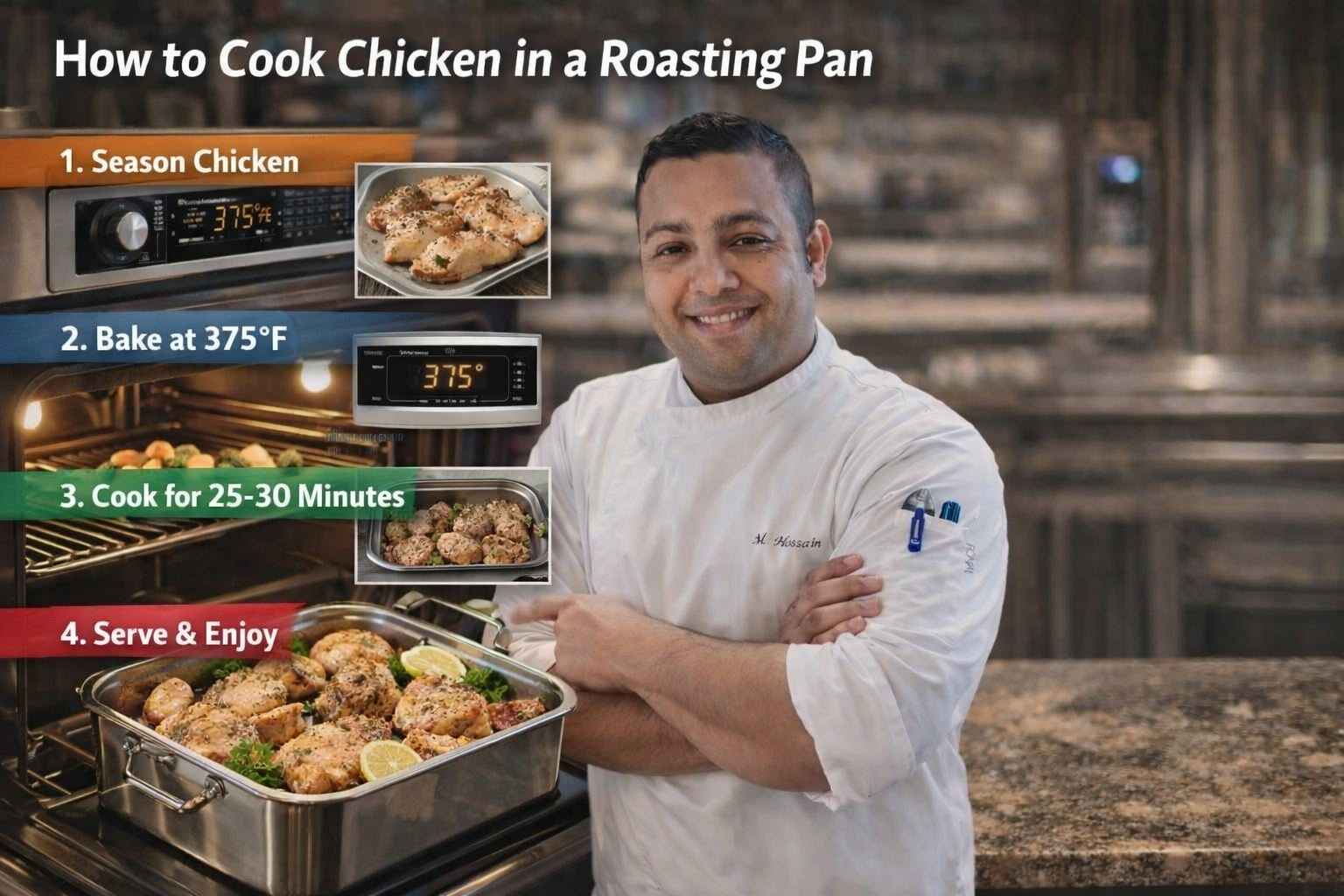
I typically roast chicken breasts at 375°F for about 25-30 minutes, depending on their size. Bone-in breasts will take a bit longer, so I adjust the cooking time accordingly.
- Pro Tip: I always check the chicken breasts with a thermometer before removing them from the oven. It’s the easiest way to make sure they’re juicy and perfectly cooked every time.
How to Make Chicken Wings in a Roasting Pan
Chicken wings are another crowd-pleaser, and roasting them in a pan is a great way to get them crispy without deep frying. I’ve tested multiple methods, and this one is my favorite.
Seasoning and Sauces
What makes chicken wings so tasty is all the seasoning and sauce options. I’ve tried everything from a classic Buffalo sauce to honey mustard and even a sweet and spicy BBQ sauce. My personal favorite? A simple combo of garlic powder, paprika, salt, and a little olive oil.
- Pro Tip: I like to let my wings marinate for 30 minutes to an hour before roasting. It lets the flavors sink in and helps with that crispy finish.
Roasting Time for Chicken Wings
Chicken wings cook quickly — usually in about 30-40 minutes at 400°F. To ensure they cook evenly, I recommend flipping them halfway through the cooking time. If you want them extra crispy, throw them under the broiler for the last 5 minutes.
Using Your Roasting Pan for Vegetables
The great thing about a roasting pan is that it’s not just for chicken. It’s versatile enough for roasting vegetables, too. Whether I’m roasting carrots, potatoes, or Brussels sprouts, I use my roasting pan to get that crispy, caramelized texture that makes vegetables taste like candy.
Roasting Vegetables Alongside Chicken
Sometimes, I’ll toss some root vegetables like sweet potatoes or carrots into the pan with my chicken. The chicken juices drip down, infusing the vegetables with flavor as they roast. It’s the ultimate one-pan meal.
- Pro Tip: I chop the vegetables into even pieces to ensure they cook at the same rate. And don’t forget to season them well — a little olive oil, salt, and pepper go a long way.
Final Thoughts: Why Roasting Chicken in a Pan Is a Game-Changer
After years of roasting chicken in all kinds of pans, I can confidently say that using a good-quality roasting pan is a game-changer. It makes a difference in how evenly your chicken cooks, how crispy the skin gets, and how juicy the meat stays. Whether you’re roasting a whole bird, chicken thighs, or even veggies, a roasting pan is your secret weapon for achieving perfect results every time.
From Florida’s humidity to the dry heat of Arizona, I’ve learned to adapt my techniques to different environments, but one thing remains true: the right roasting pan makes all the difference.
I hope these tips help you roast chicken to perfection in your own kitchen, no matter where you live or what kind of oven you have. Let me know if you want more tips or specific recipes — I’ve got plenty more where this came from!
FAQs: How to Cook Chicken in a Roasting Pan
What is the best temperature for How to Cook Chicken in a Roasting Pan?
Set your oven to 375°F for most cuts. This heat helps the chicken roast slow and stay juicy. Check that the thickest part hits 165°F before you serve.
How long does it take to cook chicken in a roasting pan?
Most chicken breasts roast in 25 to 30 minutes at 375°F. Bone in pieces may take 35 to 45 minutes. Always check the internal temp for safe results.
Should I cover the roasting pan with foil?
Cover the pan for the first half if you want moist meat. Remove the foil near the end to crisp the skin. This balance gives you juicy chicken with golden edges.
Do I need a rack when learning How to Cook Chicken in a Roasting Pan?
A rack lifts the chicken and lets heat flow all around. It helps the skin brown and keeps the bottom from getting soggy. You can roast without one, but a rack works best.
How do I keep chicken from drying out in a roasting pan?
Season well and add a bit of oil or butter before roasting. Let the chicken rest for 5 to 10 minutes after it cooks. Rest time keeps the juices inside the meat.