
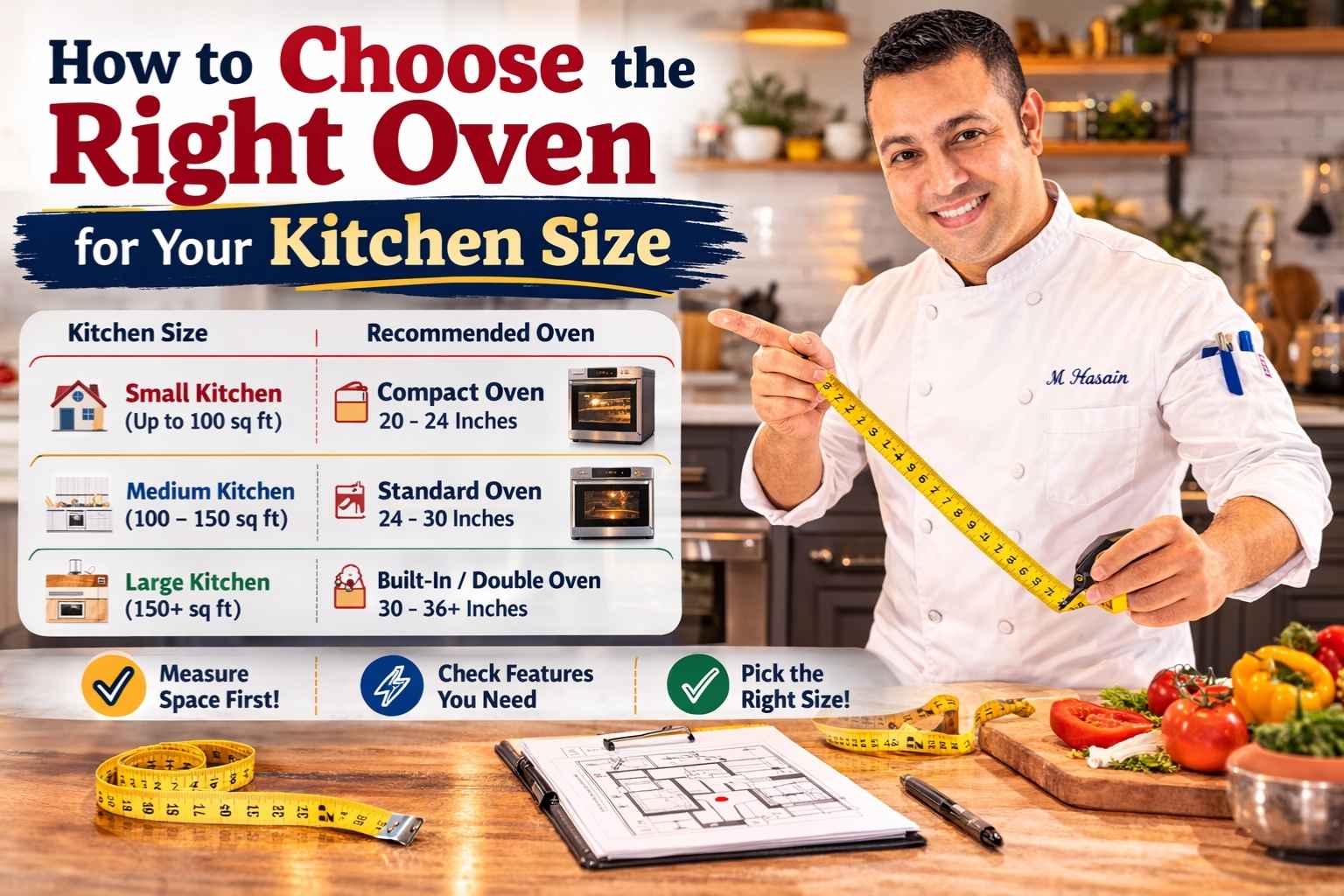
I once thought any oven would work in any kitchen—until I tried baking sourdough in a cramped rental and hosting Thanksgiving in a wide-open Arizona kitchen. Turns out, learning how to choose the right oven for your kitchen size makes all the difference between stress and smooth cooking.
I’m Mossaraof, a professional cook and food blogger who’s roasted, baked, and broiled in kitchens from Chicago to Florida. I’ve seen how oven placement, size, and layout can make or break a meal.
In this article, I’ll walk you through everything I’ve learned firsthand—what works, what doesn’t, and how to avoid the headaches I’ve lived through. Whether your kitchen is tiny or open-concept, I’ve got stories, tips, and hard-earned advice to help you choose smart.
Let’s dive in—and if you’re brand new to oven use, check out The Complete Guide to Using an Oven at Home to get started.
Table of Contents
ToggleWhy Kitchen Size Affects Your Oven Choice More Than You Think
Sometimes, people think kitchen size is just a design issue. But I’ve found it makes or breaks how you actually use your oven.
Small Kitchen, Big Problem
My first apartment kitchen in Chicago was barely 60 square feet. I mean it — if the oven door was open, no one could get to the fridge.
I had a standard 30-inch range jammed between two cabinets. I thought that was normal. Until I burned my arm trying to pull out a lasagna while dodging the trash can.
Small kitchens aren’t just tight. They trap heat. They force you to make choices like:
- Where do I put the cutting board when the oven’s on?
- Can I still open the dishwasher while baking?
- Is it safe to store pans under the oven?
And the worst part? A big oven in a small space feels hotter. I used to sweat just boiling pasta in August.
Large Kitchen, Wrong Oven
Then came Arizona. My house had a beautiful open kitchen — vaulted ceiling, big island, tons of space. But I made a rookie mistake: I reused my old 24-inch electric oven.
I figured smaller ovens heat up faster and save energy. And they do. But I didn’t realize I’d be batch-cooking for guests, prepping freezer meals, and testing sourdough on weekends.
The oven was too small for my space. I couldn’t fit multiple trays. Baking evenness suffered. I ended up rotating pans constantly — like a dance with a hot box.
And guess what? The space around it made it feel even smaller. It was like having a mini fridge in a walk-in pantry. It looked off, and it felt off.
How to Measure Your Kitchen the Right Way (Not Just Width)
This part is about what I wish someone told me before I installed my first wall oven solo. (Yes, solo. Yes, it went terribly.)
Key Measurements That Matter
When folks say “measure your space,” they usually mean wall-to-wall. But as someone who’s had to remeasure after installing the wrong size appliance… that’s not enough.
You’ve got to think in 3D. And in real-life cooking motion.
What I learned the hard way:
- Wall to cabinet space — especially if you’ve got tight drawers near the oven
- Door clearance — not just for the oven, but also the dishwasher, fridge, pantry
- Walkway space — can someone walk behind you while you’re checking cookies?
- Vertical clearance — crucial for wall ovens or built-in setups
- Ventilation zones — ovens need breathing room, especially in humid climates
In Florida, I once installed an oven right next to the back door. Every time I opened it, the humidity rushed in and messed with my meringue. That’s the kind of thing no tape measure tells you.
Real-Life Measuring Tips
Here’s what I do now — and what I recommend to anyone asking how to choose the right oven for your kitchen size:
- Painter’s tape layout: Mark where the oven will go. Include swing space.
- Mock door test: Use cardboard as a fake oven door. Open it. Walk around it.
- Open-all-appliances drill: Open everything nearby at once. Check for collisions.
- Check your verticals: Wall ovens too high = awkward baking. I’ve had to use a step stool just to baste.
If it looks like it’ll fit, that’s just the beginning. If it works on a busy Wednesday night? That’s the true test.
Types of Ovens and What Works Best for Each Kitchen Size
Different kitchens call for different ovens — and I’ve learned that the hard way. From studio apartments to oversized Midwest basements, I’ve cooked in every layout.
Small Kitchens (Apartments, Tiny Homes, Studio Rentals)
Let me tell you about my six-month sublet in New York. Galley kitchen. Zero counter space. The oven door nearly hit the wall.
If your kitchen’s under 100 square feet, don’t try to force in a full-size range.
Best options I’ve used:
- Compact freestanding ranges (20–24 inch)
- Countertop convection ovens
- Toaster ovens with broil/bake settings
What worked for me:
- The Breville Smart Oven Air Fryer saved me. Roasts, cookies, salmon — it did it all.
- A Frigidaire 24” gas range in a friend’s RV-style kitchen surprised me with its power.
U.S. tip:
Older apartments in cities like NYC, Boston, and SF often have limited wiring. Smaller, lower-amperage ovens are safer and more compatible.
Mid-Sized Kitchens (Standard U.S. Homes, Condos)
When I lived in a Florida rental, I had a 30-inch Whirlpool electric range with convection. It hit the sweet spot.
Best setups for this range:
- 30” freestanding or slide-in ranges
- Single wall ovens with drawers underneath
- Convection bake = even results, fewer hot spots
Reliable brands I’ve tested:
- Whirlpool (smooth-top slide-ins)
- Samsung (solid convection and air-fry combo)
- GE (reliable and no-frills)
Large Kitchens (Open Concept, Remodels, Family Kitchens)
In Arizona, I finally had the space — but started with a tiny oven. That mismatch taught me everything.
Better fits:
- Double wall ovens
- Slide-in range + wall oven combo
- Warming drawer setups for extra flexibility
When I upgraded to a KitchenAid double wall oven, cooking became smoother. I could bake and roast without juggling trays.
Wall Oven vs Range — Which Makes Better Use of Space?
I’ve used both — and flip-flopped more than once.
Wall Oven Benefits
My first wall oven install was in a Florida rental. It changed everything.
Why I loved it:
- No bending over
- Bake while someone uses the cooktop
- Works beautifully in two-cook households
Downside: You need cabinetry. And a second appliance for the cooktop.
Range Benefits
Classic, compact, and simple. I grew up with one. I still love them.
Why ranges still rock:
- Save space — oven + cooktop in one
- Easier to replace in rentals or short-term setups
- Great for older U.S. homes
Pro tip:
One-cook kitchen = range. Two-cook kitchen = consider wall oven + separate top.
Gas vs Electric vs Dual Fuel — And What Fits Your Layout
I’ve cooked on them all — and they each have a place.
Gas Ovens
Great for fast preheat and moist cooking. Ideal for roasting.
Downsides:
- Uneven baking
- Needs a gas line
- Less precise at low temps
Still common in:
The Midwest, Northeast, and older U.S. homes
Electric Ovens
My Florida rental had one. I ended up loving it.
Why it grew on me:
- Even heat
- Crisp baking
- No gas hookup needed
Better for:
Apartments, new builds, and folks who bake often
Dual Fuel
My Arizona dream setup. Gas cooktop + electric oven.
Best of both worlds:
- Instant stovetop heat
- Perfect baking control
Only con:
You need both gas + 240V electric. Worth it if you cook often and have the layout.
Choosing Between Single vs Double Ovens for Your Kitchen Size
This decision tripped me up more than once.
When a Double Oven Makes Sense
Arizona. Big kitchen. Holiday prep. I loved it.
Great for:
- Big families or frequent hosts
- Simultaneous baking/roasting
- Weekly meal prep warriors
When It’s Overkill
My Florida kitchen was small. The double oven? Clunky, hot, and rarely used.
Skip the double if:
- You cook for 1–2 people
- You’re short on wall space
- You’d rather have more cabinets or drawers
What I’d Do Differently
If space is tight, go for:
- A strong convection single oven
- A double oven range (small top oven + large bottom)
Ask yourself:
“Do I cook two full meals at the same time every week?”
If not — stick with one good oven.
Ventilation, Heat Flow, and Safety in Tight Spaces
This part’s not sexy — but it’s critical.
Wall Clearance and Heat Zones
Leave space around your oven. I once placed mine too close to the fridge and ended up with soft butter inside the fridge.
Leave:
- 2–4 inches on all sides
- Room for airflow behind and above
- Extra margin near doors and drawers
Don’t Skip Venting
Especially in humid places like Florida.
Musts:
- Use a vented hood or microwave
- Crack a window in humid kitchens
- Add a small fan or dehumidifier
Safety Tips from My Mistakes:
- Don’t place the oven near traffic paths
- Add oven door bumpers
- Keep flammables away from heat vents
- Check cord placement on countertop ovens
Climate Considerations — What U.S. Cooks Should Know
Where you live affects how your oven works.
Humid Areas (Florida, Gulf Coast)
Challenges:
- Longer bake times
- Moisture buildup
- Soggy textures
Fixes:
- Dry convection heat
- Vent better
- Use metal bakeware
Dry Areas (Arizona, Nevada)
Problems I saw:
- Over-browning
- Fast drying
- Uneven crusts
My hacks:
- Water pan on lower rack
- Lower temps slightly
- Use parchment or foil wraps
Cold Climates (Midwest, Northeast)
Annoyances:
- Long preheats
- Heat loss when opening the door
- Uneven heat in old homes
Tricks I use:
- Oven thermometer
- Bake midday for stable room temp
- Avoid blocking vents with foil
Smart Ovens and Compact Tech for Smaller U.S. Kitchens
I used to roll my eyes at these. Not anymore.
Compact Smart Ovens
Tried and loved:
- Tovala
- June Oven
- Anova Precision Oven
Why they work:
- Quick preheat
- Versatile settings
- App control from anywhere
Smart Slide-In Ranges
Tested in Florida:
- Samsung slide-in range with Wi-Fi and air fry
- I loved the remote preheat and recipe sync
Bonus:
You don’t need a second gadget on your counter.
Final Tips — What I Wish I Knew Before Installing Each Oven
Let’s wrap this up with real talk.
Things I’d Always Do
- Measure twice, install once
- Use painter’s tape + cardboard
- Simulate a busy cooking night
- Get pro install for gas or dual fuel
- Always double-check oven temp with a thermometer
Mistakes I’d Avoid
- Oversizing in a small kitchen
- Ignoring swing space
- Skimping on ventilation
- Choosing looks over function
- Forgetting how I actually cook
The Question I Now Always Ask
“What’s the one meal I make most often — and how does this oven make that easier?”
That question has saved me thousands — and made my cooking life simpler, happier, and a whole lot cooler.
FAQs: How to Choose the Right Oven for Your Kitchen Size
How do I choose the right oven size for my kitchen?
Measure your kitchen space before buying. Leave room for airflow and safe use. Choosing the right oven for your kitchen size helps improve cooking comfort and keeps the layout neat.
What oven type works best for a small kitchen?
Compact ovens, wall ovens, or countertop ovens work well in small kitchens. They save space while still offering good cooking power for daily meals.
Is a built-in oven better for medium or large kitchens?
Built-in ovens fit well in medium or large kitchens. They blend into cabinets and free up counter space. This makes the kitchen look clean and more organized.
Should oven capacity match my cooking needs and kitchen size?
Yes. A small family may need a smaller oven, while large families need more capacity. Matching oven size with cooking needs keeps energy use low and cooking easy.
What measurements matter when choosing the right oven for your kitchen size?
Check width, height, depth, and door clearance. These measurements ensure the oven fits your kitchen space and opens safely without blocking walkways or cabinets.