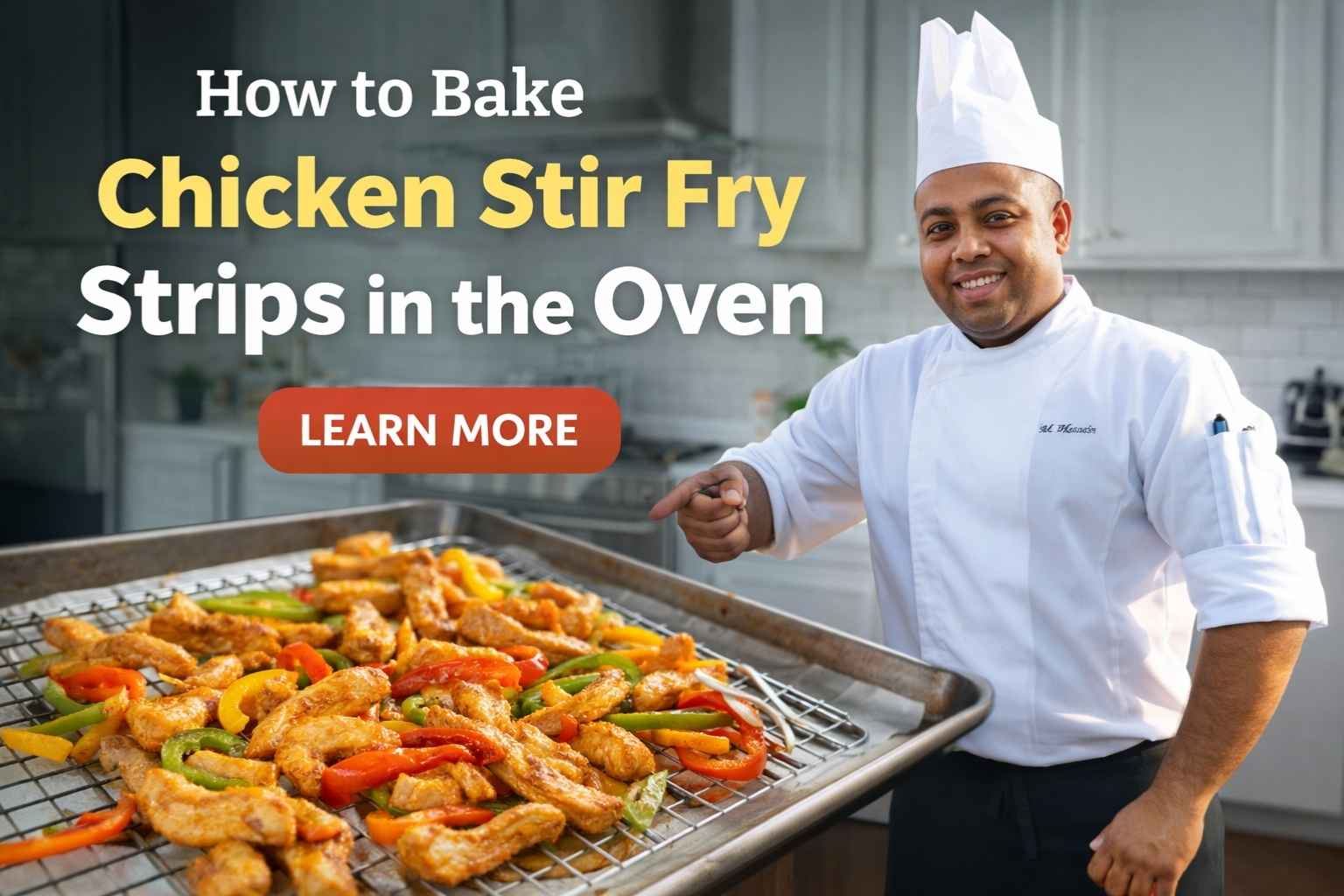
Hi, I’m Mossaraof, a pro cook and food blogger. I love simple food that tastes great. One dish I make a lot is How to Bake Chicken Stir Fry Strips in the Oven. It is fast, easy, and full of flavor.
Many people think stir fry must use a pan. I felt that too at first. Then I tried the oven and it changed my weeknight meals. If you want to master oven cooking, see The Complete Guide to Using an Oven.
In this guide, I will show you How to Bake Chicken Stir Fry Strips in the Oven step by step. You will learn the best heat, cook time, and tips for juicy chicken. Let’s start and make a quick meal you will love.
Table of Contents
ToggleWhat Are Chicken Stir Fry Strips? (And Why I Use Them So Often)
I love shortcuts when they actually taste good — and stir fry strips are exactly that.
They’re pre-sliced chicken breast or thigh meat, cut into thin strips so they cook quickly. I grab them from Kroger, Aldi, or Costco, depending on what part of the country I’m cooking in.
Sometimes they’re labeled “chicken for fajitas” or “chicken stir fry,” but they’re all basically:
- ¼ to ½ inch wide slices
- Skinless, boneless (thankfully)
- Packaged raw and ready to season
In my Midwest kitchen, I’ve leaned on these for everything — wraps, rice bowls, pasta, even salads. They’re faster than whole breasts and way more forgiving than cubes if you’re baking in a rush.
Can You Really Bake Chicken Stir Fry in the Oven? (I Had Doubts Too)
I’ll be honest — I didn’t think the oven could pull it off.
I mean, stir fry is all about fast, hot cooking. Flash sear, stir fast, done in minutes. Wouldn’t baking just dry everything out? Or worse — make it rubbery?
But I was too tired to stir-fry and too hungry to order takeout.
So I oiled a baking sheet, tossed the strips in seasoning, and spread them out like I would veggies. I left space between each piece (key move) and baked them at 400°F. No foil, just parchment paper and crossed fingers.
Fifteen minutes later, I opened the oven and got hit with the smell of garlic, pepper, and roasted chicken — the kind of smell that makes you forget you ever doubted yourself.
They looked amazing. Some edges were golden. The texture? Way better than I expected. Juicy, not chewy. And I didn’t even flip them that first time.
That night changed the way I cook stir fry strips.
Best Oven Settings for Chicken Stir Fry Strips
At first, I guessed the temperature. Not proud of it — I just slapped the oven to 400°F and hoped for the best. It worked okay… but over time, I learned there’s a sweet spot depending on your oven type.
And believe me, in a Florida kitchen where it already feels like 90°F indoors, I needed to get it right fast without reheating the whole house.
Conventional vs. Convection Ovens (They Behave Differently)
I tested this method in both oven types — one in my cousin’s apartment in Chicago (basic electric oven), and one in my convection oven back home.
Here’s what I found:
- Conventional oven (no fan)
→ 400°F, 18–20 minutes
It took longer for edges to brown. Needed a mid-way flip for even color. - Convection oven (with fan)
→ 375°F, 15–17 minutes
Cooks faster, browns better, and dries out less if you keep a close eye.
The fan helps circulate hot air, which crisps the edges without overcooking the middle. If you’ve got a convection setting, it’s worth using here — just don’t walk away for too long.
Turbo Convection Ovens (Like Oster or Hamilton Beach Countertop Ovens)
Okay, so this part was fun. I used a turbo convection oven I keep for quick meals. It’s basically a mini oven with a fan that sounds like a small aircraft.
Here’s what worked in my tests:
- Temp: 360°F (these run hotter in tight spaces)
- Bake time: 14–16 minutes
- Lower rack: keeps it from scorching too fast on top
And since these mini ovens heat up faster, I didn’t always need a preheat — just a minute or two warm-up.
Extra Tip: Don’t Use Broil Mode First
I once tried to broil from the start thinking it’d mimic stir fry searing. Nope.
The strips cooked unevenly and the edges went dry before the inside hit 165°F. Save broiling for the last 2 minutes if you want crisp — not from the start.
How Long to Bake Chicken Stir Fry Strips in the Oven
Once I got the temperature right, the next question was: “Okay, but for how long?”
Because if you go even five minutes too far with thin strips, you’ll end up with something that tastes like jerky. And I’ve done that… more than once.
So I started timing every batch. I kept notes. And now I’ve got a little mental chart based on thickness and whether they’re fresh or frozen.
Quick Timing Guide (Based on Strip Thickness)
This works whether you’re using store-bought pre-cut strips or slicing them yourself from a chicken breast.
- Thin strips (¼ inch thick)
→ 400°F for 12–14 minutes
Flip at 7 minutes for even browning. - Medium strips (½ inch thick)
→ 400°F for 16–18 minutes
I usually flip around 10 mins, then check with a thermometer at 16. - Thick or uneven strips (¾ inch or chunkier)
→ 400°F for 20–22 minutes
These are rare, but if I cut them too lazy one night, this is my fix.
If You’re Using Frozen Chicken Strips (Unseasoned)
I’ve had days where I totally forgot to thaw the chicken. I’m human.
So I tested baking stir fry strips from frozen — and it works!
Here’s how I handle it:
- Bake at 400°F for 25–28 minutes
- Cover with foil for the first 10 minutes to help steam them through
- Uncover and flip for the last 10–15 mins to finish with a roasted texture
They won’t brown as deeply as fresh strips, but they’ll still be juicy. I often add seasoning once they’re halfway done to avoid it burning on the icy surface.
Use a Thermometer — Don’t Guess
Trust me on this one: a digital thermometer saves dinner.
I use a ThermoPro or MEATER (depending on the day). Chicken stir fry strips should hit 165°F in the center. That’s the safe zone — and honestly, the juiciest texture.
If you wait for “looks done,” you’ll usually overshoot.
Marinades and Seasonings That Work Well in the Oven
This is where I hit my first major flop.
I had this gorgeous homemade teriyaki marinade — soy, garlic, honey, sesame oil. I poured it over the chicken strips, popped them in the oven, and got… smoke. Sticky, burnt sugar stuck to the pan. My smoke detector went off, and the chicken was half blackened.
So yeah — I learned the hard way that oven baking isn’t the same as a quick pan stir fry when it comes to sauces.
What I Learned About Oven-Friendly Marinades
If you’re baking stir fry strips, you want to go easy on sugar and sticky sauces — or add them at the end.
Here’s what works better:
- Oil-based marinades: They promote browning and keep strips juicy
- Yogurt or buttermilk-based: Tenderizes the meat and helps prevent dryness
- Dry rubs or spice blends: No risk of burning and packs a flavor punch
Sugary sauces (like sweet chili or teriyaki) can still be used, but I brush them on during the last 5 minutes of cooking — or after. That way, you get the taste without the burn.
My Favorite Flavor Combos for Oven-Baked Strips
These are all mixes I’ve actually used in real kitchens — not pulled from a cookbook.
- Lemon-Garlic Olive Oil
- 2 tbsp olive oil
- 1 tbsp lemon juice
- 1 tsp garlic powder
- Salt + black pepper
→ Light, clean, and bakes beautifully
- Cajun Kick
- 2 tbsp avocado oil
- 1 tsp smoked paprika
- ½ tsp cayenne (optional)
- 1 tsp onion powder
→ Bold and spicy — amazing with roasted peppers
- Yogurt Curry Bake
- 2 tbsp plain Greek yogurt
- 1 tsp curry powder
- ½ tsp turmeric
- Pinch of cumin + salt
→ Makes the strips incredibly tender — this one’s a hidden gem
Do U.S. Grocery Marinades Work?
Yes… but with a catch.
I’ve tried bottled marinades from brands like Ken’s, Primal Kitchen, and even Aldi’s store brand. They’re convenient, but many have a lot of sugar, so again, I either:
- Pat the strips dry before baking and drizzle the sauce after
- Or bake them uncovered and add the sauce halfway
You’ll get better results if you use the sauce as a finishing glaze instead of a full-on soak.
How to Bake Chicken Stir Fry Strips in the Oven — Step-by-Step
I used to wing this.
No measurements, no thermometer, just vibes. And guess what?
Sometimes the chicken was dry, sometimes undercooked, and sometimes I’d end up scraping burnt bits off foil with a spatula.
Now? I follow this routine. It’s fast, consistent, and doesn’t require babysitting like stir-frying on the stove.
What You’ll Need (Nothing Fancy, I Promise)
Most of these tools are already in your kitchen — no special gadgets required.
- Sheet pan or cast iron skillet
I use a Nordic Ware half sheet or a Lodge cast iron when I want extra browning. - Parchment paper or foil
Parchment gives better browning and easy cleanup. I avoid foil unless I’m cooking frozen chicken. - Olive or avocado oil
Both have high enough smoke points to handle 400°F baking. - Tongs
Trust me — flipping strips with a fork is just asking for frustration. - Digital thermometer
I use a ThermoPro. The goal is 165°F in the thickest strip.
Oven-Baked Chicken Stir Fry Strips: My Method
This is my go-to process now. Whether I’m meal prepping for the week or just making a quick lunch, it never fails me.
Step 1: Preheat your oven
- 400°F for conventional
- 375°F if using convection
Don’t skip this — I’ve done it before and ended up with sad, pale strips.
Step 2: Prep your chicken
- Toss 1–1.5 pounds of stir fry chicken strips with 1–2 tablespoons of oil and seasoning
- Let them sit while the oven heats — this helps with flavor absorption
Step 3: Line your pan
- Use parchment for crispier edges
- If using foil, spray it — or you’ll lose half your dinner to sticking
Step 4: Spread the strips out evenly
- No overlapping!
- Crowded chicken = steaming, not roasting
- Leave space between each strip (I know, it’s tempting to squeeze more)
Step 5: Bake mid-rack
- Pop the pan in the center of the oven
- Bake for 14–18 minutes, depending on thickness
- Flip strips around the halfway mark (7–9 mins in)
Step 6: Check doneness
- Insert thermometer into the thickest strip
- You’re looking for 165°F — the magic number for juicy and safe chicken
Optional Step 7: Broil at the end
- If you want browner edges, turn on the broiler for 1–2 minutes
- But watch it like a hawk — I’ve burnt a batch or two this way
Using Olive Oil to “Fry” in the Oven (Yes, It Works!)
The first time I tried this method, I honestly didn’t expect much. I figured, how close can you get to pan-frying if you’re just baking?
But that olive oil? Game-changer.
The strips came out sizzling at the edges, golden in spots, and juicy inside — and all I did was bake them on a parchment-lined sheet with a little oil.
Why Olive Oil Actually Works in the Oven
I’m not a chemist, but I’ve been a cook long enough to know that oil + high heat = flavor.
Here’s why it works when you bake:
- It promotes browning — especially around the edges
- It prevents drying out — coating the strips keeps moisture in
- It helps seasonings stick — dry rubs need a binder to hold on
I use extra light olive oil when I want a neutral flavor, or EVOO when I’m going Mediterranean-style.
Either way, I go for about 1 tablespoon per pound of chicken.
My “Faux Fry” Routine (No Breadcrumbs, No Mess)
When I want that fried feel — the kind with crispy edges and juicy bites — I skip the coating and let olive oil do the heavy lifting.
Here’s what I do:
- Toss raw strips with olive oil + spices (paprika helps with color)
- Spread them out with space (crowding kills crisp)
- Bake at 400°F on parchment
- Broil for 90 seconds at the end (watch closely)
And bam — golden “fried” chicken strips, straight from the oven.
No flour, no frying, no oil splatters on your shirt.
Quick Flavor Boosters That Bake Well with Olive Oil
These are ingredients I’ve added mid-bake or tossed in with the strips:
- Smoked paprika — adds a grilled flavor
- Chili powder — great in Tex-Mex bowls
- Garlic powder — avoids burning like fresh garlic
- Cumin — earthy, toasty flavor when baked
I skip fresh garlic or sugary glazes early on — they just burn in the heat. Add those at the end or use dry versions instead.
Can You Bake Chicken Stir Fry with Veggies Together?
Absolutely — but not all veggies are created equal in the oven.
I’ve definitely had moments where I threw everything on one tray thinking, “Dinner in 20 minutes!” Only to pull it out and find my onions crisping nicely while my zucchini turned to mush.
So yeah, I’ve learned to pair the right vegetables with chicken strips when baking them together.
Best Veggies to Bake with Chicken Stir Fry Strips
These veggies play nice with the chicken — they roast at similar times and textures.
- Bell peppers (any color)
→ They caramelize just enough and stay tender-crisp - Red onion or yellow onion
→ Sliced thick, they roast sweet and don’t burn - Snow peas or snap peas
→ Add them halfway through cooking so they stay snappy - Zucchini (cut thick)
→ Quarter into chunky spears — anything thinner turns soggy
When I’m doing a full sheet pan stir fry, I toss the chicken and veggies separately in oil and seasoning, then lay them side-by-side, not piled up.
Veggies I Avoid on the Same Pan
I’ve made the mistake of trying to roast everything together like it was a soup pot.
Here’s what hasn’t worked for me:
- Mushrooms
→ They release too much moisture and end up steaming everything - Broccoli
→ It either burns or stays raw unless you pre-steam it - Carrots
→ Unless pre-cooked or sliced paper-thin, they stay crunchy way too long
If I want these in the dish, I usually roast them separately or steam them and mix them in at the end.
How I Time It Out on Busy Weeknights
When I’m in a rush but still want a full meal in one tray, I do this:
- Start with chicken + slow-cooking veggies (like onion, bell pepper)
- Add quick-cooking veggies halfway (like snap peas, zucchini)
- Toss it all with the same marinade or spice blend — nothing too sugary
It ends up looking like something out of a meal prep cookbook — but way less work. I’ve packed these into lunch containers for the week more times than I can count.
Common Mistakes I Made (So You Don’t Have To)
I didn’t get this method right on the first try. Or the second. Honestly, I went through a whole pack of chicken strips before I nailed it.
These were the biggest slip-ups I ran into — and what I do now instead.
1. Overcrowding the Pan
Probably the most common (and tempting) mistake: piling all the strips together to “save space.”
But guess what happens?
- They steam instead of roast
- No browning, no crisp edges
- Just pale, damp chicken that tastes like sadness
Now, I always give each strip space — no touching. If I’ve got too much, I use two pans or cook in batches. It’s worth it.
2. Not Preheating the Oven
I’ve skipped preheating when I’m hangry or running late. Big mistake.
- The first few minutes in a cold oven?
The chicken just sits there, soaking in its own juices.
That kills any chance of a good texture.
Now I make sure my oven hits 400°F before anything goes in. I’ll even wait an extra 2–3 minutes after the oven beeps, just to be safe.
3. Using Sugary Sauces Too Early
Oh man. I’ll never forget the batch I covered in honey garlic sauce before baking.
The result?
Charred, bitter edges and a sticky black crust on my pan that took days to scrub off.
Now I either:
- Add sugary sauces in the last 5 minutes, or
- Toss cooked strips in sauce after baking
It’s safer, easier, and the flavor still shines.
4. Skipping the Flip
I used to think flipping strips halfway wasn’t a big deal. But turns out, it really matters.
- No flip = one side juicy, one side dried out
- It also helps get that nice color on both sides
So I set a timer at 8 minutes, flip them all with tongs, and finish strong.
5. Guessing Doneness by Sight
Some strips look done way before they’re safe to eat.
I’ve had slices that looked golden and perfect… but the middle was still raw. Not fun.
Now I rely on my digital thermometer. I check the thickest piece and make sure it’s hit 165°F. No more guesswork.
How Do You Fry Chicken Strips in the Oven Without Breadcrumbs?
I remember the night clearly: it was Thursday, 6:45 p.m., I had exactly one pound of thawed chicken strips and zero breadcrumbs. No panko. No flour. Not even a dusty bag of tortilla chips to crush.
I almost gave up. But instead, I leaned into it — and discovered a cleaner, faster, breadcrumb-free way to make crispy chicken strips in the oven.
Oven-Frying Without Coating — It’s a Real Thing
Turns out, if you treat your oven right and use the right oil and seasoning, you can get crisp, browned chicken strips without any breading at all.
Here’s how I pull it off now:
- Start with dry chicken
→ Pat them down with a paper towel to get rid of excess moisture - Toss in olive oil
→ Just enough to lightly coat — about 1 tablespoon per pound - Use bold spices
→ Paprika, garlic powder, black pepper, chili powder — these all help with color and flavor - Spread evenly on parchment paper
→ Avoid foil — it steams the bottom
Then I bake them at 400°F, flipping halfway, and finish with a quick broil to get those golden bits around the edges.
No breadcrumbs, no frying — just that nice roasted texture that still feels like a treat.
Why I Actually Prefer It Sometimes
I’ll be honest — this method grew on me.
It’s:
- Faster (no breading mess)
- Lighter (no flour or oil-soaked crumbs)
- Better for meal prep — they don’t go soggy in storage
I’ve packed these plain strips into salads, rice bowls, wraps — even dipped them in buffalo sauce when I was craving heat.
Optional Add-Ons for Texture (If You Want a Little Crunch)
On nights when I want a touch more bite without full-on breading, I’ve played with:
- Cornstarch — tossed lightly before baking (just 1 tsp per pound)
- Parmesan cheese — sprinkle halfway through for a toasty crust
- Chopped nuts — crushed almonds or pecans added near the end
Each of these gives a subtle crunch without turning into a full coating situation.
How Do You Fry Chicken Thighs or Legs in the Oven? (Bonus Tip)
One Saturday in January — cold, snow flurries out the window, oven already on — I realized I didn’t have stir fry strips. What I did have? A pack of boneless chicken thighs.
I figured: why not try the same baked method, just adjust the timing? So I sliced the thighs into strips about the same size and tossed them in my go-to marinade.
The result? Way juicier than I expected. Slightly darker, richer flavor, and they crisped up like champs.
Why Chicken Thighs Work So Well
Compared to breast meat, thighs:
- Have more fat → naturally juicier
- Don’t dry out as fast → perfect for longer bake times
- Can brown better without getting chewy
I’ve used this trick when I want a little more flavor or when the store’s out of chicken breasts (which happens often near me during sales).
My Method for Thigh Strips in the Oven
- Cut thighs into strips
About the same size as regular stir fry chicken — ½ inch wide - Bake at 400°F
I usually go 20–22 minutes for thigh meat - Flip once halfway through
Helps with even browning and texture - Target internal temp: 175°F
I know the rule says 165°F is “done,” but thighs taste better and stay juicier at 175°F
Sometimes I broil for 1–2 minutes at the end to crisp the edges.
What About Chicken Legs or Drumsticks?
Okay — different beast here. These are thicker, bone-in, and take longer.
But when I’m craving that oven-fried texture, I do this:
- Use drumsticks or bone-in thighs whole
- Bake at 425°F for 35–40 minutes
- Brush lightly with oil and seasoning
- Flip at 25 minutes
- Broil the last 3 minutes for crisp skin
Not exactly stir fry style, but still a great alternative when you want something hearty without breaking out the frying pan.
When I Make This Swap
- If I’ve got a family pack of thighs from Costco
- On cold nights when I want something meatier
- For oven “fried chicken” without the mess of dredging or deep frying
This version pairs beautifully with roasted veggies or even over fried rice — makes the house smell amazing, too.
Can You Use This Method in an Air Fryer Oven?
Yes, you totally can — but it’s not a one-to-one swap for a regular oven.
I tested this in my Ninja Foodi Digital Air Fry Oven, and also in my cousin’s Instant Vortex Plus. The results? Crispier, faster, but trickier with timing. And space gets tight fast.
How I Do It in My Air Fryer Oven
This is my go-to process when I want dinner fast and don’t want to heat the whole kitchen:
- Preheat to 390°F
Even if your machine says “no preheat,” trust me — do it anyway. - Use the air fryer rack or tray
Don’t crowd. If you pile the chicken, it steams. - Bake for 8–12 minutes total
Flip once around minute 5–6 - Check at minute 8
Smaller strips will finish fast. Thicker ones may need the full 12.
You get faster browning, but also a higher risk of overcooking if you don’t watch closely.
Texture Differences (Compared to Oven)
Here’s what I noticed when comparing back-to-back batches:
| Feature | Oven Method | Air Fryer Oven |
|---|---|---|
| Crispiness | Golden edges, subtle bite | More crisp, less moist |
| Juiciness | Juicier and more forgiving | Can dry out faster |
| Batch Size | Can fit 1.5–2 lbs easily | About 1 lb max per tray |
| Cleanup | Parchment = easy clean-up | Tray drips can get messy |
So yeah — it works. But I still prefer my full-size oven when I’m doing a bigger batch or want more consistent texture.
When I Reach for the Air Fryer Oven Instead
- When I’m cooking for just me
- Hot summer nights (no full oven heat)
- Lunch meal preps with ½ lb of strips
- Tossed-in-buffalo-sauce situations when I want crisp bites for wraps or salads
If I’m baking for the whole family or doing veggies too? Back to the big oven.
Do You Need Foil or Parchment Paper?
Short answer? Yes. Use something.
The first time I baked chicken stir fry strips directly on a sheet pan — no liner, no oil, just straight-on metal — I ended up chiseling cooked-on chicken bits off the pan with a metal spatula. My shoulder hurt. The pan still has scars.
Now, I always line the pan. But not all liners are equal.
Parchment Paper Is My Go-To
Parchment gives the best texture and the easiest cleanup. Here’s why I swear by it:
- Prevents sticking without steaming the chicken
- Lets the oil do its job — you still get browning on the bottom
- No weird reactions — some foil types mess with seasoning, especially acidic marinades
I use the pre-cut sheets from Costco. They fit perfectly on my half sheet pans and never curl up.
What Happens When You Use Foil
I’ve used foil plenty of times — sometimes out of habit, sometimes when I run out of parchment. It works… but with trade-offs.
Pros:
- Easy cleanup
- Holds in juices (can be useful with dry chicken)
Cons:
- Creates steam → softer texture, no crisp edges
- Sticking issues if you forget to oil or spray it
- Can burn delicate marinades if the foil gets too hot
These days, I’ll use foil only if I’m baking from frozen, or when I want extra moisture locked in.
When I Skip Liners Altogether
If I’m using a well-seasoned cast iron pan, like my 12-inch Lodge skillet, I sometimes skip the liner. That pan is like a nonstick miracle.
But even then, I’ll oil it lightly and keep an eye on hot spots.
Pro Tip: Don’t Use Wax Paper
I’ve seen this mistake online. Don’t do it.
Wax paper melts in a hot oven. It smokes. It sticks. It ruins the chicken and the pan.
Stick with parchment. Or foil. Or cast iron. Nothing else.
Cleaning Tips (Because Oven Oil Splatters Are Real)
I’ve had nights where the chicken was golden, the flavors were spot on… and then I looked at the sheet pan. Oil bubbles, dark marinade spots, and burned-on edges stuck like glue.
And of course, I didn’t soak it right away because I was “just going to eat first.”
Now I’ve got a system.
My Go-To Cleaning Routine (No Drama, No Scraping)
Here’s what I do the moment dinner’s off the tray — before the pan has time to turn into a battlefield:
- Step 1: Let the pan cool slightly
Not scorching, but still warm. That’s the magic window. - Step 2: Fill with hot water + a drop of dish soap
I let it soak in the sink for 10–15 minutes. Sometimes longer if the edges are dark. - Step 3: Use a plastic scraper or sponge (not steel wool)
Those little plastic pan scrapers? Lifesavers.
They won’t scratch nonstick pans and work great on gunk. - Step 4: Rinse and dry immediately
If I’m using cast iron, I dry it right on the stove with a paper towel and a low flame.
Bonus Tip: Deglazing Cast Iron While It’s Still Warm
If I bake the chicken stir fry strips in my Lodge cast iron skillet, I don’t soak it.
Instead, while it’s still hot:
- I pour in a splash of hot water
- Scrape gently with a wooden spoon
- Let the steam loosen the stuck-on bits
- Then wipe it clean and oil it lightly before storing
Takes less than 2 minutes, and the pan stays beautifully seasoned.
When I Just Want Easy Clean-Up
If I’m feeling tired or just not in the mood (which happens a lot after work), I’ll:
- Line the tray with parchment AND foil
Parchment on top = food doesn’t stick
Foil underneath = tray stays spotless - Use silicone baking mats —
I’ve used these on and off. They clean up well, but they don’t crisp the chicken as much as parchment.
Tools I Trust for This Oven Method
You don’t need fancy gear to make oven-baked chicken stir fry strips. But using the right tools? It saves time, prevents frustration, and honestly just makes the whole process smoother.
These are the ones I use almost every week — tested in real, messy, busy U.S. kitchens.
My Favorite Sheet Pan
👉 Nordic Ware Half Sheet Pan
This thing is a tank. It doesn’t warp at 400°F, it distributes heat evenly, and it’s the perfect size for one pound of chicken strips — spaced out, no crowding.
I got mine at Target years ago, and it still looks great (even after some burn stains I never got around to scrubbing).
The Skillet That Doubles as a Sheet Pan
👉 Lodge Cast Iron 12-inch Skillet
I bake chicken strips in this when I want extra crisp or when I’m cooking a smaller batch.
Bonus? I can serve straight from the pan, and it keeps the chicken warm longer — especially handy on cold Midwest nights when the kitchen cools fast.
Parchment Paper (Don’t Skip This)
I used to think this was optional. Not anymore.
- Prevents sticking
- Makes cleanup 100x easier
- Helps the bottom of the chicken roast instead of steam
I use the Kirkland pre-cut sheets from Costco, but Reynolds works great too.
Tongs That Won’t Quit on You
👉 OXO 12-inch Tongs
I’ve gone through cheap ones that bent or wouldn’t grip. These stay tight, don’t scratch pans, and feel sturdy in your hand.
They’ve survived flipping ribs, stir fry strips, even cookies (don’t ask).
Digital Thermometer — A Must-Have
👉 ThermoPro TP03 (for quick reads)
👉 MEATER+ (for hands-free monitoring)
I never bake chicken without checking the internal temp. A thermometer means no more guessing, no more raw middles, and no more dried-out overcooked strips.
I usually grab the ThermoPro unless I’m multitasking — then MEATER saves me.
Bonus: Small Silicone Spatula
Sounds silly, but I use this to stir marinade, toss the strips, or scrape out every last bit of sauce from the bowl. It’s one of those little things that ends up doing a lot of work behind the scenes.
When I Use This Oven Method (Real-Life Scenarios)
This isn’t just a once-in-a-while dinner trick.
I use this method all the time — in different cities, seasons, and moods.
It’s become my default because it’s easy, consistent, and flexible. And honestly? I don’t always have the energy to stir fry over a hot burner after work.
Weeknights When I’m Dead Tired
There are those nights — maybe it’s raining, maybe I just got off a shift, maybe the kitchen’s already warm — and I just want food that makes itself.
That’s when I:
- Pull out pre-sliced stir fry chicken
- Toss with oil + Cajun seasoning
- Bake for 15–18 minutes
- Eat straight off the sheet pan with a fork
Zero thought. Zero stress. Minimal dishes.
Meal Prep Sundays
Every couple of Sundays, I crank the oven and batch-cook a few trays of chicken strips. I mix up the flavors — lemon-pepper on one pan, curry on another.
Then I use the strips for:
- Rice bowls
- Wraps
- Pasta
- Quick salads
- Even breakfast scrambles
It’s one of the easiest ways I’ve found to make weekday lunches less boring — and I don’t have to think twice when it’s 11 a.m. and I’ve got 10 minutes between meetings.
Rainy or Freezing Days When I Skip the Grill
In Arizona summers, I avoid grilling. In Chicago winters, I can’t grill.
So when I want that “grilled” flavor or texture without stepping outside, I go straight for the oven:
- Chicken strips with smoked paprika, garlic, and olive oil
- Bake on cast iron or a hot sheet pan
- Finish under the broiler for that flame-kissed vibe
It scratches the same itch without fighting the weather.
Last-Minute Guests (It’s Happened More Than Once)
I’ve had friends drop by with a “hey, I’m in the area” text — and suddenly I’m hosting.
When that happens, I grab a pack of stir fry strips from the fridge or freezer, whip up a soy-garlic marinade, and toss them in the oven while I throw together rice or noodles.
People think I planned it. I didn’t. The oven did the heavy lifting.
Why I Keep Coming Back to This Oven Method
Honestly? It’s the kind of cooking that just fits real life.
I’ve done this in tight city apartments with tiny electric ovens and in full-sized suburban kitchens during holiday prep chaos. It worked just as well in Florida’s sticky heat as it did during a Chicago deep freeze. Doesn’t matter the kitchen — this method travels with me.
Sometimes I feel like a full-blown chef, laying out ingredients with care. Other times I’m tired, hungry, and just need food on a plate fast. Either way, this oven method shows up for me. No smoke. No oil splashing. No flipping chicken mid-air with a spatula that’s too short.
Just a pan, some strips, a little oil, and 20 minutes of hands-off time that I can spend cleaning up, prepping veggies, or — let’s be real — scrolling on my phone with one sock on.
I’ve cooked these strips to feed friends, family, even picky toddlers who “don’t like chicken” until they had this kind. I’ve made them spicy, sweet, herby, and plain. Sometimes I eat them right off the tray while standing by the sink.
And every time I do, I remember that night — when I was too tired to stir fry and decided to trust the oven instead.
Best dinner decision I’ve made in a while.
FAQs
How to Bake Chicken Stir Fry Strips in the Oven without drying them out?
Bake chicken stir fry strips at 400°F on a lined tray. Spread them in one layer and add a light oil coat. This helps the meat stay soft and cook fast in the oven.
What is the best temperature for How to Bake Chicken Stir Fry Strips in the Oven?
The best heat is about 400°F. This heat cooks the chicken fast and keeps it juicy. It also helps the edges get a light golden color.
How long does it take to bake chicken stir fry strips in the oven?
Most chicken stir fry strips bake in about 15–20 minutes at 400°F. Thin strips cook faster. Always check that the chicken is fully cooked before you serve it.
Can I add vegetables when learning How to Bake Chicken Stir Fry Strips in the Oven?
Yes, you can add bell peppers, onions, or broccoli to the tray. Cut them small so they cook fast. They bake well with chicken and make the meal bright and tasty.
Do I need to marinate chicken for How to Bake Chicken Stir Fry Strips in the Oven?
A short marinade helps add taste and keep the meat soft. Soy sauce, garlic, and oil work well. Even 15 minutes of soak time can boost the flavor.