Hey, I’m Mossaraof — a professional cook and food blogger. After hosting a weekend bake-off with friends, I stopped and asked myself, how much does it cost to use an oven for an hour? I had the oven running all day, and with bills going up, I wanted answers. If you’re still learning the basics, The Complete Guide to Using an Oven at Home is a great place to start. In this article, I’ll walk you through the real costs — and ways to save.
Decoding the Math: Electric vs. Gas Ovens in 2026
Choosing between gas and electric is like choosing between a truck and a sedan. One has raw power, while the other is all about steady, clean delivery.
In my experience, the fuel source is the biggest factor in your final cost. I once worked in a bistro that switched from gas to electric mid-season. The owner nearly fainted when the first bill arrived. Electric ovens are generally more expensive to run in most U.S. states.
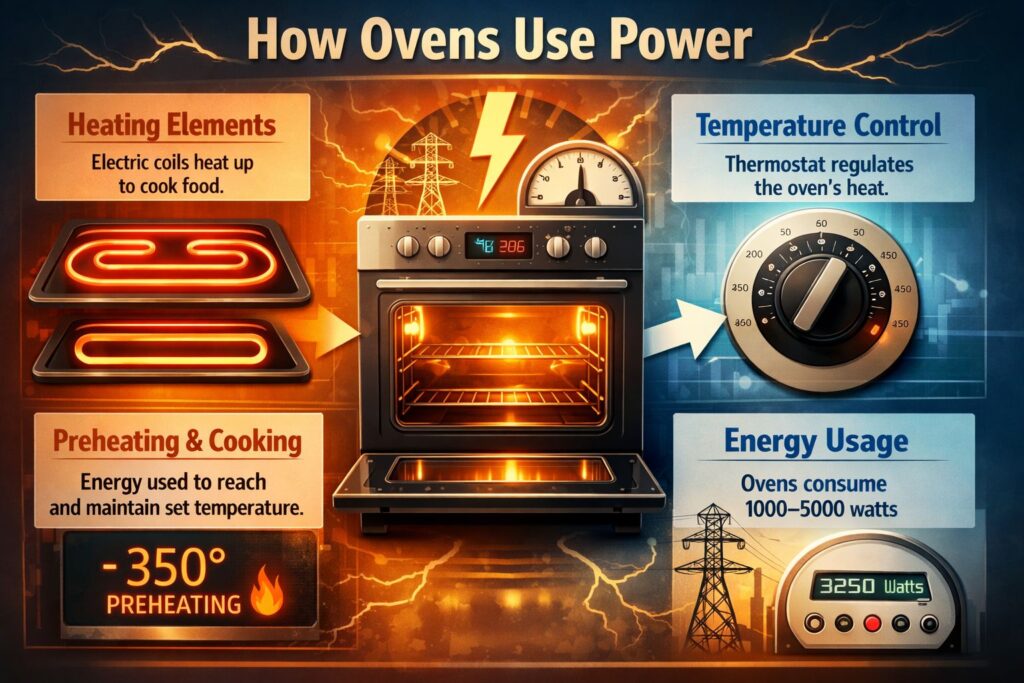
- Electric Ovens: Most U.S. homes use 240-volt outlets for these. They pull a lot of juice.
- The Average Pull: A standard oven uses about 2,000 to 5,000 watts.
- Cost Per Hour: At the current U.S. average of 18 cents per kWh, you pay about 36 to 90 cents per hour.
- Gas Ovens: These use “therms” or “CCFs.” They are much cheaper in places like Texas or the Midwest.
- The Gas Edge: You might only spend 15 to 25 cents per hour with a gas flame.
I personally prefer gas for the “click-whoosh” sound. It feels more real to me. But electric ovens give a very dry, even heat. That is better for baking cakes. You pay a premium for that precision.
Real-World Usage: How Temperature Affects Your Bill
Setting your oven to 450°F isn’t just a number on a screen. It’s a heavy lift for the metal coils inside your kitchen range.
I remember a Thanksgiving where I had three ovens going at once. One was at 325°F for the turkey. Another was at 425°F for the rolls. The high-heat oven clicked on and off way more often. It was fighting to stay hot.
- The 350°F Standard: This is the baseline for most American recipes.
- Energy Cycles: Your oven doesn’t stay “on” the whole hour. It pulses.
- High Heat Costs: Roasting at 450°F can cost 20% more than baking at 325°F.
- The Insulation Factor: If your oven is old, the heat leaks out. You pay for that lost air.
I once lived in an old farmhouse with a drafty kitchen. In the winter, my oven ran constantly just to stay at temp. It was basically a very expensive space heater. I learned to check the door seals very quickly after that month.
Brand Comparison: Energy Efficiency of US Kitchen Brands
Every brand has its own personality, and some are much thriftier with power than others.
I’ve used almost every brand under the sun. From the fancy Wolf ranges in high-end homes to the trusty GE models in rental units. Some brands just hold heat better. It’s all about the “build quality” and how much insulation they cram into the walls.
- Whirlpool & Maytag: These are the American workhorses. They are simple and hold heat well.
- Samsung & LG: These often have “smart” features. They tell your phone when the oven is hot.
- Viking & Wolf: These are pro-grade. They use more power but reach high temps very fast.
- Frigidaire: Often found in apartments. They are smaller, so they cost less to heat up.
I find that the newer “Air Fry” ovens use a lot of fan power. The fan moves the air so food cooks faster. This can actually save you money because the oven is on for less time. It’s a win-win for your stomach and your wallet.
How Much Does It Cost to Use an Oven for an Hour?
I spent my morning in a kitchen that smelled like burnt sugar and ambition. As a professional cook, my life is measured in “oven ticks.” I’ve stood in front of massive commercial decks and tiny apartment stoves in New York City. Every time I turn that dial, I think about the meter spinning outside. It’s a habit you pick up when you cook for a living. You start to see heat as money.
Most people just want to roast a chicken or bake some cookies. They don’t want a math lesson. But then the utility bill hits the mailbox. In the U.S., our energy prices are jumping. Depending on if you are in sunny California or chilly Maine, your costs change. I want to share what I’ve learned from years of staring at heating elements. Let’s look at How Much Does It Cost to Use an Oven for an Hour? and how you can keep those costs down.
Decoding the Math: Electric vs. Gas Ovens in 2026
Choosing between gas and electric is like choosing between a truck and a sedan. One has raw power, while the other is all about steady, clean delivery.
In my experience, the fuel source is the biggest factor in your final cost. I once worked in a bistro that switched from gas to electric mid-season. The owner nearly fainted when the first bill arrived. Electric ovens are generally more expensive to run in most U.S. states.
- Electric Ovens: Most U.S. homes use 240-volt outlets for these. They pull a lot of juice.
- The Average Pull: A standard oven uses about 2,000 to 5,000 watts.
- Cost Per Hour: At the current U.S. average of 18 cents per kWh, you pay about 36 to 90 cents per hour.
- Gas Ovens: These use “therms” or “CCFs.” They are much cheaper in places like Texas or the Midwest.
- The Gas Edge: You might only spend 15 to 25 cents per hour with a gas flame.
I personally prefer gas for the “click-whoosh” sound. It feels more real to me. But electric ovens give a very dry, even heat. That is better for baking cakes. You pay a premium for that precision.
Real-World Usage: How Temperature Affects Your Bill
Setting your oven to 450°F isn’t just a number on a screen. It’s a heavy lift for the metal coils inside your kitchen range.
I remember a Thanksgiving where I had three ovens going at once. One was at 325°F for the turkey. Another was at 425°F for the rolls. The high-heat oven clicked on and off way more often. It was fighting to stay hot.
- The 350°F Standard: This is the baseline for most American recipes.
- Energy Cycles: Your oven doesn’t stay “on” the whole hour. It pulses.
- High Heat Costs: Roasting at 450°F can cost 20% more than baking at 325°F.
- The Insulation Factor: If your oven is old, the heat leaks out. You pay for that lost air.
I once lived in an old farmhouse with a drafty kitchen. In the winter, my oven ran constantly just to stay at temp. It was basically a very expensive space heater. I learned to check the door seals very quickly after that month.
The Hidden Costs: Self-Cleaning and Convection Features
Modern ovens come with fancy buttons that promise to save you time, but they usually come with a surcharge on your power bill.
The “Self-Clean” button is the most expensive button in your kitchen. I used it once after a pie bubbled over. My kitchen reached 900°F and my smoke alarm wouldn’t stop screaming. It felt like my house was trying to launch into space.
- Pyrolytic Self-Cleaning: This runs for 3 to 5 hours at extreme heat. It can cost $2.00 to $5.00 per cycle.
- Steam Cleaning: Much better. It uses a little water and lower heat. It costs pennies.
- Convection Fans: These fans move air. They use a tiny bit of extra power but cook food 25% faster.
- The Math: If a chicken takes 45 minutes instead of 60, you save money overall.
I always tell my friends to use convection for meats. The skin gets crispier and the bill stays lower. It’s one of those rare times where being a better cook actually saves you cash. Just make sure to drop your temperature by 25°F when you turn that fan on.
Brand Comparison: Efficiency of Popular U.S. Kitchen Brands
Not all ovens are created equal, and some big-name brands are built to hold heat much better than others.
I’ve stood in front of Wolf ranges that felt like bank vaults. Then I’ve used cheap apartment stoves that felt like they were made of tin foil. In the U.S., we have a lot of choices, from Samsung to GE Profile.
- GE and Whirlpool: These are the reliable standards. They have thick insulation and good gaskets.
- Samsung Smart Ovens: I love the “Dual Cook” feature. You can heat just the top half of the oven for small meals.
- Viking and Wolf: These are pro-grade. They use a lot of power to heat up, but stay hot forever.
- LG InstaView: Tapping the glass to see inside saves you from opening the door. That’s a huge energy saver.
Opening the door is the enemy of efficiency. Every time you “peek,” you lose about 25°F of heat. Your oven then has to work for five minutes just to get back to where it was. If you have a light, use it.
Maintenance Secrets to Lower Your Cooking Costs
A dirty oven is more than just an eyesore; it’s an inefficient machine that struggles to breathe.
I once visited a friend who complained her oven took forever to preheat. I looked inside and saw a layer of black carbon on the bottom. It was acting like a heat shield for the food. We spent an hour scrubbing it, and suddenly it worked like new.
- Check the Gaskets: If the rubber seal is cracked, heat is leaking. Replace it for $20 to save $100.
- Clean the Sensors: The little metal probe needs to be clean to read the temp correctly.
- Calibrate Often: Use a $5 oven thermometer. If your oven says 350°F but it’s actually 375°F, you are wasting juice.
- Glass Maintenance: Keep that window clear so you don’t have to open the door.
I try to do a deep clean every three months. It’s not fun, but it keeps my roasting times consistent. When you’re a professional, consistency is everything. You don’t want a cake taking 40 minutes one day and 50 the next.
Regional Price Differences: Why Your State Changes the Menu
Living in the U.S. means your cooking costs depend heavily on your zip code. Energy isn’t just a commodity; it’s a regional reality that shifts with local climate and local power grids.
I remember moving from a small apartment in Louisiana to a house in California. In Louisiana, the electricity was so cheap I didn’t think twice about roasting a whole turkey on a Tuesday just for sandwiches. Then I got my first bill in the Bay Area. I nearly fell over. My oven habits had to change overnight.
| State | Electricity Rate (¢/kWh) | Est. Cost for 1 Hour (3000W) |
| National Average | 18.05¢ | 54.15¢ |
| Louisiana (Lowest) | 12.44¢ | 37.32¢ |
| California | 33.75¢ | $1.01 |
| New York | 27.07¢ | 81.21¢ |
| Hawaii (Highest) | 39.89¢ | $1.19 |
If you’re in Hawaii or California, you’re paying nearly double or triple what someone in the South pays to bake the same batch of brownies. It’s wild to think that the same recipe costs differently just because of where you stand. In the Northeast, where winters are brutal, your oven also works harder to heat up a cold kitchen. It’s a double whammy for your wallet.
Countertop Contenders: Small Appliances vs. Full-Sized Ovens
Sometimes the best way to save money on your oven is to not use it at all. Smaller cavities heat up faster and stay hot with much less effort.
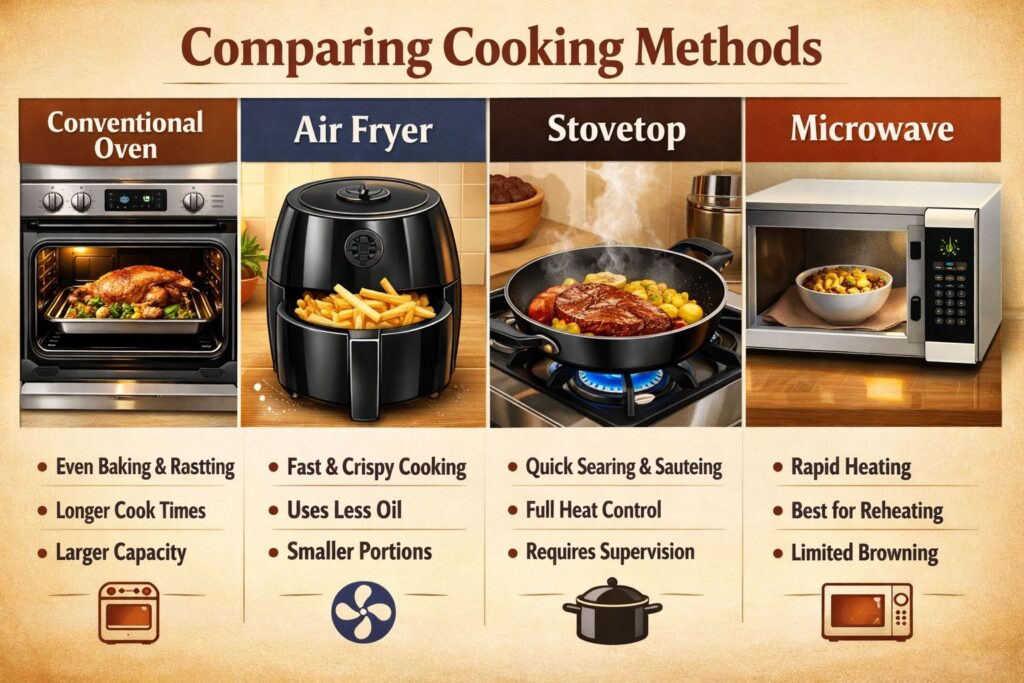
I’m a bit of a kitchen gadget nerd. I have a toaster oven, an air fryer, and a massive wall oven. If I’m just making a single chicken breast or a piece of salmon, I reach for the air fryer every single time. It feels like cheating, but the results are better and my kitchen stays cool.
- Air Fryers: These are basically tiny convection ovens. They use about 1,500 watts but cook 30% faster.
- Toaster Ovens: Perfect for 1-2 people. They use about 1,200 watts and require almost zero preheat time.
- Microwaves: The undisputed king of cheap. It costs about 4¢ to 6¢ to heat a plate of leftovers.
- Slow Cookers: These are slow (obviously), but they pull very low power—usually under 200 watts.
I call my air fryer the “utility bill’s best friend.” It takes 3 minutes to preheat compared to 20 minutes for my big GE oven. If you factor in that 17-minute difference, you’ve already saved enough to pay for the seasoning on your steak. For a solo cook in a high-cost state like Maine or Massachusetts, this is a total game-changer.
The Impact of Altitude and Climate on Your Cooking Bill
Most people don’t realize that the air around your oven affects how much energy it sucks from the wall.
I once did a guest chef spot in Denver. I tried to roast potatoes the same way I did at sea level, and they were still hard as rocks when the timer went off. High altitude means lower air pressure, which means moisture evaporates faster. Your oven has to run longer to get that same “cooked through” feeling.
- High Altitude (Mountain West): You often need to increase temps by 15-25°F or cook longer. More time = more money.
- Humid Climates (Florida/Gulf Coast): Humidity helps transfer heat, but it also makes your AC work harder to fight the oven’s heat.
- Dry Climates: Food dries out fast, so you might use “water baths” (bain-maries), which take extra energy to boil.
In my own kitchen, I’ve noticed that on humid summer days, I prefer using the grill outside. It keeps the heat out of the house. If I use the oven, my AC kicks on immediately to fight the 400°F box in the corner. That’s a hidden cost of How Much Does It Cost to Use an Oven for an Hour?—you’re often paying for the cooling, too.
When to Call It Quits: Repair vs. Replacement
An old oven might have a soul, but it’s probably also a “vampire” sucking way more power than it needs.
My grandmother had an old avocado-green oven from the 70s. It was built like a tank, but the door didn’t quite shut right. You could feel the heat 10 feet away. I finally convinced her to get a new basic Frigidaire. Her power bill dropped by $15 a month. That adds up fast.
- The 10-Year Rule: If your oven is over a decade old, its insulation is likely degraded.
- The “Hot Spot” Test: If one side of your cake is burnt and the other is raw, your elements are failing.
- The Door Test: Can you slide a piece of paper through the door seal? If yes, you’re losing money every second.
- Energy Star Savings: Newer models can be 20-30% more efficient than those made just 15 years ago.
I know it’s hard to drop $800 on a new appliance. But if you cook every day, the savings on your utility bill can pay for that oven in a few years. Plus, you get fancy features like “hidden bake elements” that make cleaning way easier. I’m all for tools that work for me, not the other way around.
H2: Smart Tech and The Future: Is Your Oven Over-Communicating?
We’re living in a world where your oven can text you when your lasagna is golden brown, but all that “brain power” comes with a tiny, hidden cost.
I recently tested a smart oven that had a built-in camera. It was cool to watch my cookies rise on my phone while I was in the garage, but then I started thinking about the standby power. These “smart” features keep the oven’s Wi-Fi and processors running 24/7. It’s not much—maybe a few dollars a year—but it’s part of the new math for How Much Does It Cost to Use an Oven for an Hour? in 2026.
- Remote Preheating: This is the big win. If you can start your oven while driving home from the grocery store, you don’t waste 20 minutes standing in the kitchen waiting.
- Precision Sensors: Smart ovens use AI to adjust the heat based on the moisture it “feels” in the air. This can shave 5-10 minutes off a roasting cycle.
- Vampire Power: Even when off, a smart oven can pull 2-5 watts. If you’re a minimalist, you might hate this.
- Integration: In states like Texas or Arizona, some smart ovens can sync with your utility company to avoid cooking during “peak” hours when rates are double.
I love the convenience, but I’m a bit old-school. I still keep a manual thermometer inside. Technology is great until the Wi-Fi drops while you’re roasting a $60 prime rib. For me, the best “smart” feature is still a heavy-duty door and a clean glass window.
Professional Chef Habits: How I Save Money Every Day
In a restaurant, we don’t just cook food; we manage heat. Applying these “pro” habits to your home kitchen is the fastest way to slash your bill.
When I’m in “chef mode” at home, I never just cook one thing. If I’m turning the oven on for a tray of roasted carrots, you better believe there’s a tray of beets and maybe some granola going in there too. Empty space in a hot oven is just wasted money. I treat that 30-inch cavity like expensive real estate.
- The “Tetris” Method: Arrange your racks before you preheat. Once the heat is on, don’t move them.
- Batch and Freeze: Cook four pounds of chicken on Sunday. Reheating a portion in the microwave costs 2¢, while roasting it fresh every night costs 50¢.
- Staggered Finishing: Put the long-cook items in the back and quick-cook items in the front.
- Residual Heat: This is my favorite. If a dish needs 40 minutes, I kill the power at 35. The oven stays hot enough to finish the job for free.
I also stopped using the “Self-Clean” mode entirely. In the pro world, we use elbow grease and a good degreaser. It’s better for the oven’s heating elements (which can burn out during those 900°F cycles) and much better for your electric bill. Plus, it gives me a bit of a workout—who needs a gym membership when you have a dirty oven?
Looking Ahead: Cooking Costs in 2027 and Beyond
The way we heat our food is changing fast, and the “standard” oven might look very different by this time next year.
We are seeing a massive push toward Induction Ranges and High-Efficiency Electric. Some cities in the U.S. are even banning gas hookups in new builds. This means we all need to get comfortable with the electric bill. The good news? The tech is getting much smarter. We’re seeing ovens with 5kW-hour batteries built-in that can charge at night when power is cheap and then “cook” during the day for free.
- Induction Dominance: Induction is 84-90% efficient, compared to 40% for gas. It’s the future of the American kitchen.
- Solar Integration: If you have panels, cooking at noon is basically free. I’m seeing more homeowners “pre-cook” their dinners during lunch break to save.
- Smaller Cavities: We’re moving away from massive 5-cubic-foot ovens and toward “modular” setups where you only heat the space you need.
I’m excited about the future, but I’ll always have a soft spot for the basics. At the end of the day, How Much Does It Cost to Use an Oven for an Hour? comes down to how much you care about the process. A little bit of attention—keeping the door shut, cleaning the seals, and batching your meals—goes a lot further than any fancy “AI” button.
Happy roasting, and keep that door closed!
The Preheat Problem: Is Waiting for the Beep Costing You?
Preheating is the most common kitchen ritual, but it’s often where we throw the most money away before a single morsel of food even enters the oven.
I used to be a stickler for the “beep.” I wouldn’t let a tray of vegetables even touch the rack until the digital display hit exactly 350°F. But then I started testing my home GE oven. It takes about 15 minutes to preheat. During that time, it’s pulling max wattage—nearly 5,000 watts—to get that massive air cavity up to speed. That 15-minute window alone can cost you 15¢. It doesn’t sound like much until you realize you do it 300 times a year.
- No-Preheat Modes: Newer brands like Frigidaire Gallery and Samsung have “No Preheat” settings. They use infrared and fan power to start cooking the outside of the food immediately.
- The “Frozen” Exception: If you’re just heating up a frozen pizza or some chicken nuggets for the kids, skip the preheat. The food is cold anyway; letting it warm up with the oven won’t hurt the texture.
- Baking vs. Roasting: For delicate things like soufflés or cakes, you must preheat. The initial “blast” of heat is what makes them rise. For a pot roast? It doesn’t care.
- Vampire Energy: Even when the light is off, the clock and the smart sensors in your LG or Bosch oven pull about 2-4 watts. It’s the price we pay for convenience.
I’ve started a new habit: I prep everything while the oven is off. Only when the knife hits the cutting board for the last time do I hit the start button. Too many people turn the oven on, then spend 20 minutes peeling potatoes. That’s just 20 minutes of paying the utility company to heat an empty box.
Regional Reality: The Hidden Cost of Living in the USA
Where you hang your apron in America dictates whether your Sunday roast is a bargain or a luxury.
I recently visited a fellow cook in Louisiana. We spent the whole afternoon baking bread. When I asked about his bill, he laughed. Down there, electricity is roughly 12¢ per kWh. Meanwhile, back in my neck of the woods in the Northeast, we’re seeing rates closer to 28¢. The exact same loaf of sourdough costs more than twice as much to bake just because of the state lines.
- The Low-Cost Leaders: If you live in Washington, Idaho, or Louisiana, you’re in the “baking sweet spot.” Your oven costs are some of the lowest in the country.
- The High-Cost Zones: Hawaii, California, and Massachusetts residents are the ones who should really look into air fryers. You’re paying “premium” prices for every minute of bake time.
- Peak vs. Off-Peak: In states like Texas or Arizona, your rate might double between 4 PM and 7 PM. That’s exactly when most people start dinner.
- Seasonal Shifts: In the winter, my oven helps heat my kitchen. In the summer, my AC has to work double-time to remove the heat the oven just made.
I’ve learned to “game the system” a bit. In the summer, I do my big baking projects in the morning before the sun hits the house. It keeps the AC from screaming. It’s these little behavioral shifts that turn a professional cook into a smart homeowner. You don’t just manage the food; you manage the environment.
Maintenance and Longevity: Keeping the “Vampire” at Bay
A neglected oven is like a car with flat tires—it’ll get you there, but it’s going to use way more fuel than it should.
I remember my first “adult” apartment. The oven was so old the door had a visible gap. I could feel the heat on my shins while I stood at the sink. I was basically trying to heat the whole apartment with a 30-year-old coil. My electric bill was astronomical. I finally bought a $15 replacement gasket, and my bill dropped $10 the next month. It paid for itself in six weeks.
- The Paper Test: Close your oven door on a piece of paper. If you can pull it out easily, your seal is shot.
- Sensor Cleaning: That little metal nub inside? If it’s covered in grease, it won’t read the temperature right. Your oven might be at 400°F when you asked for 350°F.
- Element Health: If your electric coils have “bright spots” or pits, they are about to fail. They use more energy right before they pop.
- Glass Maintenance: Clean the glass! If you have to open the door to see if the cheese is melted, you just lost 25 degrees of heat.
I treat my oven like my knives—I keep it sharp and clean. Once a month, I give the door seals a wipe with a damp cloth to make sure no crumbs are breaking the vacuum. It sounds obsessive, but when you cook as much as I do, these small “wins” add up to a free dinner at a nice restaurant by the end of the year.
The Bottom Line: (How Much Does It Cost to Use an Oven for an Hour?)
After all the math and the brand comparisons, the answer is simpler than you think, but it requires a bit of honesty about your habits.
If you’re running a standard 3,000-watt electric oven at the 2026 U.S. average rate, you are looking at roughly 45¢ to 55¢ per hour. If you’re a “peeker” who opens the door every ten minutes, add another 10¢. If you live in a high-cost state, you might hit the $1.00 per hour mark. Gas users can usually cut those numbers in half.
- Electric Standard: ~50¢/hour
- Gas Standard: ~20¢/hour
- Convection Mode: ~40¢/hour (because it’s faster)
- Small Countertop Oven: ~15¢/hour
In my kitchen, I’ve accepted that quality food has a utility cost. I don’t mind paying 50¢ to roast a perfect chicken that feeds my family for two days. That’s a bargain compared to $40 for takeout. The goal isn’t to stop using your oven; it’s to use it with intention. Use the light, keep the door shut, and maybe throw a tray of potatoes in there alongside your main dish. Your wallet—and your stomach—will thank you.
Pro-Chef Shopping Guide: Energy-Efficient Pans for Your US Kitchen
You can have the most expensive oven in the world, but if you’re using thin, warped pans from your college days, you’re literally bleeding money through your electricity bill.
In the culinary world, we think about “thermal mass” and “conductivity.” If a pan is too thin, it loses heat every time you open the door to peek. If it’s too thick without a conductive core, it takes forever to preheat. For a typical American kitchen, where we do everything from high-heat searing to slow-roasting, the material of your pan is your first line of defense against a high utility bill.
- Stainless Steel (5-Ply or Tri-Ply): Brands like All-Clad or Made In are the gold standard. They have an aluminum or copper core sandwiched between steel. This means they heat up fast and stay hot.+1
- Cast Iron (The Heat Battery): Lodge is a classic US favorite for a reason. Once a cast iron skillet gets hot, it stays hot. You can often turn your oven off 10 minutes early and let the pan’s stored energy finish the cooking.+1
- Anodized Aluminum: Look for Calphalon or Ninja Foodi sets. Hard-anodized pans are tougher than regular aluminum and conduct heat much more efficiently than pure steel.
- Ceramic Bakeware: For slow-cooked casseroles, brands like Caraway or Staub are fantastic. Ceramic holds a gentle, even heat that requires lower oven temperatures to get the same results.
I always tell people: if you’re on a budget, buy one good 12-inch stainless steel skillet and one 10-inch cast iron pan. Those two will handle 90% of your oven tasks more efficiently than a 20-piece set of cheap, thin metal. When you feel the weight of a quality pan, that’s not just “heaviness”—that’s energy efficiency you can hold in your hand.
Final Checklist: Are You Cooking or Just Burning Money?
Before you preheat for your next meal, take thirty seconds to run through this “Chef’s Audit” to ensure your oven isn’t working harder than it has to.
I’ve seen home cooks turn on a massive 5-cubic-foot oven just to toast a handful of walnuts. That’s like using a flamethrower to light a candle. In the U.S., our “bigger is better” mentality often hurts our wallets when it comes to kitchen habits.
- Is the pan size right? Using a giant roasting pan for two chicken thighs creates “dead air” that the oven has to heat. Match the pan to the food.
- Is the oven window clean? If you can’t see the browning, you will open the door. Keep the glass clear.
- Are you batching? Never leave a rack empty if you have something else you can cook for tomorrow.
- Is the seal tight? Do the “paper test” on your door. If it’s loose, your money is leaking into the room.
Cooking is an art, but managing your kitchen is a science. By understanding How Much Does It Cost to Use an Oven for an Hour?, you’re taking control of one of the most energy-hungry parts of your home. Treat your oven with respect, keep it clean, and use the right tools. Your food will taste better, and your bank account will look a whole lot healthier.
FAQs
How much does it cost to use an oven for an hour?
It usually costs 30–50 cents to run a home oven for an hour in the U.S., depending on your oven type and local electricity rates.
Does preheating the oven use more electricity?
Yes. Preheating uses full power, often adding 5–10 cents extra. A longer preheat time means more cost added to your cooking.
Is gas cheaper than electric for cooking?
In many U.S. homes, gas ovens cost less per hour. But it depends on local gas prices and how efficient your oven is.
Can I save money by using other appliances instead of the oven?
Yes. Air fryers, microwaves, and stovetops use less energy and cook faster, which helps cut your energy bill.
Do ovens still use power when they’re off?
Some do. Modern ovens with lights or timers may use a small amount of standby energy, even when not in use.