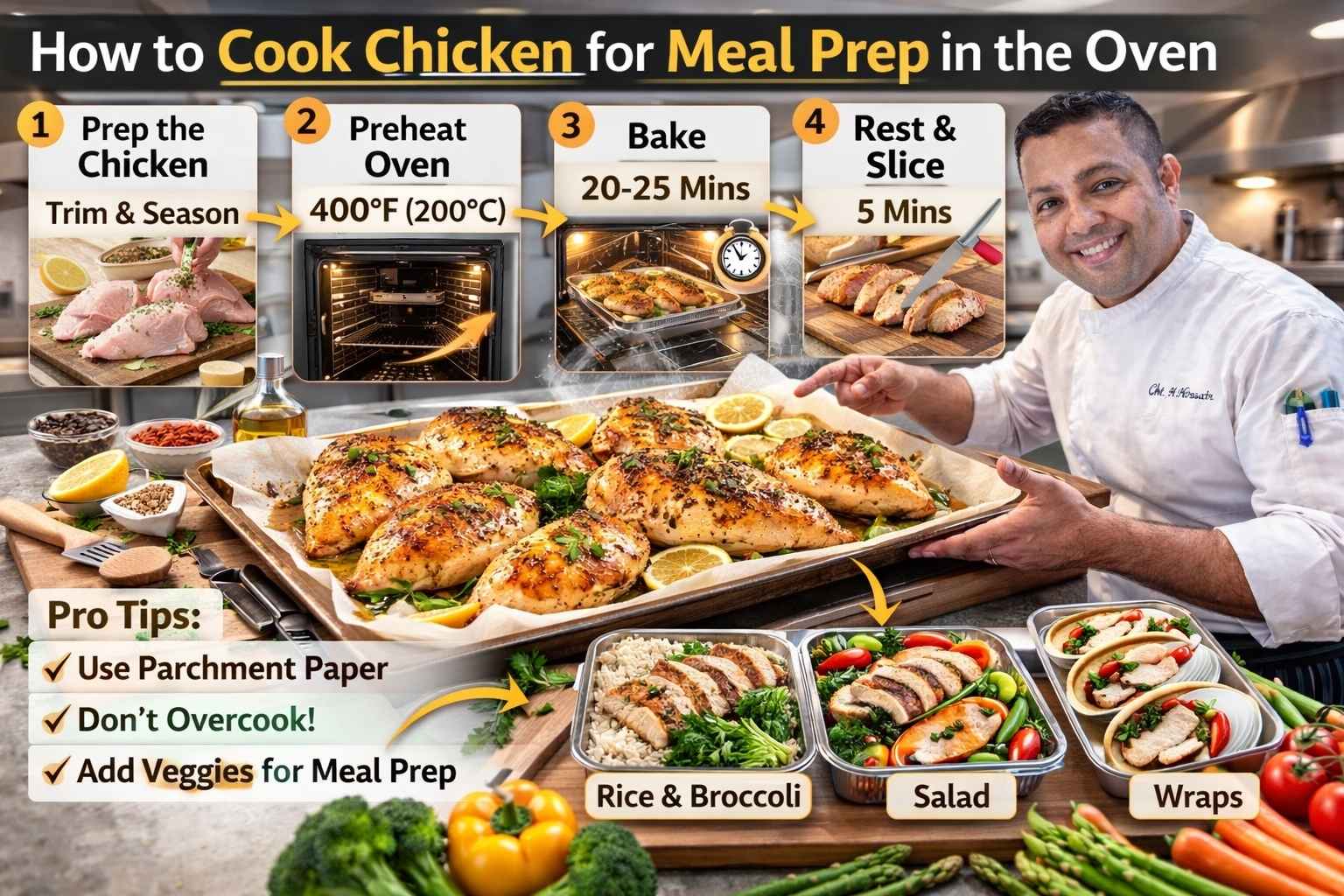
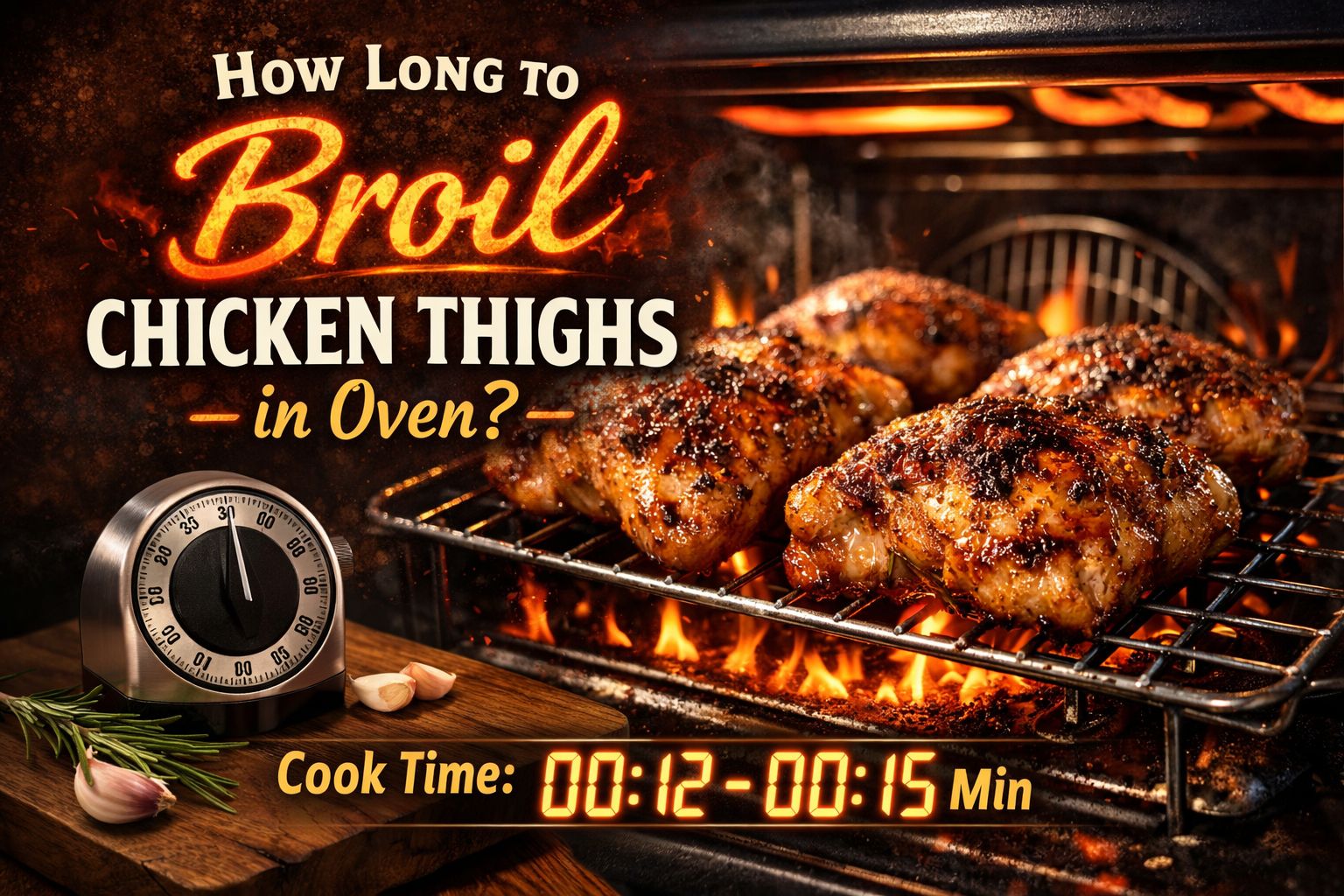
Hey, I’m Mossaraof — a professional cook and food blogger. One weeknight, I was in a rush and tossed chicken thighs under the broiler. Halfway through, I stopped and wondered, how long to broil chicken thighs in oven for that crispy outside and juicy center? I’ve tested it over and over — and found what really works. If you’re new to oven cooking, The Complete Guide to Using an Oven at Home can help you get the basics down before you broil your next batch.
Why Broiling Chicken Thighs Is Different (and Better Sometimes)
Broiling is fast. Powerful. Slightly risky if you’re not watching — but when it works, it’s magic.
What Broiling Actually Does to Chicken Thighs
Broiling sends intense heat from the top of the oven. It’s like grilling upside down.
- The skin crisps fast
- Juices stay inside
- You get browning without drying things out
The first time I broiled instead of baked, I couldn’t believe the difference. The skin puffed up and crackled like it was air-fried. No soggy mess.
But I also burned a thigh or two figuring out that sweet spot.
When I Prefer Broiling Over Baking or Grilling
I don’t broil everything. But on certain days, it’s a no-brainer:
- Weeknights when I need dinner on the table in 25
- Days when it’s raining and grilling isn’t happening
- When the skin is seasoned and I want it to shine
In the middle of a Chicago winter, broiling saved me. I couldn’t grill outside, but I still wanted that char.
U.S. Ovens Are Not All the Same — Here’s What to Watch
Here’s a lesson I learned in my Arizona rental: not all “broil” settings are equal.
- Gas ovens heat fast and uneven
- Electric ovens like GE or Frigidaire tend to be more predictable
- Some models (especially older ones) don’t even preheat on broil — the heat just comes on instantly
So before anything else, I always test where the broiler is, how hot it feels (carefully!), and how fast things brown.
The Ideal Broiling Time for Chicken Thighs (Bone-In and Boneless)
This is where I used to go wrong. I thought all chicken thighs cooked the same. They don’t.
Bone-In, Skin-On Chicken Thighs
These take a bit longer but reward you with juicy meat and crispy skin.
- High broil (500–550°F): 12 to 15 minutes total
- Flip once halfway — about 6 to 7 minutes per side
- Use the top rack, around 4 to 6 inches from the element
If you’ve got big thighs (the chicken, not yours!), you might need an extra 1–2 minutes. I always keep a meat thermometer nearby — more on that soon.
Boneless, Skinless Chicken Thighs
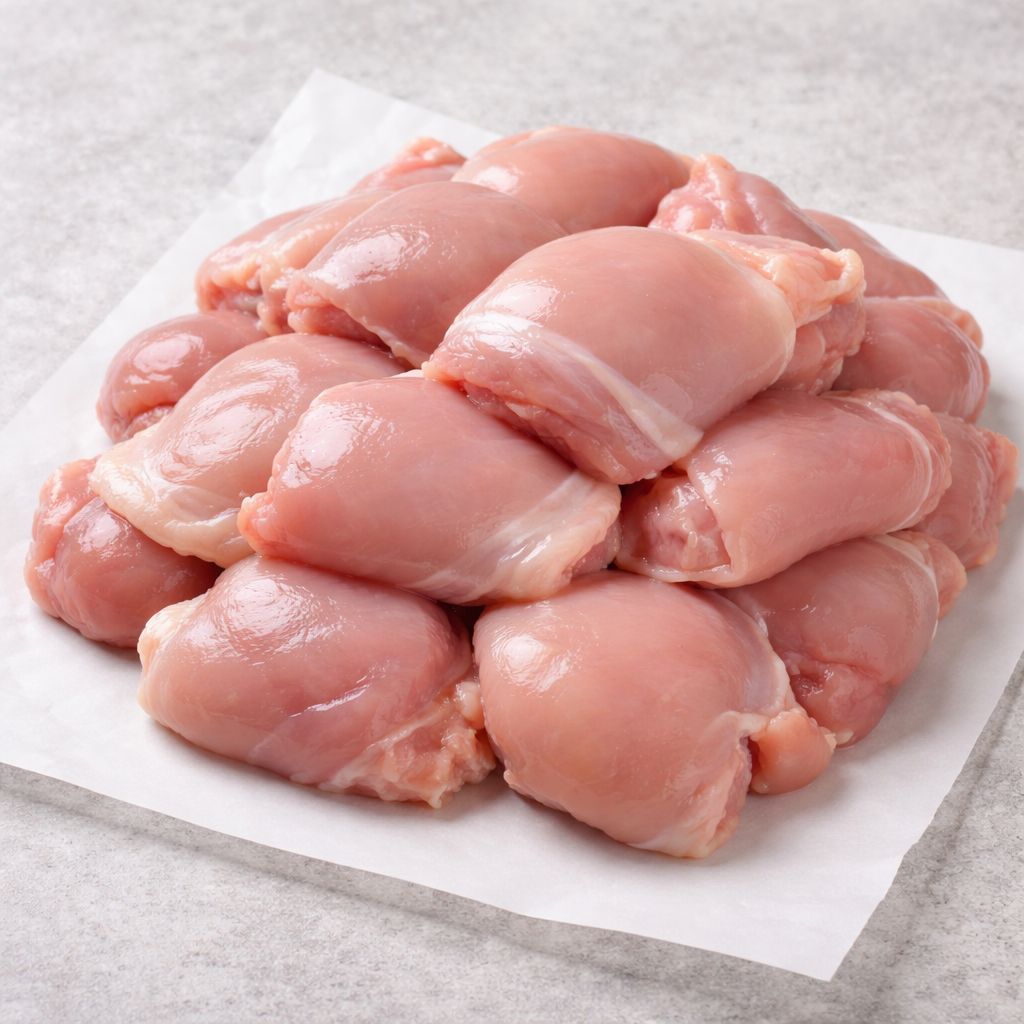
These cook fast and can dry out if you’re not careful.
- High broil: 8 to 10 minutes total
- You don’t always need to flip, but I usually do around minute 5
- Keep them juicy with a thin oil-based marinade
Funny story: one night, I broiled boneless thighs while chatting on the phone. Forgot to flip. Still edible… but dry enough to need extra sauce. Lesson learned.
My Quick Broil Timing Chart
If you’re the print-it-and-stick-it-on-the-fridge type, this one’s for you:
| Chicken Type | Broil Time | Flip? | Rack Position | Broiler Temp |
|---|---|---|---|---|
| Bone-in, skin-on | 12–15 min | Yes | 4–6 inches below | High (500–550°F) |
| Boneless, skinless | 8–10 min | Optional | 5–6 inches below | High |
| Marinated (saucy) | Add 1–2 min | Yes | 5 inches below | Medium–High |
Sometimes I set a timer for each side just so I don’t get distracted. Because once you burn honey-glazed skin… it’s game over.
Factors That Change the Broiling Time (Real-Life Insights)
Even when I follow the same recipe, different kitchens give me different results. Broiling time isn’t one-size-fits-all.
Oven Type and Brand Makes a Big Difference
I’ve cooked in everything from tiny apartments to full chef kitchens. Trust me — your oven matters.
- GE and Whirlpool run hot — I usually trim 1 minute off
- Frigidaire broilers feel milder, so I give it an extra minute
- Gas broilers heat fast but unevenly — the back browns faster
In my old Florida rental, the oven didn’t even label the broil temp. I learned to guess by smell — not ideal.
Rack Position — The Secret Sauce
The distance between your chicken and the broiler is huge.
- 3 inches = fast crisping, but you’ve got to babysit it
- 5–6 inches = safer but slower
- I like to go 4 inches for bone-in, 5 inches for boneless
Just last week, I placed the tray too close. I looked away for maybe 90 seconds — and the skin bubbled into black.
Chicken Thickness and Bone Density
Not all thighs are built the same.
- Thicker pieces take longer, especially with the bone in
- I sometimes score the underside with a knife to help the heat reach the center
- Skin-on adds time but gives that golden crisp we all want
When thighs are uneven, I’ll flatten them a bit with my hand or the bottom of a mug. Nothing fancy — just gentle pressure.
Marinades and Sauces Can Burn Fast
The sauce might smell amazing… until it burns.
- Honey, BBQ, teriyaki — all caramelize too fast
- I broil the chicken dry or lightly oiled
- Then brush the sauce on in the last 2–3 minutes
One Sunday, I marinated in sweet chili sauce and forgot that tip. My oven smoked like a wildfire. I had to toss the whole batch. Learn from me.
How to Broil Chicken Thighs Step-by-Step (Chef’s Method)
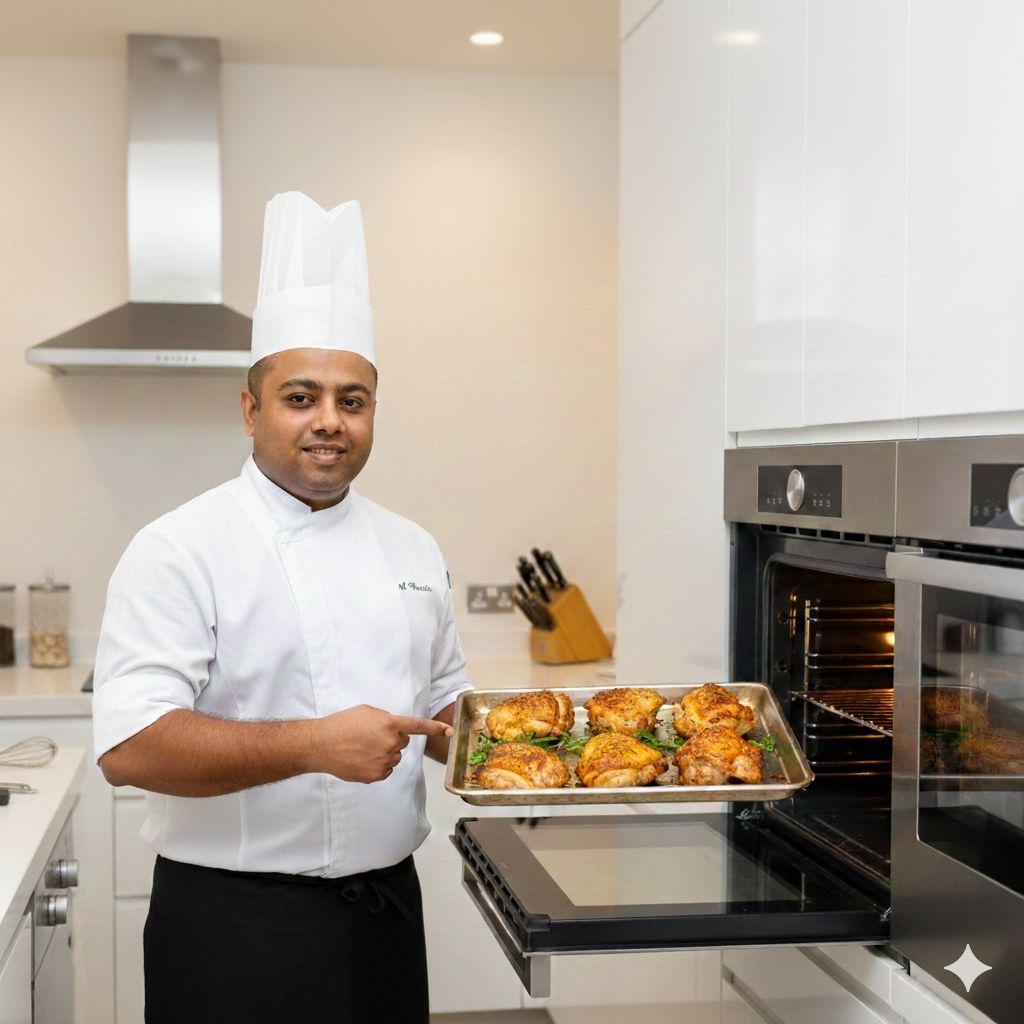
This is my go-to method, the one I use in my own kitchen when I want chicken thighs done right — and done fast.
Step 1: Prep the Chicken Like a Pro
- Pat the thighs dry with paper towels
- Trim excess fat or hanging skin — those burn fast
- Season with salt, pepper, and whatever you’re feeling (I love smoked paprika)
If I have extra time, I marinate. But even a 15-minute dry rub helps.
Step 2: Preheat the Broiler
Yes — preheat, even on broil.
- Turn the broiler on and let it run for 5–10 minutes
- Place your baking tray (lined with foil) inside to heat slightly
Preheating helps the meat hit high heat fast — it seals in those juices.
Step 3: Set the Rack and Load the Chicken
- For bone-in: 4–5 inches below the broiler
- For boneless: 5–6 inches is plenty
- Arrange thighs skin-side up, spaced out
Don’t crowd the tray. If they touch, they’ll steam instead of crisp.
Step 4: Broil, Flip, Finish
- Start your timer the second the tray goes in
- Flip at halfway — 6–7 minutes in for bone-in, 4–5 for boneless
- Watch the last 2 minutes like a hawk
If I want that last bit of char, I’ll raise the rack for the final minute. But only if I’m standing there, mitt in hand.
Signs Your Chicken Thighs Are Done (Don’t Just Trust Time)
Timing is a guide — but I’ve learned to rely on my senses too. Here’s how I really know when broiled chicken is ready.
Visual Cues
- Skin is golden brown and bubbling
- Edges look crisp, not rubbery
- Juices run clear, not pink or milky
If I see dark spots on the skin before the center is done, I’ll move the tray down and finish it a minute longer.
Internal Temperature (Thermometer = Lifesaver)
I always check with a meat thermometer — especially for bone-in.
- USDA says 165°F is safe
- I aim for 170°F on bone-in for better texture
- Insert into thickest part, away from bone
I once served undercooked chicken at a family dinner… let’s just say I use a thermometer religiously now.
Touch and Smell
- Lightly press with tongs — it should feel firm but springy
- You should smell roasted skin and spices — not raw meat
If I’m unsure, I cut one open. No shame in checking. Better than guessing wrong.
Common Broiling Mistakes (That I’ve Made Too)
Even with all my experience, I still mess things up sometimes. Broiling is quick — that’s a blessing and a curse.
Walking Away From the Broiler
This is the number one mistake.
You think you’ve got 5 minutes? You don’t. You’ve got maybe 3 before the skin turns black.
I once tried to broil thighs while making a salad in the next room. I came back to smoke and a tray of what looked like grilled leather.
Lesson: broiling is active cooking. Stay close. No multitasking.
Not Adjusting the Rack Height
Your broiler element is fierce. If the chicken’s too close, it burns before it cooks through.
One evening, I left the rack on the highest slot. The thighs looked amazing on top — but raw inside.
- Start 4–6 inches below
- Adjust if needed mid-cook (with gloves!)
Using Cold Chicken Right Out of the Fridge
I’ve been guilty of rushing. But cold chicken doesn’t broil evenly.
- Always let it sit 15–20 minutes at room temp
- That short wait makes the difference between juicy and dry
If I skip this step, I can feel the difference in the bite — the middle stays chewy.
Brushing Sauce Too Early
I used to marinate in BBQ sauce and throw it straight under the broiler.
Bad idea.
- Sugary sauces burn fast
- You end up with a sticky, bitter mess
Now I broil without sauce, then brush it on in the final 2–3 minutes.
Broiling Tips for U.S. Kitchens (Real Contexts from Coast to Coast)
Not every kitchen behaves the same. Climate, oven type, and even elevation matter.
Here’s what I’ve learned from cooking in real U.S. homes.
Florida: Humid Kitchens and Slower Browning
Cooking in humid air feels sticky — and it messes with browning.
- Skin stays soft longer under broil
- I go closer to the element — about 4 inches
- Crack a window or turn on the fan to keep the kitchen from steaming up
In summer, even drying the chicken with paper towels takes longer in Florida.
Midwest: Ovens Run Hotter in Winter
I used to think I was imagining it. But every winter in Chicago, my oven seems to heat faster.
- Broiler kicks in stronger on cold days
- I shave off 1–2 minutes or pull back the rack an inch
- Bonus: the warm oven keeps the kitchen cozy
That said, the dry air also makes meat dry out faster. I use a light oil rub to help.
Arizona: Dry Heat = Fast Crisp, Fast Dry-Out
In dry places like Arizona, the broil gets too effective if you’re not careful.
- Skin crisps beautifully — sometimes too fast
- I add olive oil or even a thin mayo-based rub to lock in moisture
- Keep a close eye, especially with boneless thighs
The trick is balance: crisp skin without drying the meat.
Apartment Ovens: Tight Spaces, Big Flavor
In NYC, I cooked on a tiny oven with a broiler drawer at the bottom. Total pain.
- Check where the broiler is (top vs. drawer)
- Use smaller trays to prevent crowding
- Keep ventilation in mind — small kitchens smoke up fast
Still, I’ve made some of my best crispy thighs in that little oven.
Flavor Boosters and Marinade Ideas (U.S.-Friendly Ingredients)
Here’s where you can make broiled chicken thighs go from “pretty good” to “can you make that again?”
These combos are my go-to options — all using pantry staples you’ll find in most U.S. homes.
Dry Rubs (No Waiting Required)
When I’m in a rush, dry rubs save dinner.
- Smoked paprika + garlic powder + brown sugar = bold and balanced
- Lemon pepper + sea salt + thyme = light and citrusy
- Cajun seasoning + olive oil = great heat, no fuss
Tip: Rub directly onto dry chicken, let it sit for 5–10 mins, and broil.
Simple Marinades (Zip Bag Style)
If I’ve got more time, I go with a marinade. Just toss everything in a resealable bag or bowl.
- Buttermilk + hot sauce + rosemary = Southern-style and tender
- Soy sauce + honey + ginger + scallion = savory with a kick
- Olive oil + lemon juice + oregano = fresh, bright, and Mediterranean
For these, I marinate 1–4 hours — then pat dry before broiling to avoid burning.
What Not to Use Under the Broiler
Not all ingredients handle high heat well.
Avoid these unless you’re adding them after broiling:
- Pesto – burns quickly, turns bitter
- Cream sauces – separate under heat
- Butter-only marinades – they burn and smoke fast
I once tried broiling thighs with ranch dressing. Big mistake. Smelled like scorched dairy and sadness.
Broiling vs. Other Cooking Methods (Why It’s Worth Knowing)
Broiling is powerful — but it’s not always the answer. Here’s how it stacks up against other common methods.
Broiling vs. Baking
Both use the oven, but they work differently.
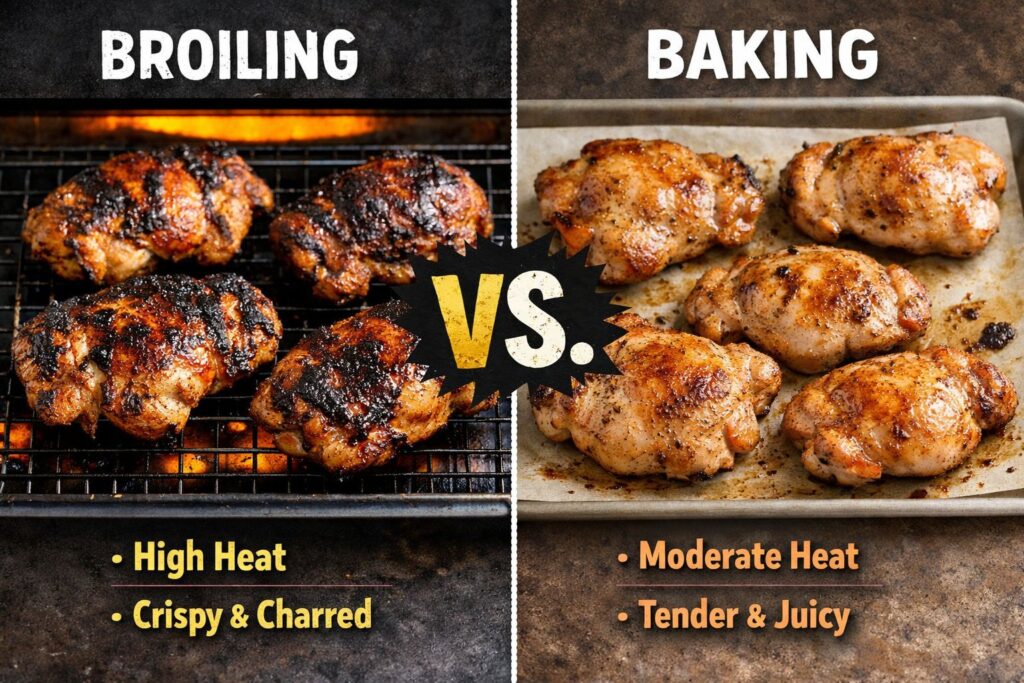
- Broiling = direct top heat, fast, crisp
- Baking = even all-over heat, slower, more forgiving
I use broil when I want skin crackle and quick results. I bake when I’m multitasking or using sauce-heavy recipes.
When I’ve got time and a bigger batch, I go bake. But when I need dinner in under 20? Broil wins.
Broiling vs. Air Frying
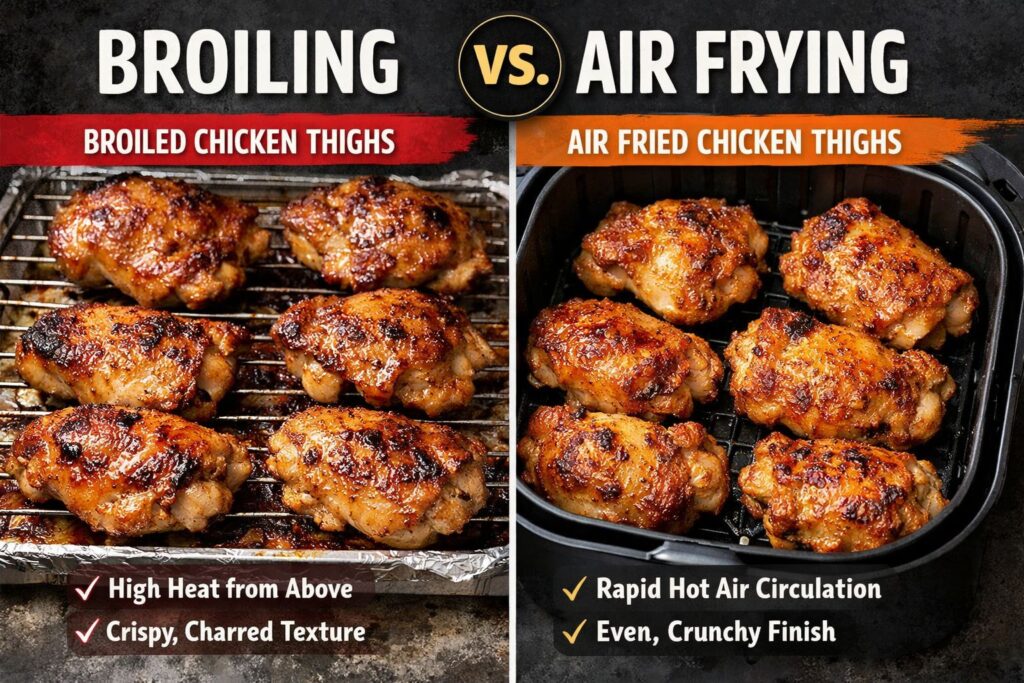
Air fryers are trendy — and yes, they work. But here’s the truth.
- Broiler handles bigger portions
- Air fryer gives amazing texture with less babysitting
- Air fryer cleanup is easier — but flavor isn’t quite the same
My air fryer is great when I’m cooking for one. But broiling still gives me more caramelized flavor, especially on bone-in thighs.
Broiling vs. Pan-Frying
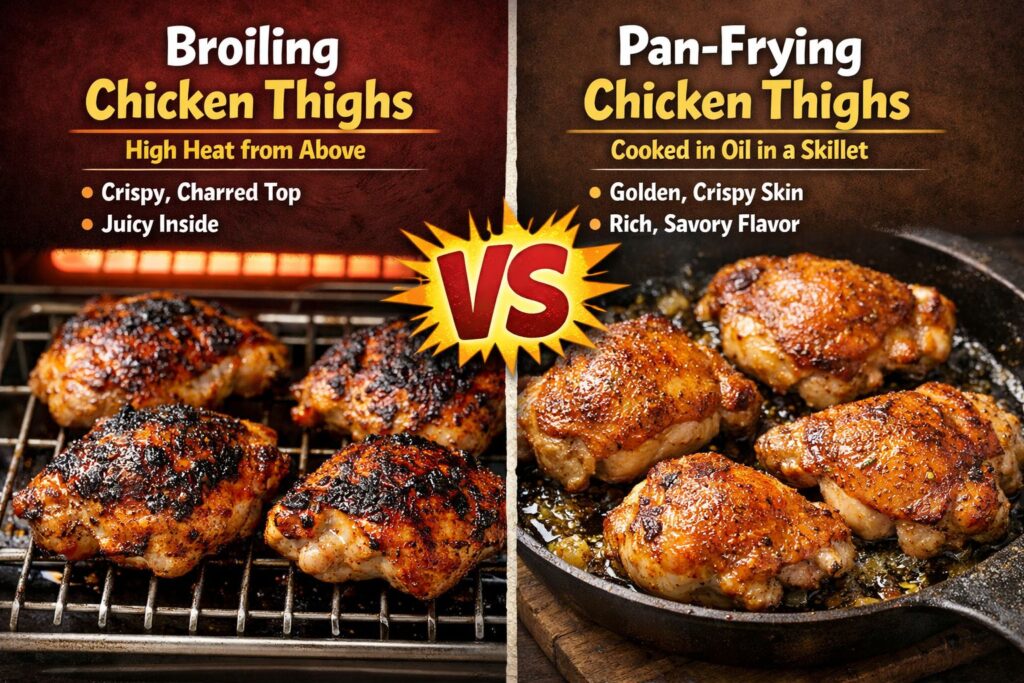
I used to pan-fry thighs all the time. But it’s messy.
- Stove cleanup is a pain
- Oil splatters, meat shrinks
- You’ve got to watch it constantly
With broiling, I line the tray with foil and it’s done. Easier on busy nights — and my kitchen stays cleaner.
When NOT to Broil Chicken Thighs
As much as I love broiling, sometimes it’s just not the right call.
You Want Low and Slow
If you’re braising, baking with sauce, or cooking thighs with veggies — broiling is too aggressive.
- It’ll char the top before the inside is ready
- Moist cooking needs time, not fire
I never broil thighs straight from the fridge into a dish of barbecue sauce. That’s a roast or bake situation.
You Have Thin or Uneven Cuts
Broiling works best on even, mid-thick pieces.
- Very thin boneless thighs? Better in a pan or air fryer
- Uneven bone-in cuts? You risk undercooked centers and burnt skin
I’ve learned this the hard way. When thighs vary in size, I trim or match them up on the tray — or skip the broiler.
Your Broiler Is Weak or Mysterious
Some ovens just don’t have a great broiler.
- If it takes more than 5 minutes to brown bread, it’s probably too weak
- If it heats unevenly or can’t hold temp, you’re better off baking
In one Airbnb, I tried broiling with a broiler drawer that barely warmed up. I ended up switching to convection bake at 450°F.
Final Reflections: What I Learned After Broiling 100+ Chicken Thighs
I didn’t always love broiling. In the beginning, it felt unpredictable.
But now, it’s my secret weapon.
I know how close to set the rack. When to flip. How to read the skin by color and crackle. And I trust my nose more than the clock.
Here’s what I’ve learned matters most:
- Stay close. Broiling is fast — never walk away.
- Know your oven. Every broiler acts a little different.
- Prep counts. Dry skin, light oil, and proper seasoning make all the difference.
- Timing is just a guide. Use touch, sight, smell — and a thermometer.
- Mistakes happen. I’ve burned, dried out, and undercooked. It’s part of the process.
Whether I’m feeding my family in the Midwest or testing a recipe in a humid Florida kitchen, broiling chicken thighs has become a go-to technique I trust.
And now — you’ve got my exact playbook. From one home cook to another, I hope it helps you make crispy, juicy, real-life chicken you’re proud to serve.
🙋♂️ FAQs: How Long to Broil Chicken Thighs in Oven?
How long to broil chicken thighs in oven?
Bone-in takes 12–16 minutes, boneless about 10–12. Flip halfway through.
What temp should broiled chicken thighs reach?
165°F internal temperature is the safe USDA guideline.
Can I broil chicken thighs without a rack?
Yes, but expect less crisp on the bottom. A rack gives airflow and better texture.
Is broiling better than baking for thighs?
If you want crispy skin fast, broiling wins. Baking is better for slower, even cooking.
Why are my thighs burning on top?
You’re too close to the broiler or using sweet marinades that char.