
Hey, I’m Mossaraof — a professional cook and food blogger.
Choosing between gas vs electric ovens used to drive me crazy, especially when I moved from a Chicago apartment with a moody gas flame to a Florida condo with an electric coil that took forever to heat. Both have their perks—and their problems—and I’ve cooked everything from sourdough to salmon in each. In this article, I’ll walk you through the real-life pros and cons of gas and electric ovens, so you can decide what fits your kitchen and your cooking style. And if you’re brand new to oven life, don’t miss The Complete Guide to Using an Oven at Home—it’s packed with everything you need to get started.
Table of Contents
ToggleUnderstanding the Basics: How Gas and Electric Ovens Work
Before I dive into cooking stories and preferences, let’s break it down simply.
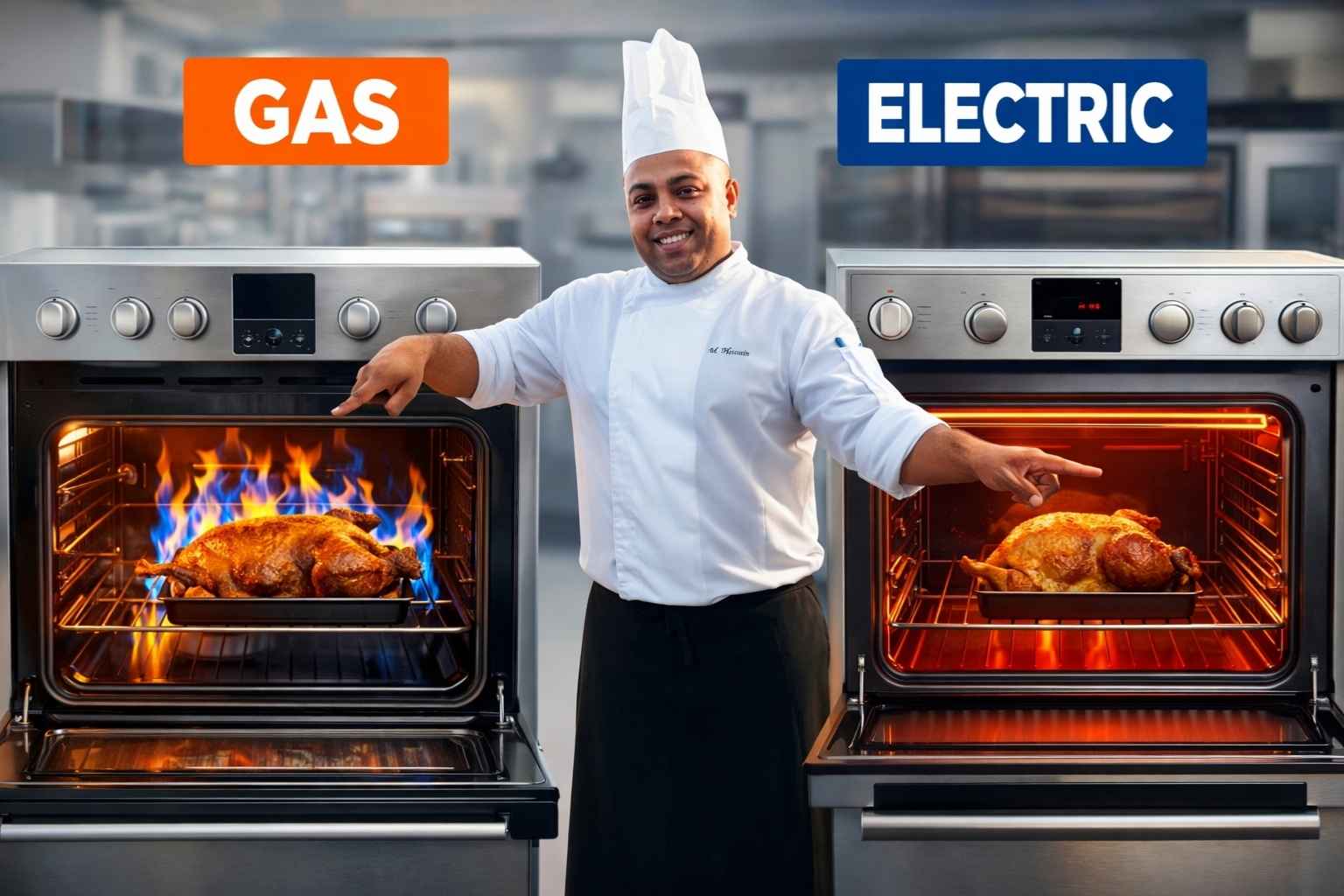
How Gas Ovens Work
A gas oven burns natural gas (or propane) to create heat. There’s usually a burner at the bottom, and the heat rises up. Older ones need manual ignition. Most modern ones have electric spark igniters.
- Heats fast
- Moist heat — great for some foods
- Needs gas hookup
I’ve used gas ovens in older rental homes. You can literally hear the whoosh when it ignites. There’s something raw and responsive about it.
How Electric Ovens Work
Electric ovens use metal heating elements, usually one at the top (broil) and one at the bottom (bake). These glow red when hot. Many also come with fancy features like convection fans, digital displays, and precise temperature control.
- Heats evenly
- Dry heat — perfect for roasting
- Needs a 240-volt outlet
My current oven is electric. It preheats slower but bakes bread like a champ.
🧑🍳 Cooking Experience: What It Feels Like in a Real Kitchen
This is where it gets personal. I’ve cooked the same lasagna in both gas and electric—and the difference is in the feel.
Gas Oven Cooking: Instant Heat and a Learning Curve
Back in Phoenix, I had a gas oven with a quirky personality. Turn it on, and within minutes the kitchen felt like summer. But it had hot spots—corners that crisped faster than the center. I learned to rotate pans halfway.
- Great for quick meals — like pizza, frozen foods
- Broils super fast — I’ve accidentally charred toast
- Better for experienced cooks who know to adjust
The biggest benefit? I could cook during power outages (happened more than once during Florida storms).
Electric Oven Cooking: Even Baking and Predictable Results
Now I live in Chicago, and my electric oven is a beast in the best way. Cookies bake evenly. Cakes rise predictably. No flame to adjust, just set and go.
- Perfect for baking
- No sudden flare-ups
- Slower to preheat—but worth it
Electric is what I trust for delicate desserts like soufflés. Gas would scare the meringue right out of them.
🥖 Baking Showdown: Which Oven Is Best for Bakers?
If you bake more than you broil, this part is for you.
Why Bakers Love Electric
- Stable, dry heat makes it easier to get crisp cookies and golden crusts.
- Top and bottom heating elements allow for better browning.
- Precise temperature control is a lifesaver for recipes that call for 350°F—not 347°F.
I tested my sourdough recipe in both. Same ingredients. Same day. The gas version came out slightly pale and doughy in the center. The electric? Picture-perfect crackly crust.
Gas Baking Can Work—With Adjustments
I don’t hate baking in gas. But you’ll want to:
- Use baking stones or steel to even out heat.
- Rotate trays more often.
- Avoid stacking too many items (moist heat can affect texture).
🍗 Roasting and Broiling: Gas Takes the Crown (Sometimes)
I roast a lot—chicken thighs, Brussels sprouts, pork tenderloin. This is where gas ovens can shine.
Gas for High Heat Searing
That direct flame gives you a nice blast of heat. My roasted carrots caramelize fast on the bottom.
- Quick broiling with direct flame
- Great for meats that benefit from moisture
Just keep an eye on it. Gas can go from golden to blackened fast. I once turned around to grab a towel and came back to scorched salmon.
Electric Broilers Are Slower, But Consistent
Electric ovens usually take longer to broil, but they’re less risky.
- Safer for cheese-topped dishes like casseroles
- Predictable heat lets you multitask (sort of)
If you’re new to broiling, electric is more forgiving.
⚡️ Energy Use and Utility Costs: What Hits Your Wallet?
Let’s talk bills.
Gas Ovens Are Cheaper to Run (Usually)
Gas tends to cost less per unit than electricity in most U.S. states.
- Lower operating cost
- Faster cooking means less energy time
Back in Arizona, my gas bill was lower than my electric bill—even during heavy use. But…
Electric Ovens Can Be More Efficient
Especially with modern insulation and smart features. If you bake often but don’t use your oven for long stretches, electric might balance out the cost.
- Better insulation in many newer models
- No gas leaks to worry about
Check your utility rates. In California, for example, electricity is expensive. In Texas, it’s cheaper. The answer depends on your ZIP code.
🧰 Installation and Maintenance: What to Know Before You Buy
This is the not-so-fun part I learned the hard way.
Installing a Gas Oven
You need:
- A gas line
- Ventilation
- Safety checkups
And if you move into a house without a gas hookup? Expect a bill.
I paid nearly $300 to get a line run to a rental once. Worth it? Not really—especially since I moved out six months later.
Installing an Electric Oven
You need:
- A 240-volt outlet
- Proper grounding
- Circuit capacity
Much easier if you’re in a modern apartment or condo. Maintenance is usually simpler, too.
🧯 Safety Differences: Flames vs. Sparks
As someone who’s dealt with more than one “oops” in the kitchen, here’s what I’ve learned.
Gas Oven Safety Risks
- Open flame means fire risk
- Gas leaks are serious
- Ventilation is critical
I always check the smell. If something smells off, I shut off the valve and open windows.
Carbon monoxide detectors? Non-negotiable.
Electric Oven Safety
- No gas = fewer risks
- Child lock features on newer models
- More consistent shut-off behavior
That said, always unplug during repairs. I once got a small zap trying to clean near the coil. Not fun.
🏡 Regional Considerations: What Works Best Where?
Climate and local utilities play a role.
Cold Climates
Electric ovens are great in chilly areas like Minnesota or Michigan. The dry heat keeps kitchens cozy, and you’re less likely to lose power than with rolling blackouts.
Hot and Humid Areas
Gas ovens can make a small kitchen feel like a sauna. In Florida summers, I avoid turning mine on during the day.
If you’re in the South or Southwest, electric might be the cooler choice—literally.
🛠 Popular Brands I’ve Cooked With (and How They Performed)
Here’s what I’ve personally used:
GE Gas Oven (Rental in Arizona)
- Heated fast
- Baked uneven
- Reliable burner
Whirlpool Electric (My current oven in Chicago)
- Super even baking
- Takes 12 minutes to preheat
- Oven light still works after 4 years!
Frigidaire Dual-Fuel (Friend’s kitchen in Oregon)
- Gas cooktop + electric oven
- Best of both worlds
- Pricey, but worth it if you cook every day
🤔 So, Gas vs Electric Ovens — Which Is Better?
Let me break it down one last time based on your priorities:
| Cooking Style | Go For… |
|---|---|
| Lots of baking | Electric |
| Roasting & broiling | Gas |
| New to cooking | Electric |
| Need fast preheat | Gas |
| Want consistent results | Electric |
| Budget-conscious | Gas (in many regions) |
| Safety-first home | Electric |
Final Thoughts From a Chef Who’s Used Both
Honestly? Neither is perfect. I’ve had burnt edges, undercooked middles, and occasional oven tantrums with both.
But here’s what matters:
- Learn your oven. Test it. Use an oven thermometer (seriously—get one).
- Use tools that help—like baking stones, foil shields, and timers.
- Rotate. Flip. Peek in the window. Trust your instincts.
Whatever oven you use, it’s your hands, eyes, and nose that do the real cooking. The oven’s just your partner.
And whether it’s gas or electric—it’ll serve you well if you treat it with care.
FAQs: Gas vs Electric Ovens
What is the main difference between gas vs electric ovens?
Gas vs electric ovens differ in how they create heat. Gas ovens use a flame for quick heat, while electric ovens use heating coils for steady heat and even baking results.
Are gas ovens better than electric ovens for cooking?
Gas ovens heat up fast and work well for roasting. Electric ovens give more even heat, which helps with baking. The best choice depends on your cooking style and needs.
Do electric ovens cook more evenly than gas ovens?
Yes, many electric ovens cook more evenly than gas ovens. Electric heat spreads better inside the oven, which helps cakes, bread, and cookies bake at the same rate.
Which is more energy efficient: gas vs electric ovens?
Gas ovens often cost less to run if gas prices are low. Electric ovens can be efficient too, but costs depend on local energy rates and how often you cook.
Are gas ovens or electric ovens easier to maintain?
Electric ovens are often easier to clean and maintain. Gas ovens have burners and gas lines that may need extra care over time. Both work well with proper use.