Ever opened the oven and smelled burning plastic? I have—and trust me, it’s not something you forget. Hey, I’m Mossaraof—a professional cook and food blogger who’s melted more than one lid by mistake. In this guide, we’re digging into a hot question: Can you put plastic in the oven? I’ll share real kitchen moments, expert tips, and what finally convinced me to draw the line. If you’re just starting out, check out The Complete Guide to Using an Oven at Home for more chef-tested oven basics.
Table of Contents
ToggleWhat Happens When You Put Plastic in the Oven?
It’s not just a mess. It’s a science lesson—plus a little danger, a lot of fumes, and sometimes a melted memory.
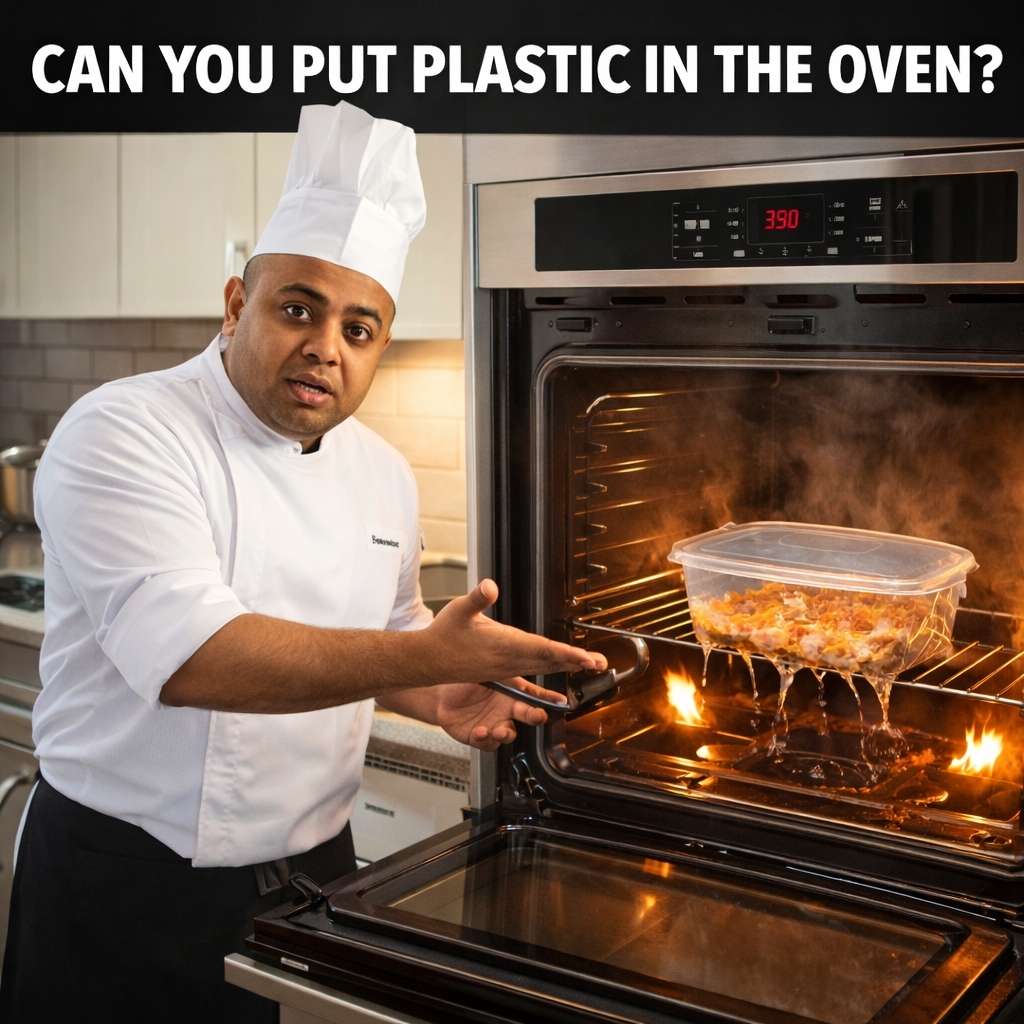
There was this time in Chicago, dead of winter, snow falling outside. I tossed in leftover pot roast inside what I thought was an oven-safe container. Within five minutes, I noticed smoke and a weird chemical smell. The plastic had started bubbling and fusing to the oven rack. I panicked.
Melting Points of Common Plastics
Here’s the thing: most plastic just isn’t built for heat.
- Polypropylene (PP): Starts warping around 250°F
- Polyethylene Terephthalate (PET): Melts at 250°F–300°F
- Polystyrene (PS): Can soften around 210°F
Ovens, even on low, can hit 300°F easily. Add in uneven heat spots (and we all have those), and you’ve got a disaster waiting to happen.
What You’ll See (And Smell)
Most times, you won’t even notice the plastic melting until it’s too late. That’s the worst part. It starts slow:
- Edges start curling or sagging
- You might see bubbles or feel stickiness on oven racks
- Strong chemical odors—especially if you’re using older or dyed plastic
- Some plastics even crackle before they collapse
That smell? It doesn’t just ruin your meal—it lingers in the oven for weeks. I once baked cookies two days after a melt accident. They came out with a weird plastic aftertaste, even though I cleaned the racks twice.
Is It Dangerous? Yes.
Besides the mess, melted plastic can be toxic.
- Some plastics release VOCs (volatile organic compounds) when heated
- BPA and phthalates—common in cheaper containers—can leach into your food
- Burned plastic can release dioxins, which are linked to long-term health effects
According to the EPA and FDA, plastic is not meant to be used in conventional ovens unless clearly marked oven-safe. And in the U.S., most household plastics just don’t make the cut.
Types of Plastic You Should Never Oven-Bake
Just because it looks sturdy doesn’t mean it can handle the heat.
I learned this the hard way while baking leftover Thai curry in one of those fancy-looking black plastic containers. It had a nice lid, the base felt thick, and it had survived a microwave once. But the second it hit the oven at 325°F, it curled up like a frightened potato chip. The smell hit first—then the smoke.
So here’s what I won’t put anywhere near an oven again:
1. Takeout Containers (Even the Heavy Ones)
These are everywhere—especially if you’re like me and order from local restaurants a few times a week. But don’t be fooled by that sturdy black bottom.
- Usually made from PET or PS, both of which melt at low temps
- Designed for microwaves or short-term storage—not baking
- Even if it says “microwave safe,” that’s not the same thing
🔹 My mistake: I once popped a container into a warm oven at 250°F thinking it was safe. It only lasted 10 minutes before collapsing.
2. Plastic Wrap and Film
Yes, it’s great for sealing bowls and storing leftovers—but it turns into clingy chaos under oven heat.
- Saran Wrap and similar brands soften quickly and stick to food
- Can shrink, melt, and even drip
- Even double layers won’t protect your dish from heat damage
🌀 I tried using plastic wrap over lasagna once, under the false impression that it would hold up “just until the cheese melted.” Big mistake. That cheese had a plastic crust I’ll never forget.
3. Disposable Storage Lids
You know the ones—those clear lids that snap onto plastic or even some glass containers.
- Most are not oven-rated
- Even if the container is safe, the lid usually isn’t
- Some melt at just 200°F
☕ I once left a lid on while warming coffee cake in the oven. It turned into a soft, sticky blob that fused with the container. I had to toss the whole thing.
4. Microwave-Safe ≠ Oven-Safe
This one still confuses people—and it’s easy to see why.
- Microwave-safe plastic can handle short bursts of indirect heat
- Oven-safe requires high, consistent heat resistance
- The materials used are totally different
⚠️ In the U.S., I’ve noticed many store-brand containers (even from popular retailers like Target or Walmart) only label “microwave safe,” never “oven safe.” If it’s not explicitly oven-rated, don’t risk it.
The Rare Exceptions: When Plastic Might Be Oven-Safe
I’m cautious—but there are a few tools I trust. And even then, only at certain temps.
There’s a difference between regular plastic and engineered materials like silicone or CPET. Over time, I’ve come across some rare plastic-like products that held up—if you follow the rules.
Oven-Safe Silicone Tools
These have been a game changer in my kitchen.
- Silicone bakeware like muffin molds, spatulas, and sheet liners
- Brands like Silpat, GIR, and OXO Good Grips label max heat ratings (usually 425°F–500°F)
- They bend but don’t warp or melt
🍪 I use a silicone mat every week for cookie batches. In Florida’s humidity, it helps keep bottoms from burning while baking evenly.
🎯 Tip: If your silicone smells weird the first time you use it, wash it in warm soapy water and let it fully dry. The smell usually goes away after the first few uses.
CPET Containers (Rare and Commercial)
These are more common in frozen meal trays or commercial kitchens.
- CPET = Crystallized Polyethylene Terephthalate
- Safe up to 400°F (but only if clearly labeled)
- You’ll see them in some pre-packaged lasagnas or pot pies
🧊 I once bought a frozen shepherd’s pie that came in a CPET tray with a little oven symbol and a 375°F label. Worked perfectly. But you’ll rarely find these in U.S. home kitchens outside of frozen meals.
Caution with Mixed Materials
Some “safe” plastics are combined with metal or ceramic to improve heat resistance. But these still come with limits.
- Oven-safe up to a point—usually around 350°F
- Can’t go near the broiler
- Often crack or warp over time
I had a glass container with silicone-rimmed lid clasps. Used it at 375°F—no melting, but the clips got soft and droopy. Not melted… but not usable either.
How to Tell if a Container Is Oven-Safe
Most of us just flip it over and squint at the bottom—but it’s not always that simple.
I’ve stood at the kitchen counter, holding a container upside down like I was deciphering a secret code. I’ve burned a few, guessed wrong a few times, and finally learned what to look for.
Here’s what’s helped me tell oven-safe from oven-mess:
Look for Symbols (But Don’t Trust Them Blindly)
Sometimes you’ll see symbols molded into the bottom. That’s your first clue.
- 🧤 Oven icon — Usually a little rectangle with heat waves
- 🔥 Temperature rating — For example, “Oven Safe to 400°F”
- 💦 Other symbols (microwave, dishwasher) — These don’t mean oven-safe
🧪 One time I thought the “microwave steam” symbol meant oven-safe. Nope. It melted into my oven rack at 325°F while reheating chili.
🔍 Tip: Some containers only have heat-resistance mentioned in the manual or packaging—so check that too, especially with glass or silicone.
Know Your Brand
Some U.S. kitchen brands are better at clearly labeling their containers. I’ve had good experience with:
- Pyrex — Glass base is oven-safe, but lids are not
- Rubbermaid Brilliance — Great for fridge and microwave, but not oven
- CorningWare — Ceramic safe for oven; plastic lids are not
- OXO Good Grips — Silicone tools often labeled to 450°F or more
I once used a Rubbermaid lid in a 300°F oven because it “looked tough.” Let’s just say my chicken reheated fine—my lid didn’t survive.
Manufacturer’s Website Is Gold
When I’m unsure, I go straight to the company site. Most U.S. brands now include detailed instructions online, including:
- Temperature limits
- Broiler restrictions
- Whether the lid or base is safe
📱 It only takes a minute—but it saved me from ruining a good casserole pan once. The brand said “oven-safe to 350°F without lid.” Guess what I would’ve left on?
My “Rule of Thumb” Now? If I Doubt It—I Don’t Use It
Even if something feels thick or strong, I don’t gamble with oven heat anymore. I’d rather use a basic metal tray and foil cover than risk melted plastic and ruined food.
Alternatives to Plastic in the Oven
Here’s what I trust now—after trial, error, and a few smoke alarms.
If you’re like me, you probably reheat leftovers and bake in the same go-to containers. After too many melt messes, I’ve built a mental list of oven-safe heroes.
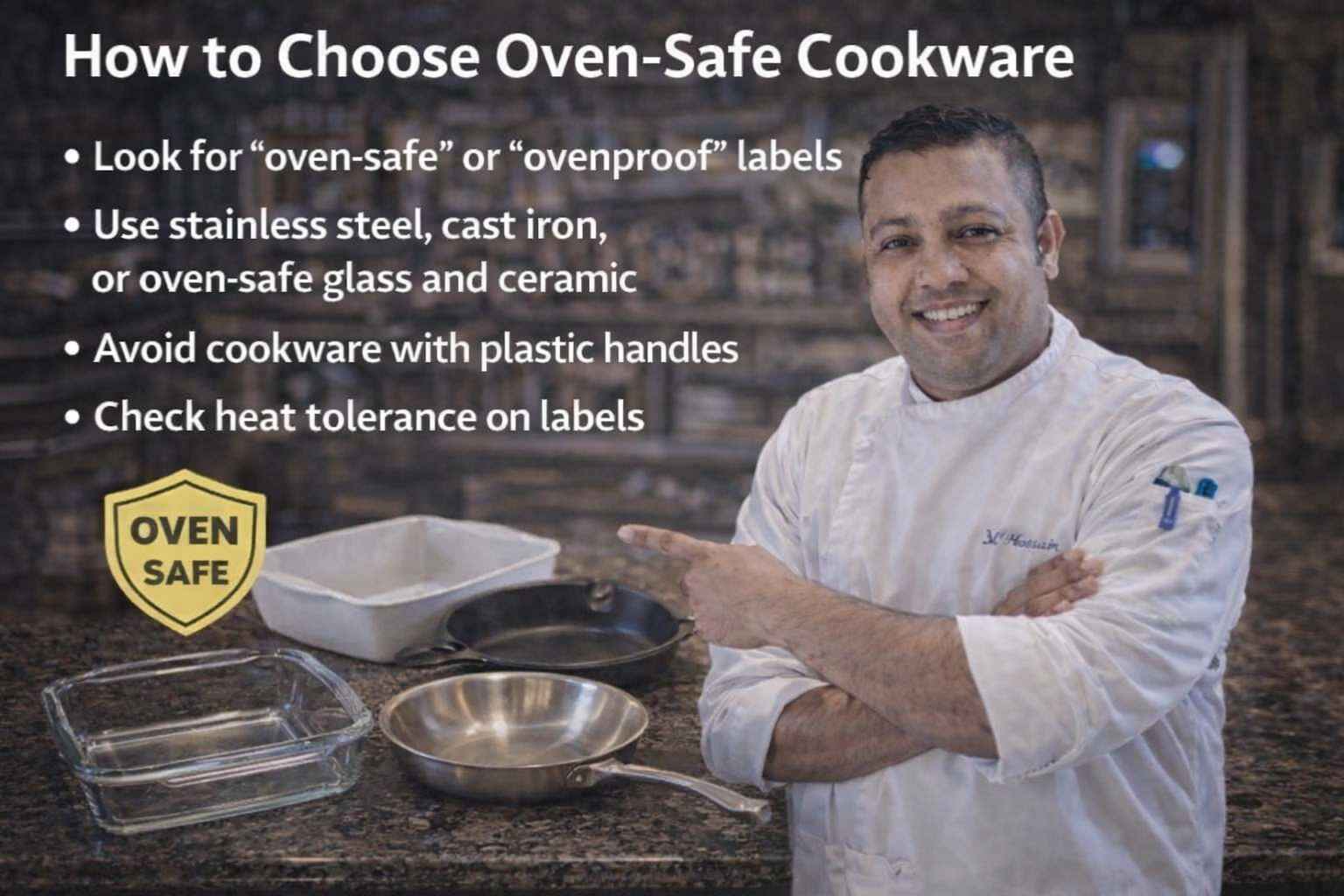
1. Glass Bakeware
This is my everyday go-to.
- Brands: Pyrex, Anchor Hocking
- Safe up to 450°F
- Great for casseroles, baked pasta, roasted veggies
🌽 I once made a killer zucchini gratin in my glass Pyrex at 425°F—came out golden, no sticking, no drama. Just make sure to remove any plastic lids before it hits the oven.
🧊 Bonus: You can go fridge-to-oven (if tempered) but never freezer-to-hot oven. That’s a recipe for shattered glass.
2. Metal Trays and Sheet Pans
Old-school and dependable.
- Great for roasting, baking, and reheating
- Aluminum or stainless steel both work well
- Use parchment or silicone mats to reduce sticking
🥦 In my Arizona apartment, sheet pan dinners were my weeknight trick—roasted broccoli, sweet potatoes, and chicken thighs on one tray at 400°F. Done in 30 minutes. No plastic in sight.
3. Cast Iron and Enameled Cookware
If it’s heavy, it’s likely safe.
- Brands: Lodge, Le Creuset, Staub
- Withstand high temps, including broiler heat
- Even heat distribution for stews, bakes, and skillet dishes
🧀 I baked mac & cheese in a cast iron pan last Thanksgiving—topped with crushed Ritz crackers and cheese. Crispy, golden, gooey. And no plastic lid to warp halfway through.
4. Ceramic and Stoneware
They’re a bit heavier, but so worth it.
- Brands: CorningWare, Emile Henry, Pillivuyt
- Ideal for lasagnas, cobblers, and slow bakes
- Stay hot longer after removing from oven
🍑 My go-to peach cobbler dish is ceramic. The finish gives that perfect edge browning you just can’t get in glass.
5. Silicone Bakeware (The Right Kind)
Not all plastic-like tools are bad.
- Look for FDA-approved, food-grade silicone
- Rated up to 425°F–500°F
- Perfect for muffins, brownies, and non-stick liners
👩🍳 I have a set of silicone muffin molds that get weekly use. In humid Florida, they don’t warp or crack like older metal trays did.
📝 Just be careful: Some cheap knockoffs might say “silicone” but include filler plastic. Stick to brands with clear temp ratings.
U.S.-Specific Plastic Use Habits That Get Folks in Trouble
I’ve lived in humid Florida, snowy Chicago, and dry Arizona—and no matter the climate, plastic sneaks into ovens in weird ways.
Most of the plastic messes I’ve made weren’t from baking lasagna in a Tupperware. They were from everyday habits—stuff we do without thinking. And they catch up fast, especially in real U.S. kitchens like mine.
1. Leaving Plastic Utensils on Hot Baking Sheets
You take something out of the oven, set it down on the stovetop, and next thing you know—you’ve laid a plastic spoon right across a 400°F pan.
- Spatulas soften and warp before you even notice
- Handles can melt into cookie sheets or leave sticky residue
- Sometimes they just snap when you try to lift them later
🍪 I melted a cookie spatula right onto my baking tray once. It fused so tightly I thought I’d have to toss the tray.
2. Using Plastic in Toaster Ovens
This one’s huge in U.S. dorms, small apartments, and RVs. Toaster ovens seem harmless—but that top coil is brutal.
- Heat is concentrated and direct
- Melting happens fast, especially on top racks
- No ventilation means fumes build quickly
🔥 I once reheated a breakfast burrito in a plastic container in my Chicago studio’s toaster oven. It only took 90 seconds to bubble over and trigger the smoke alarm.
3. Wrapping Food in Plastic Wrap for Reheating
This happens a lot with leftovers, especially if you’re in a rush.
- Wrap shrinks, sticks to food, and melts fast
- Can drip onto oven racks or pans
- Almost always leaches chemicals into the food
🥘 I made a lasagna to freeze, then forgot to unwrap the plastic before tossing it into the oven. The top fused into the cheese. That entire layer? Ruined.
🧼 Lesson learned: Now I use foil or parchment—never plastic wrap—for oven reheating.
4. Storing Plastic Items Inside the Oven
You’d be shocked how often this happens. (Or maybe not—maybe you’ve done it too.)
- Empty plastic bowls or pans left inside to “save space”
- Some folks even store Tupperware or serving trays in cold ovens
- One accidental preheat = disaster
🏠 My cousin’s rental in New Jersey came with a tiny kitchen, so she stored plastic cutting boards in the oven. Guess who forgot and preheated it to 425°F for pizza? Melted all three—and the smell? Awful.
Chef-Tested Tips: Keeping Plastic Far from Oven Disasters
These are the habits that keep my kitchen sane—and my food safe.
You don’t need to toss every plastic in your kitchen. Just keep it out of the oven zone.
Here’s what I do now—and what’s actually worked.
✅ Create a “No-Plastic Near Oven” Zone
- Store plastic containers and tools far from the stove or oven
- I keep a plastic bin under the sink just for storage lids and Tupperware
- Keeps temptation (and mistakes) away when I’m in a rush
🧠 Out of sight, out of melt.
✅ Always Transfer Leftovers Before Reheating
- Never reheat directly in takeout or plastic containers
- Use a designated “reheat-safe” dish (mine’s a glass Pyrex with no lid)
- Bonus: it warms more evenly anyway
🥣 Even if it’s just soup, I pour it into a saucepan or oven-safe bowl first.
✅ Double-Check Labels (Even If You Think You Know)
- Especially with new tools or containers
- Look for clear oven-safe symbols or temp limits
- I’ve caught surprises even in name-brand items
🔍 I once assumed my silicone loaf mold was good to 500°F. It was only rated to 375°F—and yes, it sagged in the oven and gave my banana bread a weird dip.
✅ Use Foil or Parchment Instead of Lids
- Wrap food in foil to trap moisture
- Use parchment as a non-stick barrier
- Great for baking, roasting, or warming leftovers
💡 My go-to trick: lightly tent foil over casseroles to avoid dry tops. It replaced plastic wrap in my kitchen for good.
What to Do If You Accidentally Put Plastic in the Oven
Been there. Panicked. Fixed it. (Mostly.)
The first time I melted plastic in my oven, I froze. The smoke hit fast. The smell was like burning crayons mixed with something far worse. I had leftover pizza on the rack, and a plastic lid still stuck to the bottom like chewing gum in summer heat.
Here’s what I did to recover—without destroying the oven or having to buy a new one.
1. Turn Off the Oven Immediately
This is non-negotiable.
- Hit the “Off” button as soon as you smell or see plastic melting
- Don’t try to scrape or touch anything hot
- Keep the oven door shut for a minute to avoid letting out smoke in your face
💨 I opened mine too fast once—took a full hit of plastic fumes. Bad idea.
2. Ventilate the Kitchen (Fast)
- Open windows and doors
- Turn on the vent hood or an external fan
- If you have an air purifier, now’s the time
🌬️ In my Arizona rental, I had all the windows open with ceiling fans spinning like helicopters. It helped clear the air in under 30 minutes.
3. Let the Plastic Cool Completely
I know you’ll want to clean it right away—but don’t.
- Melted plastic is sticky when hot and hard when cool
- Wait at least 30 minutes after the oven is off
- Use oven mitts to check the rack before touching anything
🧊 I once tried to wipe melted plastic with a wet rag while it was still gooey. It smeared everywhere.
4. Scrape Off What You Can (Safely)
- Use a wooden or plastic spatula
- Avoid metal scrapers—they can scratch the oven
- Be patient—it might take a few passes
🧼 I used the edge of a wooden spoon and baking soda paste to scrub the mess off the oven rack. It wasn’t quick—but it worked.
5. Use Vinegar or Baking Soda to Remove Residue
- Baking soda paste: Mix with water, spread on plastic, let sit 20 min
- White vinegar spray: Helps break down stubborn pieces
- Avoid harsh chemical oven cleaners right after melting plastic
🧽 One time I sprayed a commercial oven cleaner on warm melted plastic—it smoked and foamed and made it worse.
⚠️ Tip: Do NOT use the self-cleaning cycle if melted plastic is still inside. It can release even worse fumes or damage the heating elements.
6. Inspect the Oven
After the mess is gone:
- Check the bottom for lingering residue
- Look at the heating element for damage
- Run the oven empty at low heat (200°F) for 10 minutes to “bake out” any smell
👃 I did this after melting a takeout lid—and while the pizza was a loss, the oven came back to life after two cleanings and a lemon-water boil.
Can You Put Plastic in the Oven at a Low Temperature?
This is a question I get all the time—and I’ve tested it more than once.
So, what if you keep the oven really low? Like 200°F? 180°F? Wouldn’t that be okay?
Short answer?
No—It’s Still Risky
Even at low temps:
- Most household plastics still warp
- Chemical leaching starts before visible melting
- And oven temps fluctuate more than people realize
🌡️ I tried warming up bread in a plastic clamshell at 200°F once. It held for five minutes… then slumped to one side and started to curl. The kitchen smelled faintly sweet—and not in a good way.
Plastic Can Soften Before It Melts
This is key.
- You might not see bubbling, but that doesn’t mean it’s safe
- Plastics can become sticky and release fumes silently
- Some start leaching at 160°F–170°F (depending on type)
🧪 I later read a study that said polyethylene—common in cling wrap and disposable containers—starts to break down at just 170°F.
So even though your oven temp says “Low,” there’s no guarantee all zones are that cool. Especially if you live in a cold-weather region like I did in Chicago, where oven hot spots are real.
Can You Put Plastic in a Warm Oven? (Oven Off but Still Hot)
I thought I was safe. The oven was off. Turns out, that doesn’t mean it’s cool.
This mistake felt innocent. I’d just baked a casserole at 400°F. I pulled it out, the oven was turned off, and I thought, “No harm if I toss the takeout tray in there to keep warm while I finish the salad.” Big mistake.
The oven was still well over 250°F inside, and the plastic container melted just enough to warp, stick to the rack, and ruin the leftovers.
Residual Heat Is Stronger Than You Think
Even after shutting the oven off, the heat doesn’t disappear.
- Most ovens retain heat for 30–60 minutes
- The air may cool, but the racks, walls, and floor stay hot
- Hot spots linger longer—especially in gas ovens
🔥 I once put a plastic measuring cup on the middle rack in a “cooling” oven—only to find it sagging into a Dali painting shape ten minutes later.
Don’t Use the Oven as a “Warming Drawer” Unless It’s Off AND Cold
Many folks do this in small U.S. kitchens (especially in city apartments). It’s tempting to treat the oven like a cabinet. But I’ve learned the hard way:
- If the oven’s been used in the past hour, it’s not plastic-safe
- Even 200°F can soften certain plastics
- Use warming drawers or insulated bags instead
🧤 Now I just warm leftovers on the stovetop or let the oven cool fully before putting anything inside. No shortcuts.
Why Some Oven-Safe Lids Are Partially Plastic
This confused me for years—until I took a closer look at the materials.
Some containers say “oven-safe,” but the lid looks… plasticky. It’s not just your imagination. A lot of modern cookware uses hybrid materials—and that can be tricky if you’re not careful.
Tempered Glass Lids with Silicone Trim
You’ll find these on brands like:
- Pyrex
- CorningWare
- OXO and some IKEA cookware sets
These lids look like plastic but:
- The center is tempered glass (safe to 400°F+)
- The edges are food-grade silicone—not regular plastic
- Still not broiler-safe or great above 425°F
🍲 I used one of these lids on a mushroom gratin in Arizona. It held up fine at 375°F—but when I tried to broil the cheese top for 2 minutes, the silicone edge darkened. It didn’t melt—but it clearly wasn’t happy.
Mixed Materials = Mixed Instructions
The labels usually say something like:
- “Oven-safe without lid”
- “Lid safe up to 350°F”
- “Remove silicone before broiling”
You have to read the entire care guide—even on brand-name stuff. I once melted the edge of a snap-lock lid in a 375°F oven because I missed the fine print that said “not oven-safe above 300°F.”
🧾 Now I always check both the base and lid separately. Just because the dish can go in the oven doesn’t mean the lid can too.
U.S. Brands That Clearly Label Oven-Safe Products
Some brands make this easy—and I’ve learned to trust them after trial and (melted) error.
I’ve cooked in dozens of American kitchens—from rental homes in Florida to cabins in Colorado. One thing I’ve noticed? Not all brands are created equal when it comes to clarity.
These brands have helped me avoid mistakes:
1. Pyrex
- Glass bakeware clearly labeled oven-safe
- Usually good to 450°F
- Lids are not oven-safe (but they’ll tell you that in bold)
🥘 My go-to for baked pasta and casseroles. Just ditch the lid before baking.
2. Rubbermaid Brilliance
- Sleek, clear containers—look fancy
- Microwave and fridge safe only
- Not for conventional ovens (though it’s easy to forget)
🥗 I love these for prep—but I nearly melted one warming rice in the oven. Thankfully, I caught it early.
3. CorningWare
- White ceramic dishes are usually oven-safe
- Plastic lids are not
- Some glass lids are good to 425°F—if they don’t have plastic handles
🍲 I use a CorningWare French White set for everything from mac & cheese to baked oatmeal.
4. OXO Good Grips
- Great line of silicone tools and bakeware
- Clear temperature ratings on packaging and online
- Mats, spatulas, and loaf pans labeled to 450°F+
🧁 I bake mini banana muffins in their silicone molds at least once a week. Never had a melt issue—even in a hot Midwest kitchen.
My Kitchen Rule: Plastic Never Goes in the Oven
After enough melted lids, ruined dinners, and plastic-fused racks, I made it simple: no plastic, ever—no matter what.
This rule didn’t come from a cookbook. It came from a night in my Florida kitchen, when I was trying to reheat baked potatoes. I was tired. I was hungry. I left the plastic deli container on the middle rack because I thought “it’ll just be five minutes.”
The container collapsed. The potatoes rolled onto the rack. A chunk of melted plastic dripped onto the heating element, and suddenly I was waving a dish towel at the smoke alarm while the house smelled like a burnt beach ball.
That was the moment I drew the line.
Plastic Has a Place in the Kitchen—Just Not in the Oven
I still use plastic:
- For storing leftovers
- For freezer meals
- For cold pasta salad in summer picnics
But the oven? Not anymore.
I now keep a little mental checklist before anything goes in:
- 🔲 Is it glass, metal, silicone, or ceramic? ✅
- 🔲 Does the lid have plastic? ❌ Off it comes
- 🔲 Is there a label? I read it, every time
My Go-To Reheating Stack
Every U.S. home cook needs one of these. Here’s what I keep ready at all times:
- 🟩 Glass container with no lid
- 🟩 Small stainless steel baking tray
- 🟩 Silicone mat (for sticky or delicate stuff)
- 🟩 Foil sheets and parchment paper
No guessing. No risk. No funky smells.
How I Teach This to Friends and Family
I’ve started telling folks—especially new cooks—about my oven rule. Some laugh. Others tell me they’ve “done that once too.” But after a few stories, they get it.
🗣️ My little cousin in New Jersey? She called last week to say she caught her roommate about to heat pasta in a takeout box. She stopped her just in time—and quoted me: “Plastic never goes in the oven.”
I might get that printed on a dish towel someday.
Wrapping Up: My Final Word on Oven Safety and Plastic
So, can you put plastic in the oven?
Technically, some silicone and rare commercial-grade materials can survive. But for most home cooks like me and you, the answer is a solid:
No. Don’t do it. Not worth the risk.
You’ve got better tools. You’ve got safer options. And trust me—from someone who’s scraped plastic off more than one oven rack—it’s just not worth salvaging that takeout tray.
Choose glass. Choose metal. Choose ceramic.
Just don’t choose plastic—your oven, your food, and your nose will thank you.
FAQs
Can you put plastic in the oven at low temperature?
No. Even at low heat, most plastic can warp or release fumes. It’s safer to use glass, metal, or ceramic for any kind of oven heating.
What happens if you accidentally put plastic in the oven?
Plastic melts, smells bad, and can stick to racks or food. Turn off the oven, let it cool, and clean it once the plastic hardens.
Is it safe to use microwave-safe plastic in the oven?
No. Microwave-safe plastic isn’t oven-safe. It can still melt, burn, or release toxins when exposed to direct oven heat.
Are any plastics safe to use in the oven?
Only some silicone bakeware or CPET trays are oven-safe. Always check the label. Most household plastics will melt or warp under oven heat.
Can I use plastic wrap in the oven if it’s covered in foil?
No. Plastic wrap melts fast, even under foil. Use parchment or just foil alone to avoid melted plastic and harmful fumes.