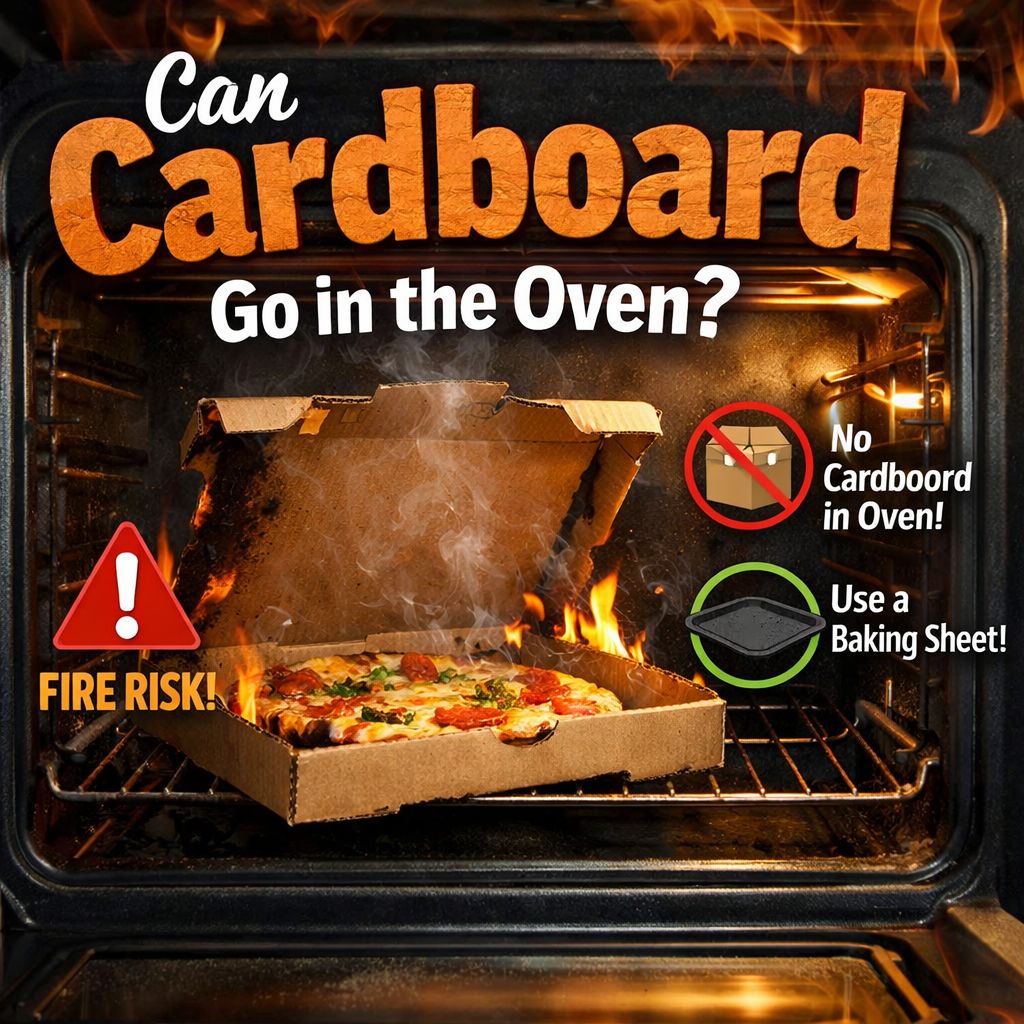
Hey, I’m Mossaraof — a professional cook and food blogger. One night, I threw a frozen pizza in the oven without removing the cardboard. A few minutes later, I smelled something burning and thought, can cardboard go in the oven? If you’re unsure too, you’re not alone. For more must-know tips, check out The Complete Guide to Using an Oven at Home — and keep reading to learn what really happens.
Why This Question Even Comes Up in Real Kitchens
Let’s be real—on weeknights when I’m tired and the sink’s already full, shortcuts feel like survival. One night, I stood there with a frozen pizza in hand and thought, “Can’t I just toss the whole box in?” That moment of temptation is exactly why this question matters more than you’d think.
Convenience vs. Safety
Cardboard looks harmless—especially when it’s holding something delicious. Most pizza boxes feel thick, bakery boxes seem sturdy, and takeout trays often look like they could take the heat.
But here’s the truth: cardboard is not heat-proof, even if it feels tough. It was made to carry food, not cook it.
And I get it—sometimes we just want less cleanup. But tossing that tray or box into the oven? That can lead to smoke, weird smells, or even worse.
In other words: what looks convenient can be a kitchen hazard in disguise.
Common Scenarios That Cause Confusion
Over the years, I’ve seen (and done) all sorts of things that seemed fine… until they weren’t:
- Reheating pizza in the box: You figure it’s already in there—why dirty a tray? I tried it once. Never again. The edges scorched and the crust turned rubbery.
- Using a cardboard base under frozen food: Some frozen pizzas come on a thin round. It looks like a baking tray, right? But that little disc isn’t meant to face direct heat. It can warp, smoke, or even catch fire.
- Lining pans with cardboard: I’ve seen folks do this when they run out of foil or parchment. Please don’t. Cardboard isn’t a backup baking liner. It absorbs grease and heat—and not in a good way.
These situations happen when we’re in a rush, or when packaging feels like it should be oven-safe. But I’ve learned—sometimes the “easy” way leads straight to a smoky mess.
What Temperature Does Cardboard Burn?
This is where things get real. Cardboard doesn’t need an open flame to catch fire—just the right amount of heat. And if you’re like me, running an oven at 400°F for pizza or roasted veggies is a weekly thing. So yeah… this matters more than you’d think.
The Flashpoint of Cardboard
Here’s the number that changed how I cook: Cardboard ignites at around 427°F (219°C). That’s not a wild firepit number. That’s a regular oven setting.
I used to preheat my oven to 450°F for frozen fries or to get that crispy pizza crust. It never occurred to me that something as ordinary as a cardboard box could become a fire hazard at the same temp I use to roast chicken.
So if you’re wondering, “Can cardboard go in the oven if I’m careful?”—well, even the oven being on might be too hot, depending on your temp.
Quick answer: Cardboard burns at 427°F. Many ovens exceed this during preheat or broil cycles—making cardboard unsafe inside.
What Happens Before It Burns?
Now, it’s not always an instant burst of flames. I’ve seen it start subtly—and that’s almost worse.
A few times, I noticed the edges of a cardboard base curling up. Then came the weird toasty smell. It wasn’t quite smoke—but it wasn’t right either. That’s smoldering. And it’s your warning sign.
You might also spot scorch marks on your oven rack or even the tray underneath. It’s like the cardboard is whispering, “I wasn’t meant for this heat.”
One time, I pulled out a pizza and the whole kitchen smelled like burnt paper—not cheese, not crust, just… ash. I hadn’t hit 400°F, but it didn’t matter. Even at 350°F, cardboard can smolder, smoke, and mess with the taste of your food.
Quick answer: Before catching fire, cardboard can smolder, warp, and release odors—especially around 350°F or higher.
So even if your oven is set to a “safe” number, don’t trust cardboard to stay quiet. It’s flammable, it’s unpredictable, and it’s not worth the risk in your kitchen.
Can You Put Cardboard in the Oven at 200 Degrees?
I’ve actually tried this—very carefully—on a lazy Sunday while warming up leftovers. The oven was set to 200°F, and I figured, “That’s low enough, right?” But here’s what I found out the hard way: even at 200 degrees, cardboard isn’t totally safe.
Why 200°F Seems “Safe” (But Isn’t Always)
200°F sounds harmless. It’s closer to “keep warm” than “cook.” There’s no roaring flame, no sizzling oil—just gentle heat. But cardboard doesn’t need a fire to be a problem. At low temps, it can still dry out, warp, or give off weird smells.
One time, I used the box from a bakery cake to “warm it up just a little.” The edges stiffened, and I swear I could smell something like burnt paper and sugar. It didn’t catch fire—but it definitely didn’t make dessert better.
Quick answer: Cardboard won’t burst into flames at 200°F, but it can dry out, smell odd, or even release fumes—especially if coated with wax or ink.
And let’s not forget the coatings. Some packaging has waxy layers, glue, or ink that aren’t meant to be heated. At just 200°F, these materials might not combust—but they can break down and release things you don’t want in your food.
Fire Risk at Low Temps?
Even though 200°F sounds low, most home ovens don’t hold an exact temperature. They cycle. That means they might jump to 220°F or 250°F for a few minutes before dropping back down. I’ve watched my oven’s thermostat spike, especially during preheat.
That slight spike? It’s enough to push dried-out cardboard into the danger zone.
And the longer it sits in there, the more brittle the cardboard becomes. I’ve had pizza boxes start curling after just 15 minutes. It’s like they’re slowly turning into kindling.
Quick answer: Oven temps can fluctuate above 200°F, especially over time—raising the risk of smoldering cardboard or hot spots.
So even if your oven says 200°F, trust me—cardboard still isn’t a safe bet. If you’re just trying to warm something up, grab a pan or a piece of parchment. It’s not worth the gamble.
Is Cardboard Ever Oven-Safe?
Spoiler alert—almost never. I’ve baked, broiled, reheated, and even experimented on purpose just to test this. And the conclusion’s always the same: cardboard isn’t made for ovens.
Even when it looks sturdy or comes with the food itself, it’s not designed to handle heat—just to hold things for a moment.
Pizza Boxes, Cake Boxes & Frozen Food Packaging
Here’s a common trap I fell into more than once: assuming that just because food came in it, it must be oven-safe. It’s easy to think that frozen pizza box, cake box, or takeout tray can handle a quick bake. But they weren’t made with that kind of heat in mind.
Most cardboard packaging has coatings, glue, or printed ink. At high temperatures, these can release toxins or give your food a weird smell. One time, I slid a mini cake (still in the cute pink box) into the oven to warm it slightly. The smell that came out? Not vanilla. More like melting crayons meets burnt paper.
Quick answer: Most food packaging cardboard is not oven-rated—coatings and inks can release toxins or smell bad when heated.
Even “plain” boxes can be deceptive. Some have a waxy surface or liner inside to prevent grease stains. That wax? It’s not made for your oven either. At best, it melts. At worst, it smokes or seeps into your food.
What About Baking on the Cardboard Round?
If you’ve ever bought a frozen pizza, you know the type: a thin cardboard disc underneath. It looks like a tray. It’s not.
Those rounds are there to make packing easier—not to survive 400°F. I’ve tried baking with the cardboard still under the crust, thinking it would crisp up just fine. Instead, the bottom got soggy, the edges warped, and the whole kitchen smelled like hot cardboard.
Quick answer: The cardboard round under frozen pizza is for transport only, not baking—it can warp, smolder, or affect taste.
Once, I actually watched the edges of one of those rounds brown and curl inside the oven. That was my “never again” moment. Now I always transfer pizzas to a stone or baking sheet before they hit the heat.
Better (And Safer) Alternatives I Use Now
After a few close calls—and one smoky kitchen—I’ve built a go-to list of oven-safe tools that actually work. These aren’t just safer than cardboard. They make cooking easier, cleaner, and honestly, better.
Parchment Paper
This one’s a kitchen MVP. Parchment paper is heat-safe up to 450°F, which covers pretty much everything I bake on a weeknight—from cookies to roasted veggies to pizzas.

The best part? It keeps things from sticking and makes cleanup a breeze. I use it when I’m baking a frozen pizza directly on the rack. Slide a piece underneath and boom—crispy crust, no cardboard risk.
Quick answer: Parchment paper is oven-safe up to 450°F and is perfect for replacing cardboard in most baking situations.
Just remember, not all parchment is created equal. Make sure it’s the oven-safe kind—not wax paper, which can smoke or melt.
Aluminum Foil
Aluminum foil has saved dinner more times than I can count. I’ve used it to wrap garlic bread, make quick roasting trays, and line pans when things get messy.
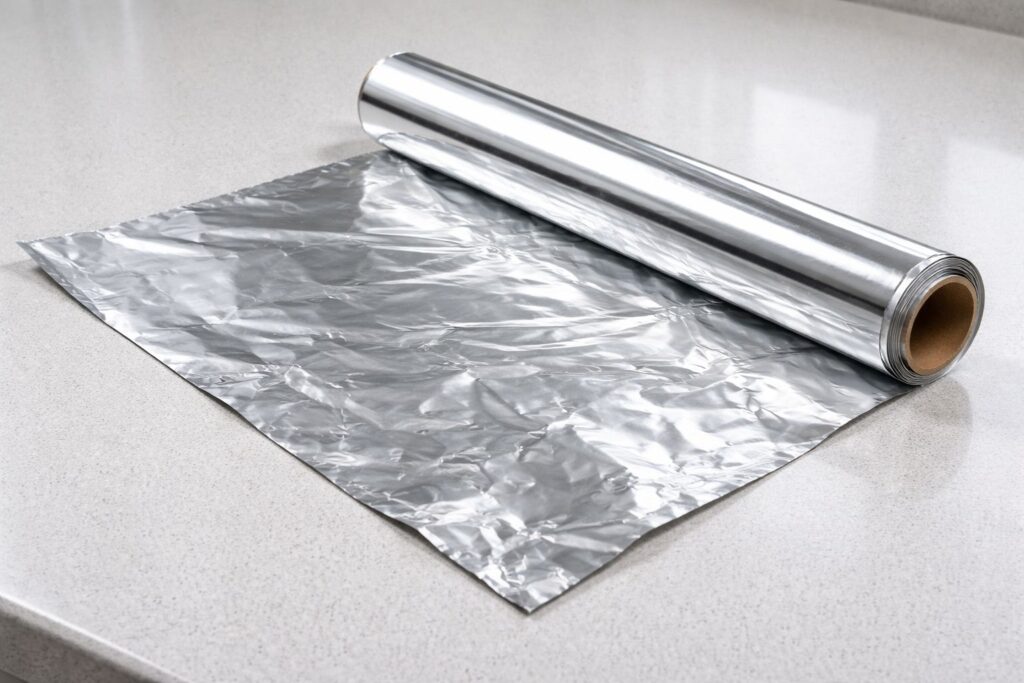
It holds up well under high heat, but there’s one rule I stick to: never cover the bottom of your oven with foil. It can trap heat and mess with how your oven cycles—some manufacturers even warn it could void the warranty.
Quick answer: Foil works great as a liner or tray—but avoid placing it on the oven floor to prevent airflow and heat issues.
When in doubt, I fold up the edges and make a little foil tray. Works like a charm for frozen pizza, cheesy snacks, or leftovers.
Sheet Pans or Pizza Stones
These are my secret weapons when I want things crispy. A metal baking sheet gives food a solid surface with even browning—way better than soggy cardboard. I preheat the pan if I want an extra-crispy bottom.
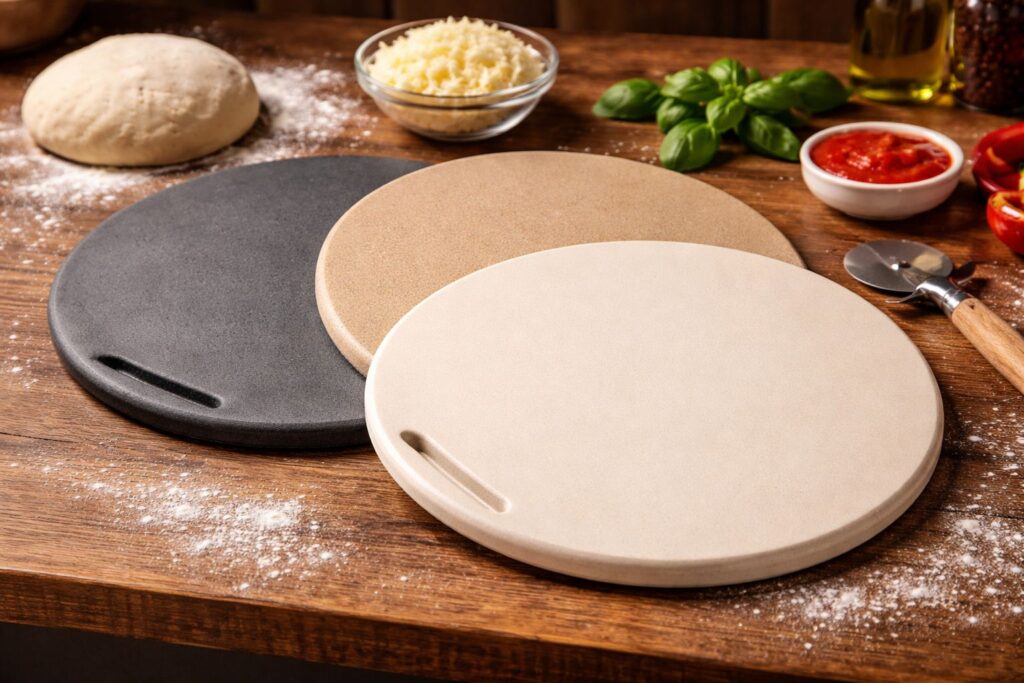
But my favorite for pizza? A good pizza stone. I keep one on the bottom rack and let it heat up while the oven preheats. It holds that heat and gives my pizza a golden, crisp base—without any risk of burning paper or cardboard.
Quick answer: Sheet pans and pizza stones distribute heat evenly and safely—making them ideal for frozen pizza or anything that needs a solid surface.
And bonus: these tools last forever. I’ve had my stone for years. It’s stained, sure—but it’s seasoned like a cast iron pan. It tells stories.
My Personal Story — When I Almost Burned Dinner
One Friday night, I made the mistake of trusting the box.
I had a frozen pizza in one hand and zero energy left in the tank. Long day, empty stomach, and honestly? I just didn’t feel like grabbing a tray. The cardboard round underneath looked solid enough. So I tossed the whole thing—box, tray, and all—straight into the oven.
What Happened
At first, everything seemed fine. Oven was set to 375°F. I figured I was safe.
But about ten minutes in, I smelled something… off. Not cheese. Not crust. More like hot paper with a hint of regret.
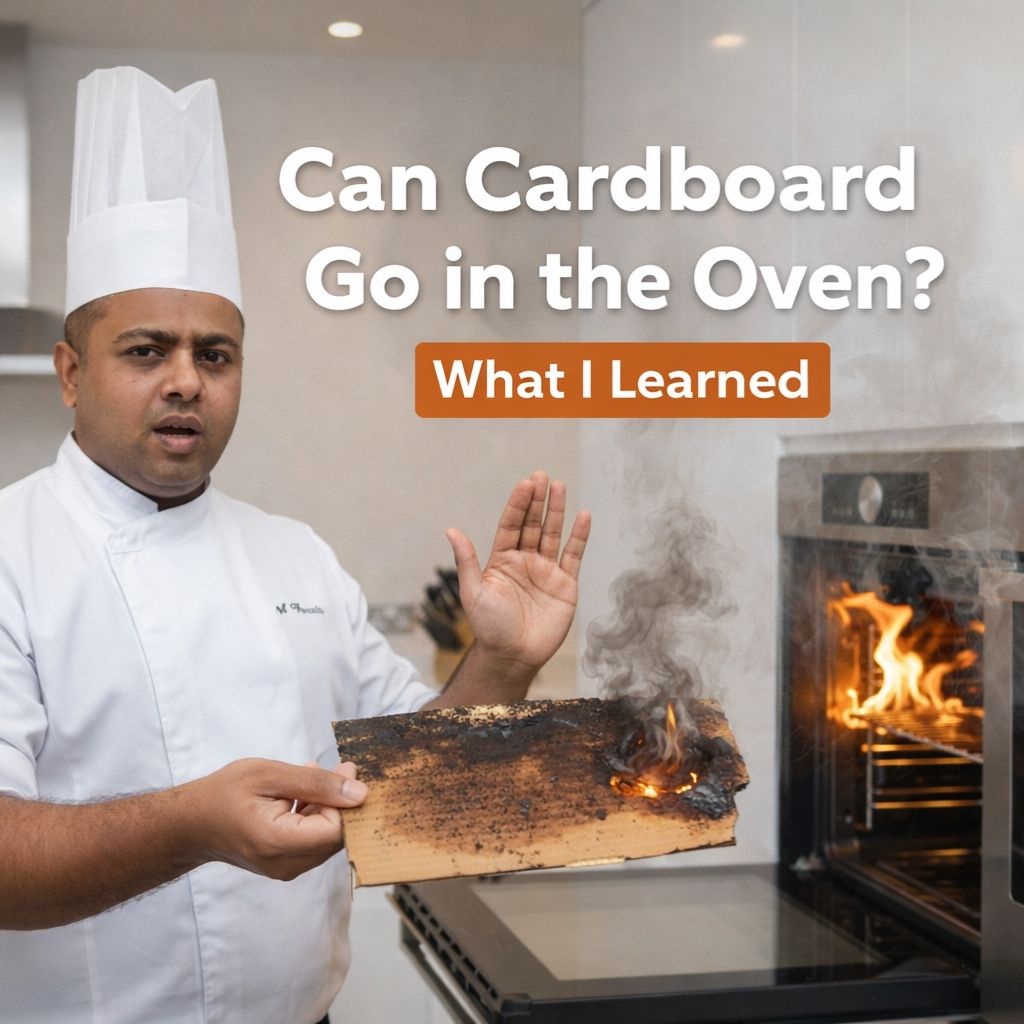
I opened the oven and boom—edges of the cardboard were browning. The tray had warped, curling at the sides like it wanted out. The smell hit hard, and a thin ribbon of smoke drifted out. That pizza? It still looked raw in the middle, but the air already felt like a campfire gone wrong.
Quick answer: Even if your oven isn’t blazing, cardboard can smolder, warp, and smell bad—fast.
I yanked the tray out with oven mitts, waving smoke toward the window like it was a fire drill. And dinner? It was still edible. But it didn’t taste right. The crust was soggy, the air was musty, and I felt like I’d just dodged a small kitchen disaster.
What I Learned
Since that night, I’ve made it a rule: never trust packaging, no matter how sturdy it looks.
Just because a pizza comes with a cardboard base doesn’t mean it’s oven-safe. I used to assume that if the food was frozen on it, it was fine to bake on it too. Nope.
Now I always check the label—and I mean actually read it. If it doesn’t say “oven-safe,” it’s not. Period.
Quick answer: Always use bakeware, not packaging—even if the box looks tough. Cardboard isn’t made for oven heat.
These days, I slide frozen pizzas onto a preheated stone or pan. I skip the cardboard, skip the smoke, and get a crispier crust anyway. It’s safer, smarter, and honestly? It just tastes better.
Final Thoughts from My Kitchen
If you’ve ever stood in your kitchen and thought, “Can cardboard go in the oven?”—take it from someone who’s been there, done that, and nearly smoked out the house. It’s just not worth the risk.
Quick answer: No, cardboard should never go in the oven—it’s flammable, unpredictable, and not made for heat.
I’ve learned this the hard way. From soggy crusts to curling edges and smoky smells, cardboard always ends up causing more problems than it solves. Even at low temps like 200°F, things can go sideways fast—especially when your oven cycles and spikes.
Quick answer: Cardboard can smolder or release fumes even at moderate heat—making it a bad choice for oven use.
And let’s not forget about the chemicals. Many pizza boxes, cake trays, and takeout packages are coated with wax, glue, or printed ink. When those get hot, they can leach into your food or fill your kitchen with that unmistakable “uh-oh” smell.
Quick answer: Heated cardboard packaging can release harmful fumes from coatings, adhesives, or inks—not something you want near dinner.
So now? I stick with tools that are built for heat—like parchment paper, sheet pans, and my trusty pizza stone. They keep things safe, crispy, and cleanup is usually easier too.
Quick answer: Use oven-safe alternatives like parchment, foil, or stones instead of cardboard—it’s safer and delivers better results.
Bottom line: when it comes to cardboard and ovens, just don’t. Your food—and your fire alarm—will thank you.
FAQs – Quick Answers for Curious Cooks
Can you put cardboard in the oven at 200 degrees?
Not recommended.
Even at 200°F, cardboard can dry out, release odors, or start to smolder. Your oven might also spike above 200°F without warning. I’ve tested this personally—and while it didn’t catch fire, it made the kitchen smell like burnt paper. Best to use parchment or a tray instead.
Quick answer: No. Cardboard can still smolder or smell bad at 200°F—especially during longer cook times or temp spikes.
Is it safe to bake pizza on cardboard?
Definitely not.
Even if the pizza came with a cardboard round underneath, it’s only meant for transport—not baking. I learned that the hard way when my crust went soggy, and the cardboard warped like a wilted leaf. Plus, it can smoke or affect the flavor.
Quick answer: No. That cardboard disc is for packaging, not baking—it can smolder, smoke, or make your crust soggy.
What temperature does cardboard catch fire?
Around 427°F (219°C).
That’s lower than you’d think. I used to roast veggies at 450°F until I realized I was flirting with danger if cardboard was nearby. Even 400°F gets you close. And remember—many ovens go a little higher than the dial says during preheat.
Quick answer: Cardboard can ignite at 427°F, but may smolder and release fumes at lower temps like 350°F.
Can you use cardboard as a baking tray?
Nope.
I’ve seen people try this in a pinch when foil or pans were out. Don’t do it. Cardboard isn’t made for heat—it’s flammable, it absorbs grease, and it could release glue or ink chemicals onto your food.
Quick answer: No. Cardboard isn’t oven-safe and can catch fire, warp, or leak chemicals when heated.
What happens if you accidentally put cardboard in the oven?
Expect smoke—or worse.
The first sign is usually a strange smell, then curling edges, then smoke. One time, I opened the oven and thought I was at a campfire. If it happens to you, turn the oven off, remove the cardboard carefully, and ventilate fast.
Quick answer: You’ll likely see smoke or smell burning paper. Turn off the oven, remove the cardboard, and air out your kitchen.