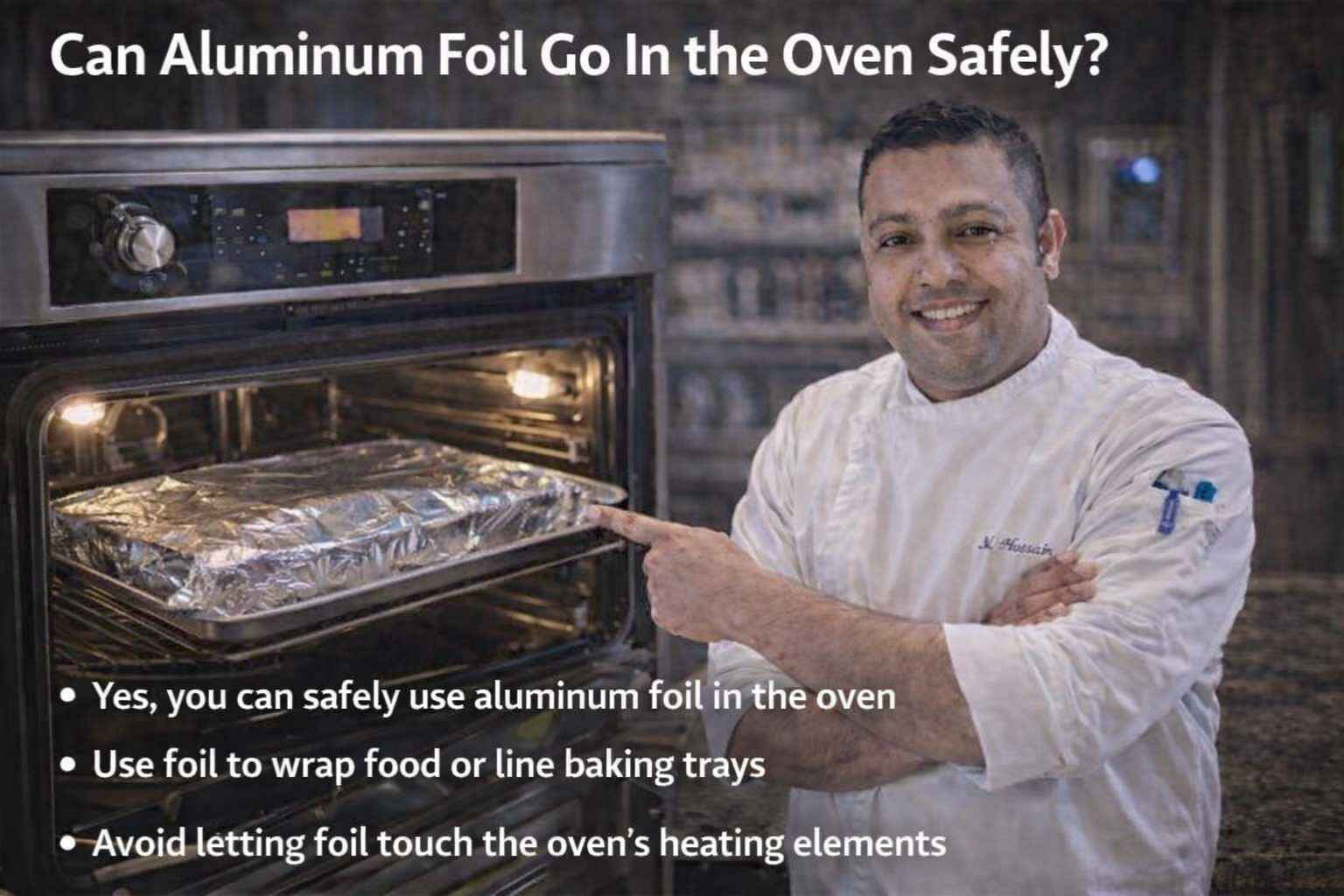
Hey, I’m Mossaraof — a professional cook and food blogger who’s spent years testing oven tricks in real U.S. kitchens, from steamy Florida rentals to icy Midwest apartments. One question I still get all the time is, “Can aluminum foil go in the oven safely?” And honestly, I’ve learned the hard way that the answer isn’t as simple as yes or no.
I’ve scorched foil under a broiler, watched it stick to oven floors, and found smarter ways to use it without ruining dinner. In this guide, I’ll walk you through what actually works, when to use it, when not to, and what oven manuals don’t always make clear. If you’re still getting the hang of your oven, check out The Complete Guide to Using an Oven at Home for chef-tested tips that’ll help everything make more sense.
Let’s get into the real-life stuff no one tells you about foil.
Table of Contents
ToggleWhat Aluminum Foil Is Made Of (And Why That Matters)
Let’s start with the stuff itself. Aluminum foil looks simple, but knowing what it’s made of helped me cook smarter.
It’s Nearly Pure Aluminum
Most foil—like Reynolds Wrap—is 98–99% aluminum. That means it’s super lightweight, flexible, and heat-conductive.
But it’s also reactive. And in my experience, it gets real finicky at high temps.
It Doesn’t Melt, But It Can Warp
Aluminum melts at about 1220°F. But ovens don’t get that hot—thankfully. What happens instead? It warps or gets brittle when pushed above 600°F.
I’ve seen this firsthand. Broiling salmon at 500°F in Arizona? The foil edges folded in and charred. It didn’t catch fire, but it looked like it wanted to.
You Can Put Foil in the Oven — But Only If You Do It Right
I’ll be honest: I use foil all the time. But not blindly. There are ways to use it safely, and ways that nearly ruined dinner.
How I Use Foil Safely
- Lining baking sheets. My go-to for roasted carrots, potatoes, or quick cleanup after bacon.
- Tenting meats. Especially with turkey or pork loin—it helps hold moisture in while resting.
- Covering lasagna midway. Keeps the cheese from going too brown.
What I Don’t Do Anymore
- Never on the oven floor. I did this once to “catch drips.” It blocked airflow, overheated the bottom, and left a warped foil mess.
- Never cover an entire oven rack. It stifles the heat circulation. I tried it for a massive roast pan—ended up with uneven heat and rubbery potatoes.
How I Adapt Foil Use to Where I’m Cooking
U.S. kitchens vary—hot, cold, dry, or damp. And believe me, aluminum foil doesn’t behave the same everywhere.
Florida Kitchens — Humid and Steamy
Cooking fish in foil packets in Florida? A lifesaver.
- Foil traps steam and helps food stay juicy.
- But in humid air, I noticed things can over-steam. That’s when I leave a vent open or poke holes on top.
Midwest Winters — Cold Outside, Cranked Inside
In Michigan, where the oven’s working overtime, I use foil to line trays but not the oven bottom.
- It helps prevent messes from bubbling casseroles.
- I avoid using foil under sourdough loaves. That crispy bottom crust? Gone if the foil traps steam.
Dry Arizona Heat — High Temp, Low Moisture
When broiling chicken thighs in Phoenix, I learned quickly:
- Don’t place foil near the broiler element.
- It can reflect heat too strongly and burn your food (and your foil).
Instead, I shift the rack down and use a foil-lined tray with space on all sides.
When Foil and Food Don’t Mix Well
Not all foods play nice with foil. I learned this by accident—like the time I wrapped tomato slices in foil and stored them overnight.
Acidic Foods React With Aluminum
- Tomatoes, citrus, vinegar — they can corrode foil.
- I’ve seen little gray spots form on the food. Not appetizing.
Now, I always use parchment paper as a buffer. Just layer it between the food and foil.
Salt Can Be Sneaky Too
When I brine chicken thighs, I avoid wrapping them in foil directly. Salt can pit the foil, especially if it sits for hours.
I use a glass dish instead—or stainless steel. Foil’s just not built for salty sleepovers.
Where You Place the Foil Matters
This one might sound obvious, but it took me years to stop putting foil in dumb places.
Never Cover the Entire Rack or Oven Floor
- The manual for my Whirlpool clearly says: don’t line the bottom.
- But I tried it once during a messy lasagna bake. The foil scorched and stuck. I had to scrape it off with a plastic spatula. Awful.
What I Do Instead
- I line a rimmed baking tray with foil and set it on a lower rack.
- That way, it still catches drips without blocking air flow.
Disposable Foil Trays Are Handy
Especially when meal prepping for the week. I grab a stack from Dollar General. These trays:
- Handle heat well
- Don’t curl like flat foil sheets
- Can be tossed without guilt
The Time Foil Almost Set Off My Broiler
True story. I once slid a foil-lined tray under the broiler and stepped away. Came back to see edges glowing orange.
Here’s what I learned:
Broilers + Foil = Watch Carefully
- Foil reflects heat. Under a broiler, it can bounce back and concentrate it.
- This can cause burning fast. Especially with thin meats or oily marinades.
Now, I keep the rack a level lower and use parchment if I’m unsure.
Want to Avoid Foil Altogether? Here’s What I Use Instead
Some days, I skip foil completely. These are my favorite alternatives when I’m cooking in bulk or just want better results.
Parchment Paper
- Works for cookies, fish, pizza reheats
- Doesn’t trap steam like foil sometimes does
Just don’t broil with it. It’ll singe fast.
Silicone Mats (Like Silpat)
I use these for roasted root veggies or chicken wings:
- Easy to clean
- Reusable
- Even heat distribution
But they don’t brown as well as bare pans. So it’s a trade-off.
Ceramic Lids or Dutch Ovens
When braising short ribs or making baked beans, I skip foil entirely and use my Le Creuset lid.
- Keeps moisture in
- No foil tearing or folding required
It’s bulky, sure. But worth it.
Can You Reuse Aluminum Foil?
I’m a practical cook. I don’t toss foil if it doesn’t need to be tossed.
When I Reuse It
- Clean foil that tented over roasted chicken? I fold and keep it.
- Foil used to line cookies? Wipe and reuse.
When I Toss It
- Greasy or soaked in meat juices
- Torn or warped
- Reacted with food (like lemon or tomato)
In Chicago winters when trash pickup is slow, I’ll reuse foil till it’s begging to retire.
What U.S. Oven Brands Actually Say About Foil
I’ve owned GE, Whirlpool, and Frigidaire ovens across different homes. Their manuals were surprisingly consistent.
Most Say “Do Not Line Oven Floor”
- Even GE, which I assumed would be more lenient, warned against it.
- Lining racks sparingly is okay—but don’t block vent holes.
Convection Ovens Make It Trickier
Convection ovens blow air around. If foil flaps or blocks vents:
- Heat doesn’t circulate right
- Food cooks unevenly
- And your oven might overheat
So in my convection model, I keep foil usage tight and secure.
What About Other Appliances?
You might be tempted to throw foil into anything with heat. Here’s my take after trial (and some error).
Toaster Ovens
- I line the crumb tray, never the rack.
- If foil touches the sides, it gets crispy fast.
Air Fryer Ovens
- Only use foil when it can’t fly around.
- I poke holes so air still circulates. Otherwise, things cook unevenly.
Microwaves
- Don’t do it. I tried a “foil shield” once. Sparks flew.
- Unless your manual says exactly how to use foil (and most don’t), skip it.
My Personal Rule Now? Read the Manual. Trust Your Eyes.
Every oven is different. Even my last two GE models heated completely differently.
So now I:
- Keep the manual in a drawer
- Check it before lining anything
- And when in doubt—I just go old-school with a bare pan
That one time in a Florida rental when foil bubbled up like lava? Never again.
FAQs
Can aluminum foil go in the oven safely at any temperature?
Yes, aluminum foil can go in the oven safely at normal bake and roast temps. Avoid placing it near heating elements or using it under the broiler where heat is very direct.
Is it safe to put aluminum foil on the oven rack?
You can place foil on a rack if it does not block airflow. Never cover the full rack. Heat needs space to move or food may cook uneven and ovens may overheat.
Can aluminum foil touch food while baking or roasting?
Foil can touch most foods, but avoid direct contact with acidic foods like tomatoes or lemon. Use parchment between food and foil to prevent taste changes.
Is it safe to line the bottom of the oven with aluminum foil?
No, do not line the oven floor with foil. It blocks heat flow and may cause damage. Most U.S. oven brands like GE and Whirlpool warn against this.
Can aluminum foil be used in convection ovens?
Yes, but use foil carefully in convection ovens. Do not block fans or vents. Loose foil can move and affect heat flow, leading to uneven cooking.